

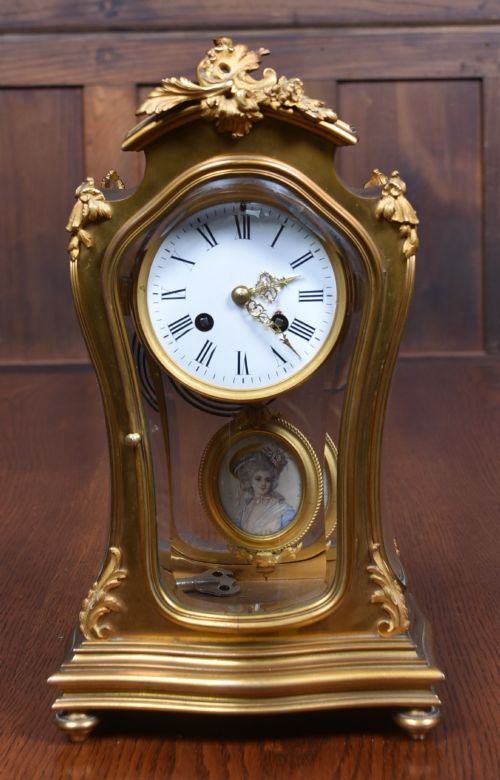


French Enamel Portrait
These French enamel portrait pieces capture miniature likenesses in fired glass on metal, sought after for their exquisite colour and intimate historical charm.
French Enamel Portrait
A french enamel portrait brings together fine painting and vitreous glass fused to metal bases such as copper or gold. When you search for this phrase, you uncover delicate miniatures housed in jewellery caskets, snuff boxes, wall art, and mantel clocks.
The pieces on this page span the eighteenth, nineteenth, and early twentieth centuries, reflecting diverse periods from the Georgian era through to Napoleon III and the Belle Époque.
You are most likely to encounter nineteenth-century works featuring Limoges plaques, gilt bronze mounts, and hand-painted likenesses set into clocks, tazzas, and pendants.
How they were made
Craftsmen fused powdered glass onto metal plates, typically copper or gold, by firing them at high temperatures in a kiln. This vitreous enamel technique created a durable, glossy surface capable of holding fine detail over centuries.
Portrait painters applied mineral pigments onto the enamel ground before refiring the piece to permanently set the colours. Artisans then mounted these plaques within gilt bronze, ormolu, brass, or porcelain housings.
Structural framing often involved cast and gilt bronze or ormolu, complemented by glass crystals, wood backing, and occasionally porcelain components to complete the decorative object.
French Enamel Portrait Retail Price Guide 2026
Typical asking prices for french enamel portrait among the pieces listed under this phrase on Sellingantiques today, from the lower quarter to the upper quarter. They describe what is for sale here now, not the wider market.
Curtain tie-backs transformed mundane drapery into an art gallery display, proving eighteenth-century homeowners wanted portraits watching over their parlour curtains.
What varies in quality
The casting and mercury gilding of the surrounding bronze or ormolu mounts vary considerably, with superior items displaying crisp chiselling and heavy, solid construction. Inferior mounts show softer detail and thinner metal plating.
The stability of the fired enamel ground and the preservation of the original pigments determine long-term durability. Complete integration between the painted plaque and its original housing elevates the overall standing of the piece.
Jean-Baptiste Isabey·Rodier·F. Bienvue
The French Enamel Portrait Glossary
- Limoges enamel
- A technique originating in France where painted enamel plaques are created on a metal base, often depicting historical or portrait subjects with rich tonal gradation.
- Ormolu
- Gilded bronze used extensively for mounts and decorative frames during the eighteenth and nineteenth centuries, providing a bright golden finish.
- Gilt bronze
- Metal alloy cast into decorative shapes and coated with a thin layer of gold to give a rich, metallic sheen.
- Pendant locket
- A small hinged container worn around the neck, designed to hold a miniature portrait or personal keepsake.
- Tazza
- An ornate shallow cup or plate mounted on a stem and foot, frequently utilised for display purposes on tables.
French Enamel Portrait: Frequently Asked Questions
What is a french enamel portrait?
A french enamel portrait is a miniature painting fused in glass onto a metal plaque, often incorporated into decorative objects such as clocks, boxes, and jewellery.
These pieces combine portraiture with decorative metalwork, reflecting the aesthetic tastes of eighteenth and nineteenth-century France.
How were enamel portraits used?
Enamel portraits served as personal tokens of affection, wearable jewellery, and decorative elements on utilitarian items like snuff boxes and vanity caskets.
Larger plaques were mounted on mantel clocks, mirrors, and tazzas to display wealth and artistic appreciation in formal rooms.
How do I date a french enamel portrait?
Dating relies upon stylistic markers of the frame, the costume depicted in the portrait, and the material composition of the backing and mounts.
Nineteenth-century pieces frequently utilise gilt bronze mounts and revival styles, while eighteenth-century examples exhibit distinct Rococo or Georgian characteristics.
Where should I display these pieces?
These delicate objects suit well-lit display cabinets, mantels, or tables where their fine painted details and gilt mounts catch natural light.
Protecting them from direct sunlight and excessive humidity preserves the vibrant mineral pigments of the enamel surface.