


French Empire Ormolu Timepiece
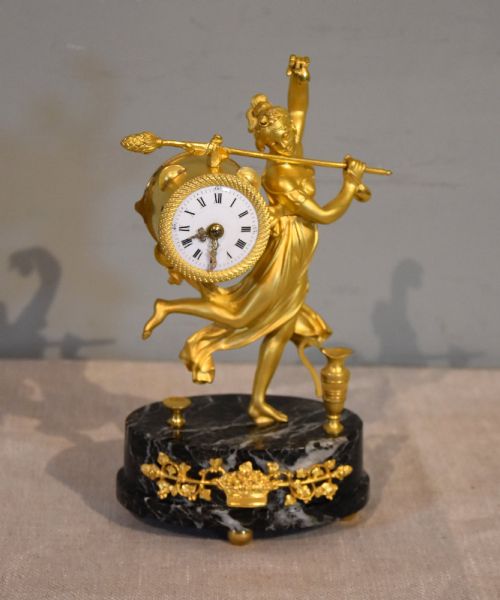
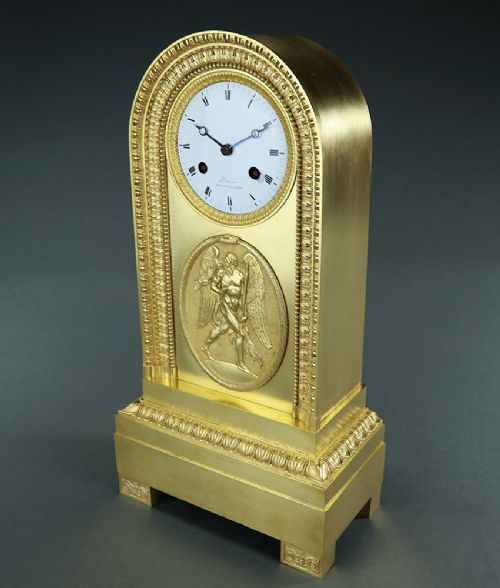
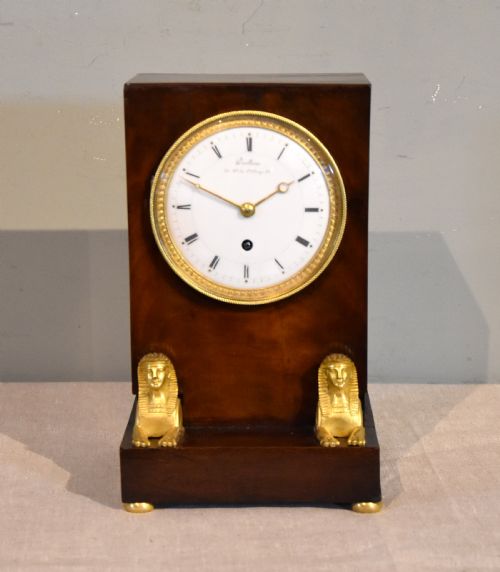
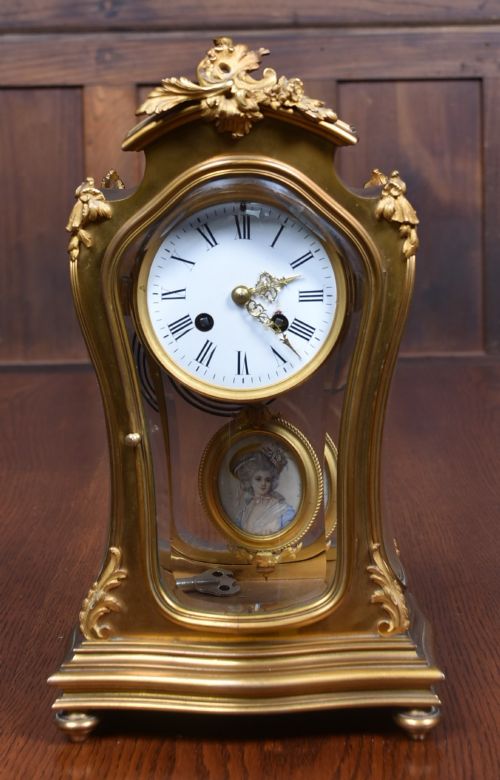
A french empire ormolu timepiece brings neoclassical sculptural presence and precision mechanical movement into a room.
French Empire Ormolu Timepiece
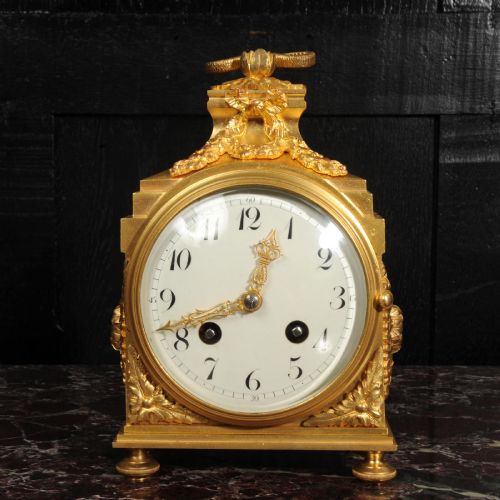
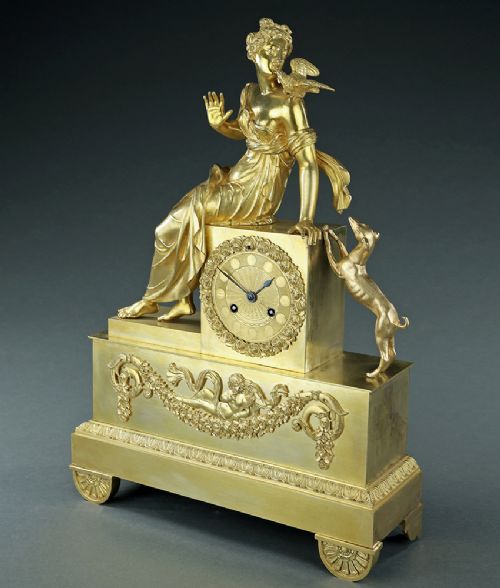
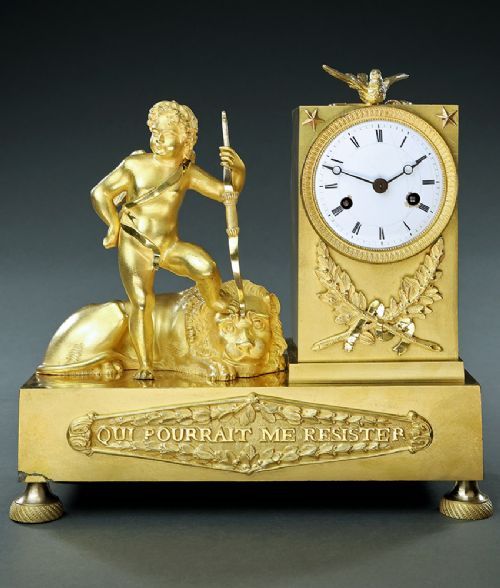
A french empire ormolu timepiece is a heavy decorative mantel clock combining cast bronze metals with mercury gilding, often depicting mythological or allegorical figural scenes. These mechanical works date predominantly from the nineteenth century, ranging from strict classical portico designs to elaborate figural mantel pieces.
Buyers encounter architectural borne models, drum head clocks flanked by lions, and sculptural compositions featuring patinated bronze figures against bright gilt mounts. Many incorporate marble bases in white or green alongside traditional eight day striking movements.
How they were made
The cases rely on a combination of cast bronze and brass components finished with mercurial or fire gilding to achieve the characteristic ormolu surface. Founders frequently contrasted these bright gold elements with dark patinated bronze figures and structural bases carved from marble or mahogany.
Internal mechanisms utilise brass gear trains, anchor escapements, and fusee or spring driven power sources. Dial faces are typically white enamel with painted numerals, often protected behind bevelled glass within cast bezels.
Poodle dogs and goats occasionally stand guard over the dial alongside classic mythological figures.
What varies in quality
The refinement of the casting and chiselling defines the upper tier of these clocks, where manual post cast chasing sharpens every leaf, drapery fold, and facial expression. Lower tiers show softer, more generalised surface details from worn or repetitive moulding.
The integrity and originality of the mercurial gilding also separate standard examples from superior ones, alongside the complexity and signed provenance of the mechanical movement housed within the bronze case.
Samuel Marti·Ravrio·Pons De Paul·Hessen Paris·Deniere Et Fils·Victor Paillard
The French Empire Ormolu Timepiece Glossary
- Ormolu
- A technique of applying finely ground high karat gold mercury amalgam to a bronze object before firing. The process yields a deep, lasting golden lustre unique to period French bronzes.
- Fusee
- A conical pulley used with a cord or chain to maintain even tension on the clock train as the mainspring unwinds. This mechanical device improves timekeeping accuracy across the power reserve.
- Pendule d'Officier
- A portable military style campaign clock featuring a flat top and carrying handle. These compact timepieces were designed for officers on the move during the nineteenth century.
- Garniture
- A matching set consisting of a central clock flanked by twin candelabra or vases. These decorative ensembles create a balanced display across a mantelpiece.
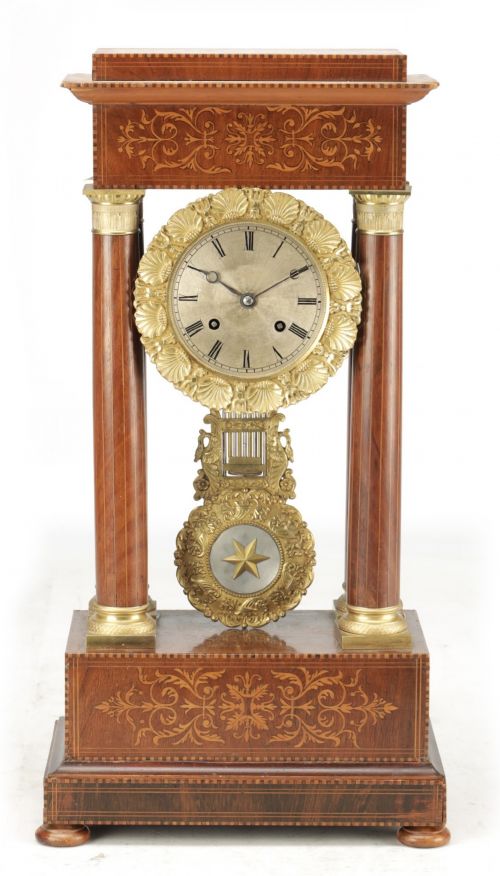
- Portico clock
- A monumental clock design featuring a raised dial suspended between four slender marble or bronze columns. The architecture often mirrors neoclassical temple facades.
French Empire Ormolu Timepiece: Frequently Asked Questions
How do I wind the clock?
Insert the matching winding key into the small arbour holes on the enamel dial face. Turn gently in the indicated direction until you feel firm resistance from the mainspring.
Avoid over winding the mechanism to prevent damage to the internal brass teeth or spring barrels. Consult a professional horologist if the tension feels uneven or stiff.
Why does the clock run fast?
Variations in temperature and ageing oil can alter the effective length of the pendulum suspension spring. Adjust the small regulating nut located on or above the pendulum bob to lengthen the swing.
Lowering the bob slightly will slow the beat rate down over a twenty four hour testing period. Make small adjustments daily until timekeeping stabilises.
Where should I place the clock?
Select a sturdy, level surface away from direct sunlight, exterior draughts, and damp walls. Mantelpieces and heavy wooden sideboards offer stable platforms that minimise ambient vibration.
Ensure the clock rests squarely so the anchor escapement maintains an even tick. An unlevel case will cause the movement to stop running prematurely.