


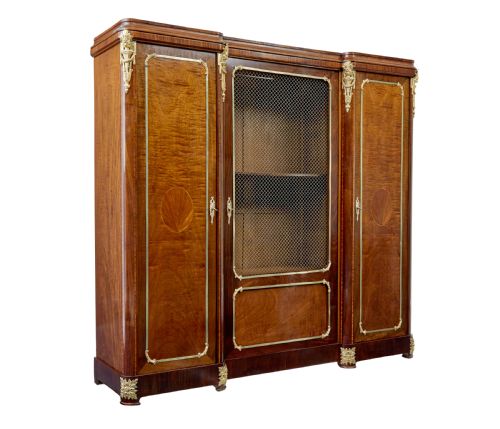


French Empire Cupboard
These french empire cupboard selections bring architectural dignity and rich timbers into domestic spaces.
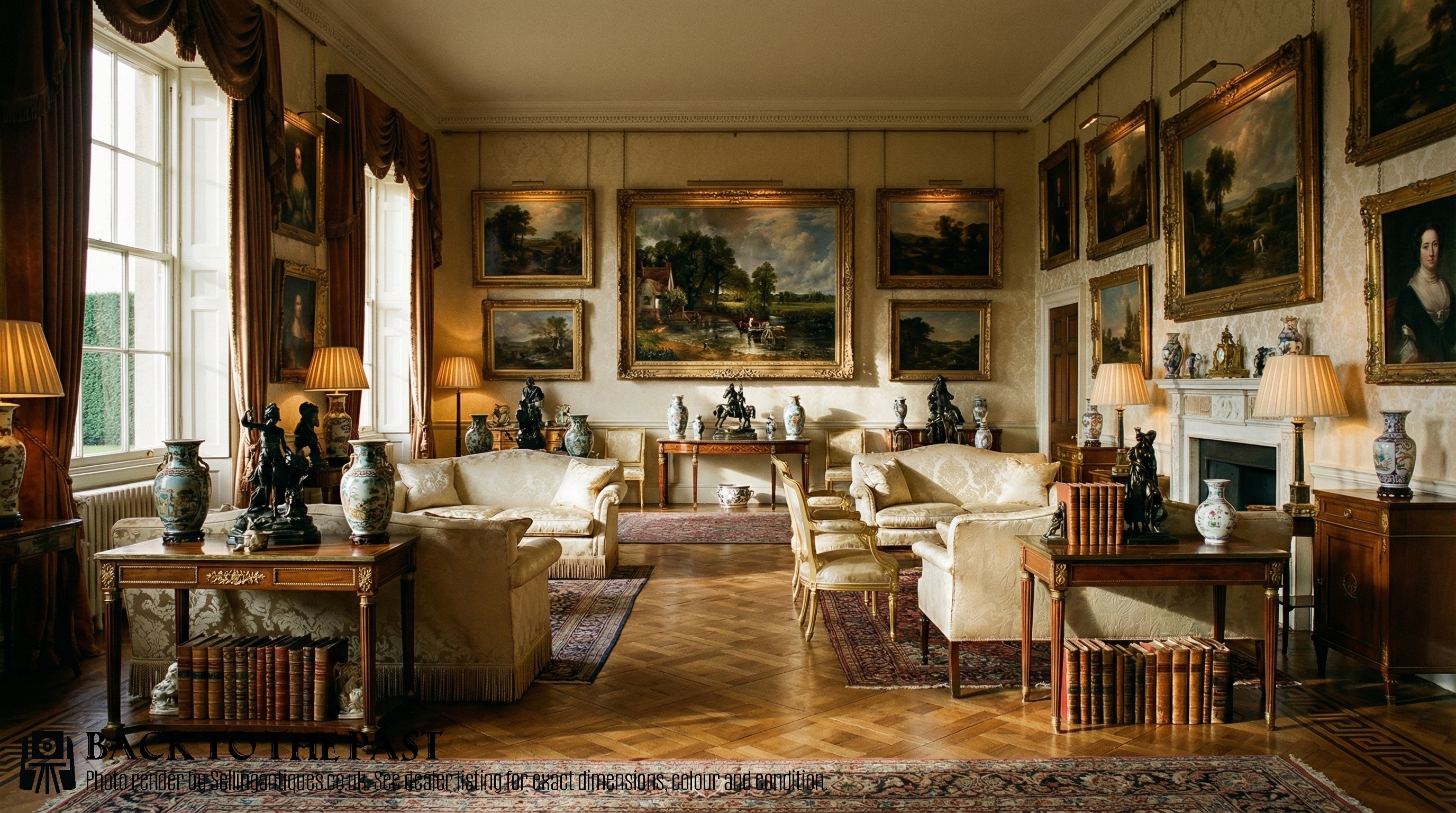
French Empire Cupboard
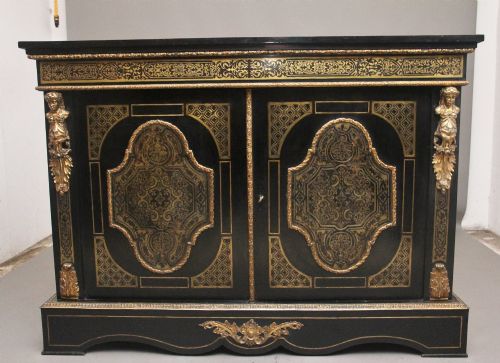
A french empire cupboard typically manifests as a substantial mahogany, ebonised or fruitwood piece designed for storage and display. These items draw on nineteenth-century design vocabulary, often incorporating classical proportions and striking silhouette lines.
Buyers frequently encounter bedside tables, tall bookcases, armoires and side cabinets spanning the nineteenth century and subsequent revival periods. The selection ranges from cylindrical pedestals to grand commodes topped with marble.
Originating largely from French workshops, these items integrate architectural presence with practical storage. The forms reflect the stylistic shifts from strict Empire classicism towards Napoleon III and later revival aesthetics.
How they were made
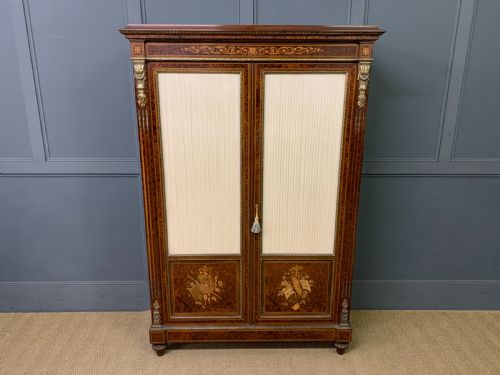
Cabinet makers utilised dense primary timbers such as mahogany, flame mahogany, plum pudding mahogany and ebonised wood, often enhanced by amboyna, rosewood or fruitwood veneers. These woods provide a heavy, durable carcase capable of supporting ornate decorative elements.
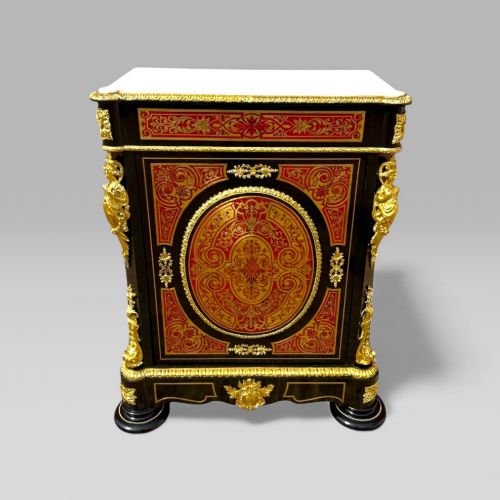
Metal ornamentation defines the decorative language of the style, employing cast or chased ormolu, brass and gilt metal mounts. Workshops applied these mounts to frame panels, highlight cornices and accentuate structural pillars.
Stone and ceramic elements complete the construction repertoire, with inset marble slabs forming resilient counter surfaces and Sevres style porcelain plaques adding colourful focal points to door panels.
The current selection spans the nineteenth century, featuring mahogany, marble, brass, ormolu and ebonised wood across various cabinet forms.
What varies in quality
The refinement of the cast ormolu and gilt metal mounts distinguishes standard production from superior work. Crisp chiselling, secure fixing and harmonious integration with the timber carcase mark out the better examples.
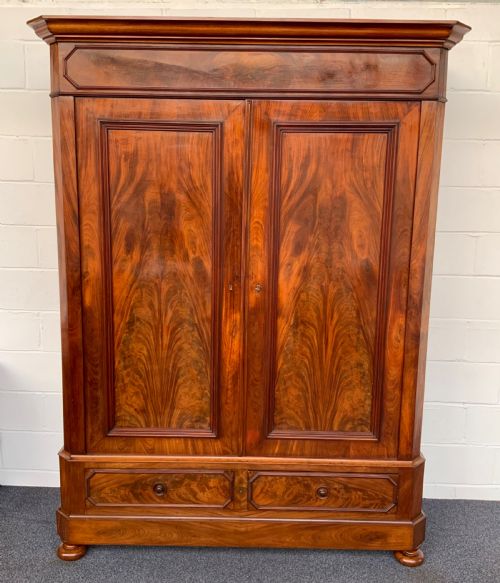
Timber selection and veneer matching dictate visual success across larger surfaces. Grain continuity on flame mahogany or meticulous boulle marquetry demonstrates the skill of the original workshop.
Edmond Poteau
The French Empire Cupboard Glossary
- Ormolu
- Gilded bronze or brass applied as decorative mounts to furniture carcases. This technique creates metallic highlights against dark timber surfaces.
- Commode
- A low cabinet or chest of drawers designed for domestic storage. These pieces frequently feature marble tops and gilt bronze mounts.
- Boulle
- A form of marquetry utilising brass and tortoiseshell inlaid in intricate patterns. It adorns ebonised surfaces on nineteenth-century cabinets.
- Chiffonier
- A tall sideboard or narrow cabinet fitted with shelves and doors. This form provides elevated storage within a compact footprint.
- Armoire
- A large freestanding wardrobe or cupboard used for hanging garments or storing linens. They often display prominent flame mahogany graining.
French Empire Cupboard: Frequently Asked Questions
Where should I place a bedside cupboard?
These cylindrical or square stands suit bedroom settings where their marble tops offer a durable surface for lighting and personal items. Their compact footprints allow them to sit neatly beside standard bed heights.
They also function effectively as small side tables in hallways or reception rooms, where their classical proportions provide a distinct visual anchor against plain walls.
How do I care for marble tops?
Marble surfaces require regular dusting with a soft cloth and immediate wiping of liquid spills to prevent staining. Avoid acidic cleaning agents that can etch the polished stone.
Applying a neutral stone wax periodically helps maintain the sheen and protects the porous material from everyday wear.
What defines the French Empire style?
The aesthetic draws inspiration from classical antiquity, favouring symmetrical forms, dark mahogany timbers and restrained architectural columns. Decoration relies heavily on cast ormolu mounts depicting military, floral or classical motifs.
Later nineteenth-century interpretations often blend these formal elements with Napoleon III ebonised finishes and rich Boulle marquetry.
How do I distinguish revival pieces?
Revival items produced towards the end of the nineteenth century often exhibit a synthesis of earlier Empire proportions with contemporary Victorian or Napoleon III manufacturing techniques. Closer inspection of the interior construction and secondary woods helps clarify the date of manufacture.
Stylistic cues such as the inclusion of porcelain plaques or ebonised boulle work point specifically towards the later decades of the century.