

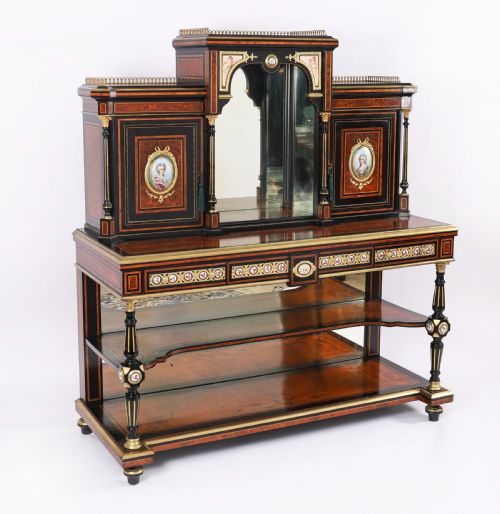


French Ebonised Writing Table
A french ebonised writing table brings dark wood, gilt mounts, and fitted desks into a room with distinct nineteenth-century presence.
French Ebonised Writing Table
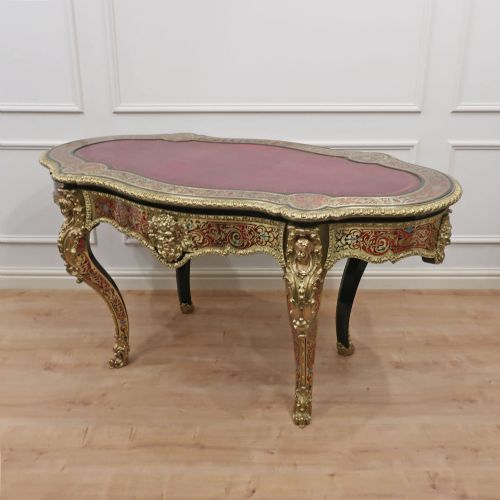
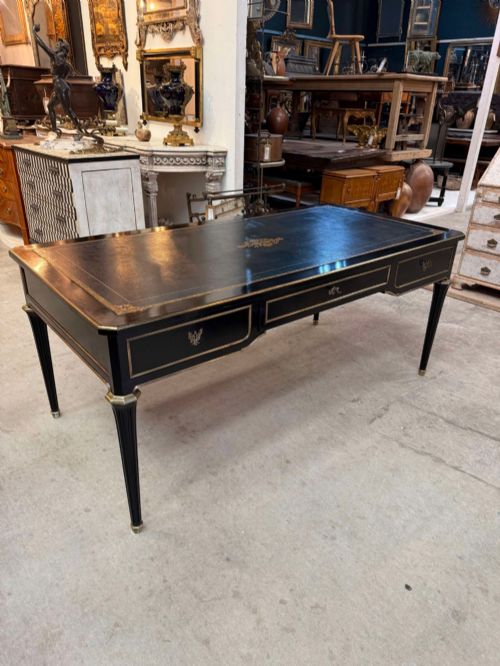
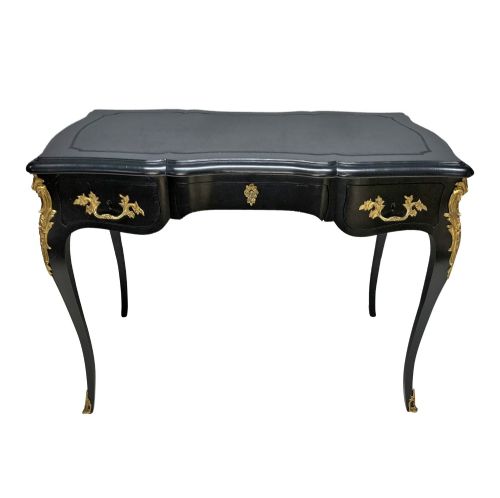
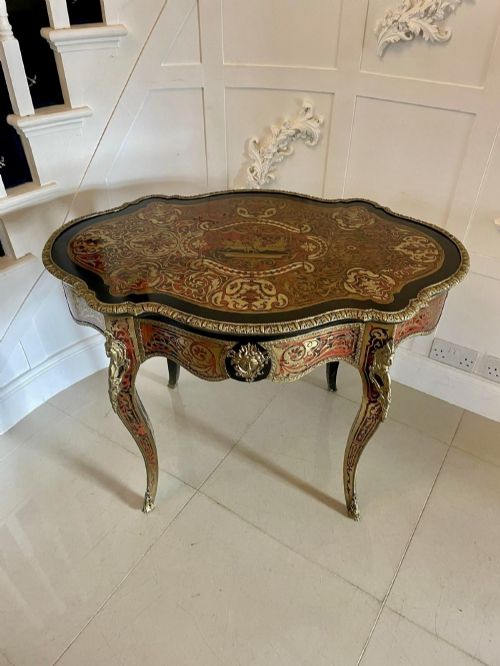
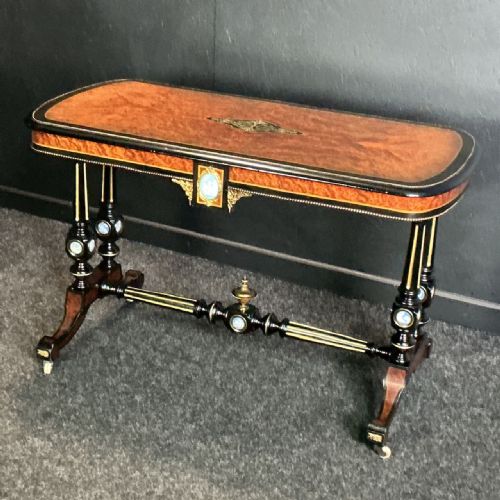
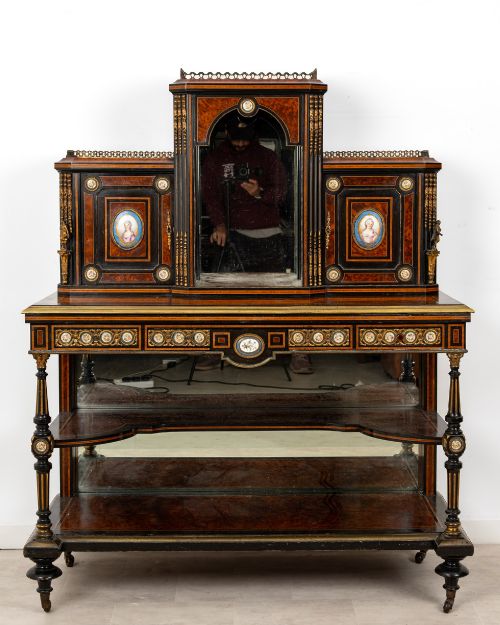
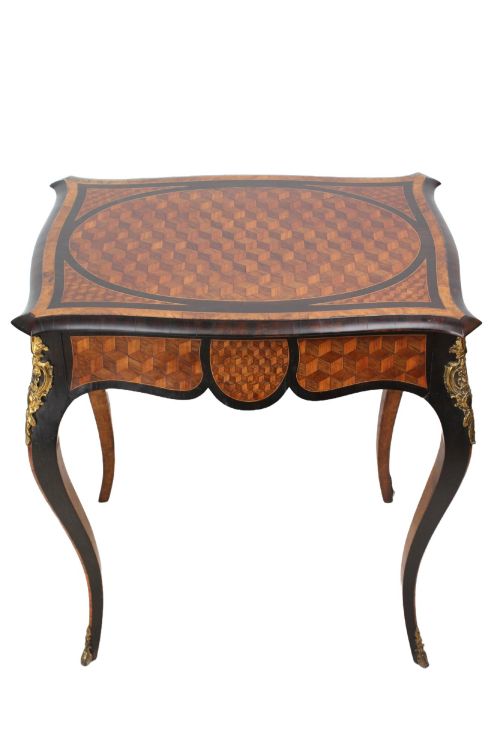
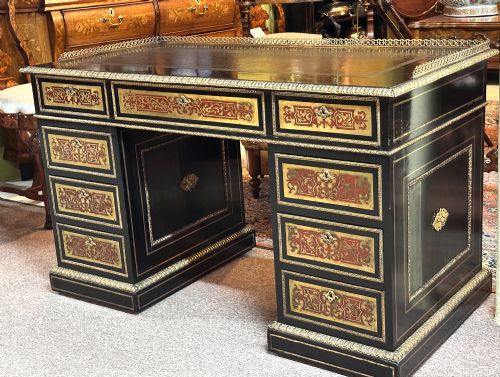
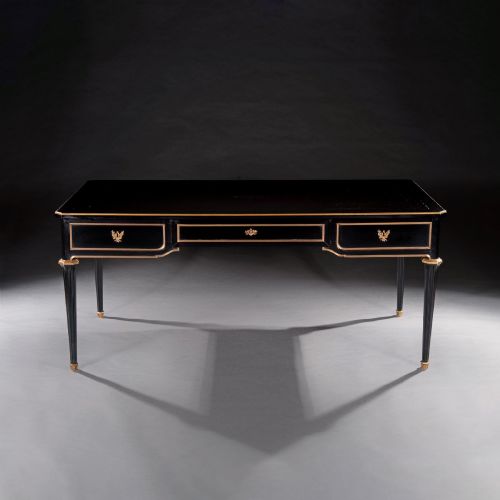
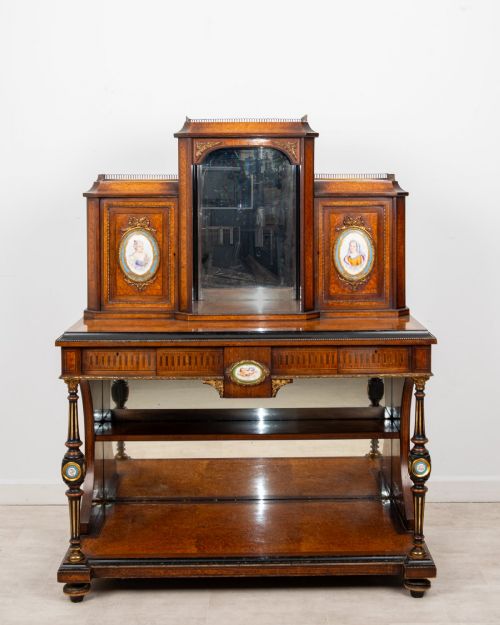
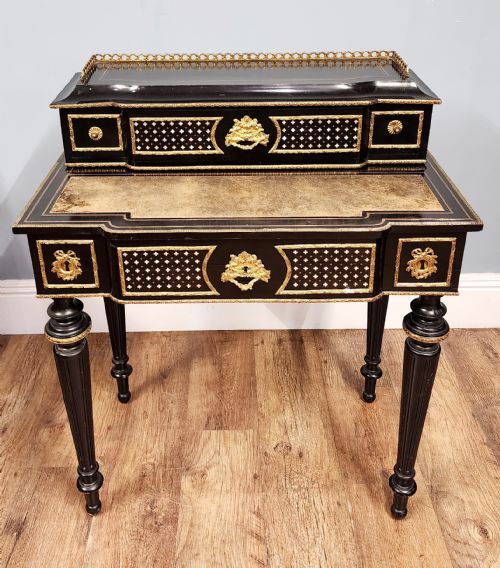
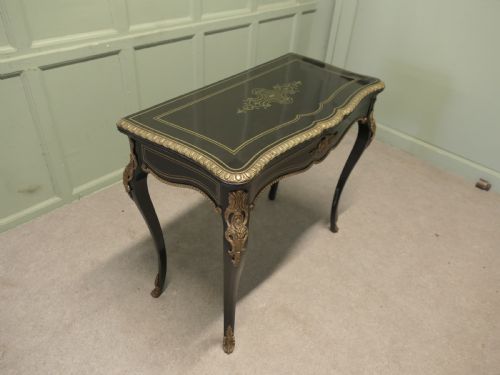
A french ebonised writing table combines nineteenth-century cabinet work with dark wood surfaces, often taking the form of a bureau plat, a games table, or a bonheur du jour. These pieces span periods from the mid-nineteenth century to the Edwardian era, reflecting Napoleon III, Louis XV revival, and Empire styles. The examples found here range from modest side tables to elaborate desks equipped with porcelain plaques and brass inlay.
Buyers will most frequently encounter nineteenth-century pieces showing revivalist influences, particularly Louis XV and Napoleon III designs. These forms vary from freestanding centre tables to tiered writing desks with upper cabinets and drawers. Materials extend beyond plain dark timber to incorporate amboyna, walnut, and tortoiseshell alongside contrasting metal mounts.
Craft and Detail
Quality rests upon the precision of the brass and tortoiseshell inlay, the crispness of the ormolu casting, and the depth of the ebonised finish. Finer tables demonstrate seamless integration of porcelain plaques and meticulous parquetry, whereas simpler pieces rely on plain dark timber and minimal mounts.
The sophistication of the internal stationery compartments and the execution of the drawer dovetailing separate standard production from master workshop output. Signed pieces by recorded makers exhibit superior handling of bronze mounts and veneer matching across complex curved surfaces.
French Ebonised Writing Table Retail Price Guide 2026
Typical asking prices for french ebonised writing table among the pieces listed under this phrase on Sellingantiques today, from the lower quarter to the upper quarter. They describe what is for sale here now, not the wider market.
Some desks hide secret drawers behind miniature faux book spines, designed to keep private correspondence safe from prying eyes.
JAS Shoolbred·Maison Millet·Paul Sormani·Diehl Paris·Mathieu Befort
The French Ebonised Writing Table Glossary
- Ebonised
- Wood treated to imitate ebony, giving a dense black finish common on nineteenth-century French furniture. This technique provided a uniform dark background for gilt bronze and brass mounts.
- Bonheur du Jour
- A small light writing desk featuring a cabinet or small drawers above the main work surface. These desks often incorporated porcelain plaques and mirrors.
- Ormolu
- Gilt bronze mounts applied to furniture corners, legs, and aprons for decorative effect. The metal is cast and chased before receiving its gold finish.
- Boulle work
- Marquetry technique using brass and tortoiseshell inlaid in intricate patterns, named after the cabinetmaker André-Charles Boulle. This ornamentation defines many mid-nineteenth-century tables.
- Bureau Plat
- A freestanding double-sided writing table with drawers in the frieze. These tables stand away from walls, finished with decorative mounts on all sides.
French Ebonised Writing Table: Frequently Asked Questions
What is a French ebonised writing table?
A French ebonised writing table is a nineteenth-century desk featuring dark finished wood, often decorated with brass inlay, gilt bronze mounts, or porcelain plaques. These pieces range from simple side tables to elaborate writing cabinets.
They reflect historical revival styles such as Louis XV and Napoleon III, designed for domestic correspondence and display.
How do I identify a Napoleon III writing table?
Napoleon III writing tables typically display dense ebonised finishes combined with ormolu mounts, boulle marquetry, or inlaid brass work. They date from the mid to late nineteenth century and draw heavily on earlier royal French aesthetics.
Look for serpentine forms, contrasting tortoiseshell details, and fitted writing compartments beneath hinged or sliding lids.
Where should I place a bonheur du jour?
A bonheur du jour suits a drawing room, study, or bedroom where its compact writing surface and upper compartments can be appreciated. Because many are finished on all sides, they work well positioned away from walls.
Keep them out of direct sunlight to protect the polished ebonised finish and any delicate tortoiseshell or amboyna veneers.
What is the difference between a bureau plat and a bonheur du jour?
A bureau plat is a flat-topped freestanding desk with drawers built into the frieze, designed to be viewed from every angle. A bonheur du jour includes a small cabinet or shelving superstructure above the writing surface.
Both utilise ebonised timber and metal mounts, but the bonheur du jour offers upright storage compartments for stationery.