



French Dressing Chest
A French dressing chest combines practical storage with elegant mirror work, offering a sophisticated centrepiece for the bedroom.
French Dressing Chest
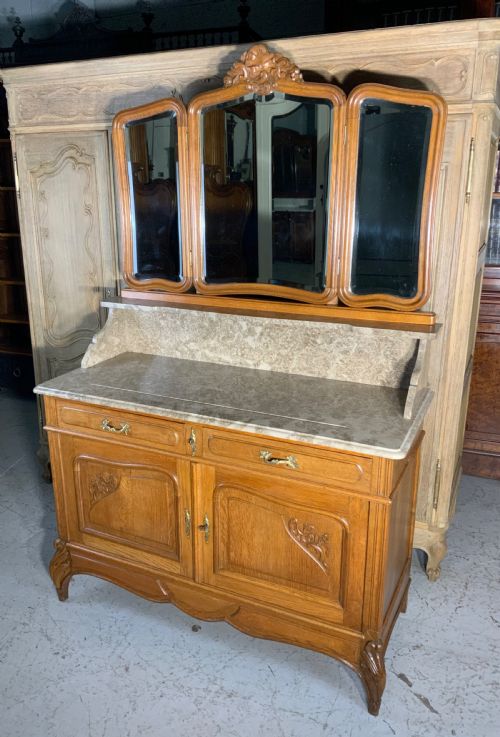
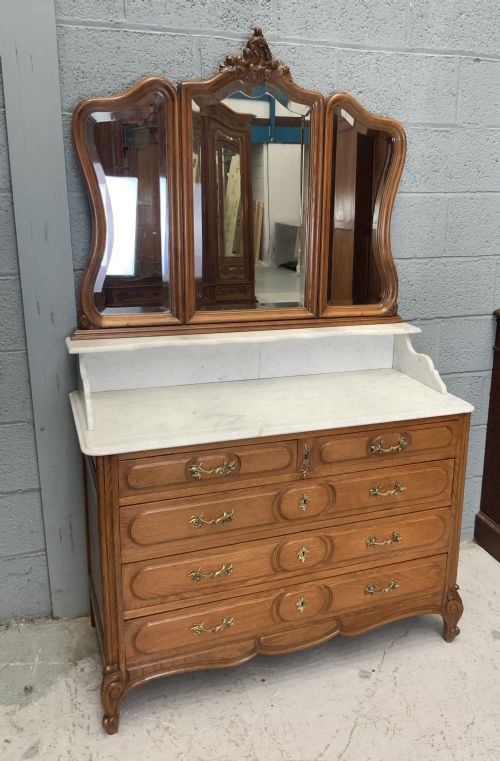
A french dressing chest provides dedicated storage and personal grooming surfaces, uniting the utility of a chest of drawers with the vanity of a dressing table. These pieces span the nineteenth century and the early twentieth century, appearing in forms such as carved oak washstands, mahogany marble-topped commodes, and faux bamboo dressing tables.
The selection ranges from grand nineteenth-century mahogany pieces and Louis XVI style commodes to miniature apprentice chests of drawers. Buyers encounter various interpretations including French Provincial designs, Empire Revival styles, and Victorian Rococo Revival pieces.
Construction and materials
Cabinetmakers utilised dense timbers including mahogany, oak, rosewood, satinwood, and pine to build these chests, often applying intricate carving or brass inlay to the exterior surfaces. Marble tops provide durable and decorative working surfaces on commodes and washstands.
Fitted interiors and secondary woods demonstrate traditional joinery techniques appropriate to the nineteenth and early twentieth centuries. Glass mirrors, often mounted in adjustable frames, complete the structural assembly.
French Dressing Chest Retail Price Guide 2026
Typical asking prices for french dressing chest among the pieces listed under this phrase on Sellingantiques today, from the lower quarter to the upper quarter. They describe what is for sale here now, not the wider market.
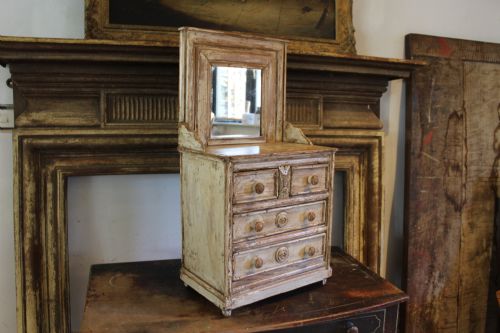
Apprentice chests give us miniature drawers built with full-sized care, perfect for storing tiny secrets.
Judging quality and craftsmanship
Quality rests in the selection of timber figures, such as birds-eye maple or figured mahogany, and the crispness of applied carvings and brass work. Heavier marble tops and solid framing separate substantial case pieces from lighter regional variants.
The integrity of original glass, internal compartment fittings, and surface patination distinguish superior examples from heavily restored or later altered pieces.
The French Dressing Chest Glossary
- Commode
- A low chest of drawers or cabinet, often featuring a marble top in French examples.
- Apprentice chest
- A miniature version of a chest of drawers made by a craftsman to demonstrate skill.
- Washstand
- A piece of furniture designed for personal washing, frequently adapted to hold basins and toiletries.
- Faux bamboo
- Furniture carved or painted to imitate the appearance of natural bamboo stalks, popular during the Victorian era.
- Campaign chest
- Portable furniture designed in sections for travel and military use.
French Dressing Chest: Frequently Asked Questions
What is a french dressing chest?
A french dressing chest is a dual-purpose piece of bedroom furniture that combines drawer storage with a mirror and surface for grooming. These items range from large marble-topped commodes to smaller mirrored chests.
Originating across the nineteenth and early twentieth centuries, they reflect various regional styles including French Provincial, Louis XVI, and Empire Revival.
How do I use one today?
These chests function effectively in modern bedrooms as primary dressing tables or statement storage units. The surface provides space for daily items while the drawers organise garments or accessories.
Marble-topped variants offer resilient surfaces, while mirrored versions help bounce light around smaller rooms.
How do I care for marble tops?
Marble surfaces require prompt wiping of acidic liquids like perfume or water to prevent staining. Gentle soap and water maintain the polished stone without scratching.
Avoid harsh chemical cleaners that can dull the historical finish of the marble.
How do I identify the period?
Dating relies on examining construction materials, joinery techniques, and stylistic markers such as Rococo curves or Louis XVI symmetry. The use of specific woods like rosewood or satinwood alongside brass hardware helps narrow down the decade.
Secondary woods and backboards provide further clues to age and regional origin.