


French Double Sconces
French double sconces bring warmth and formal symmetry to a room, offering twin branches of candle or electric illumination against the wall.
French Double Sconces
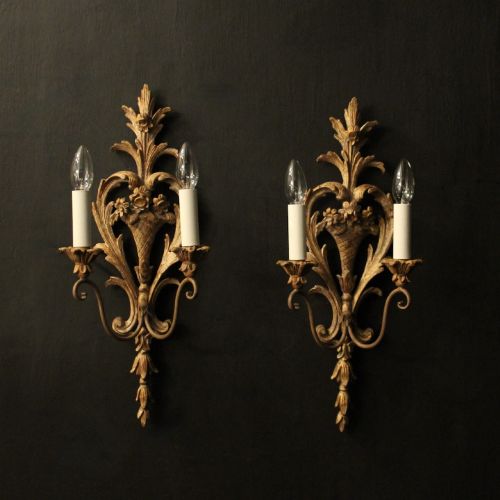
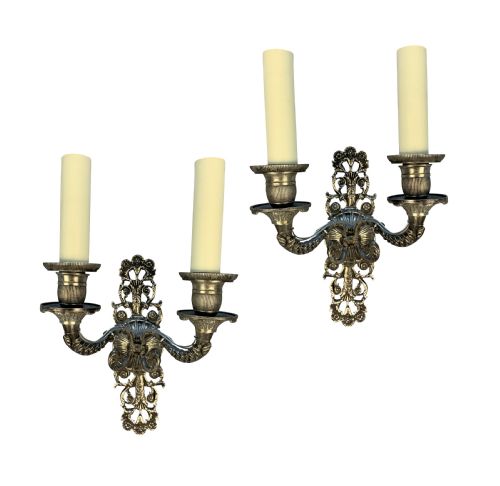
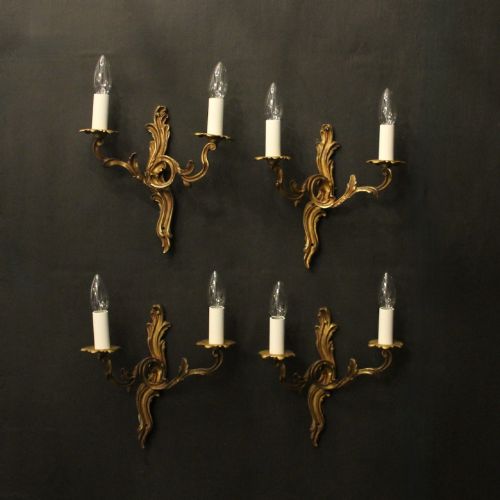
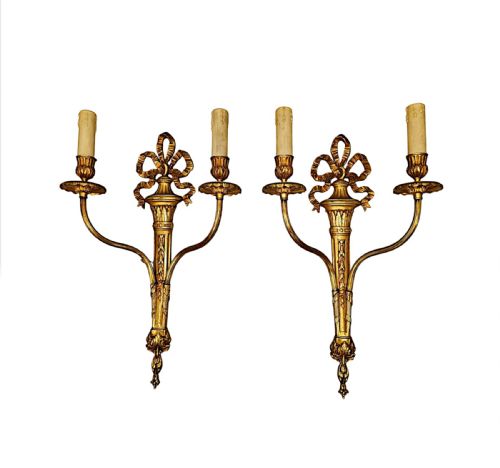
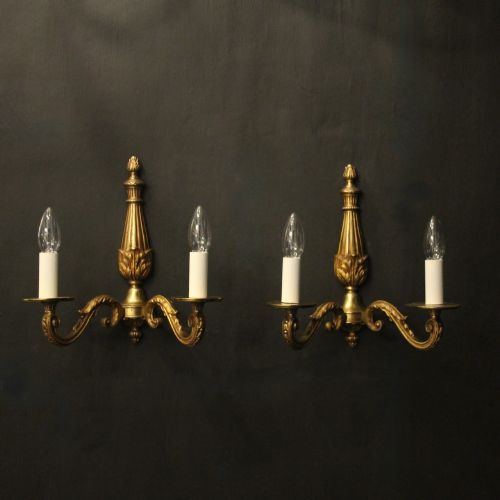
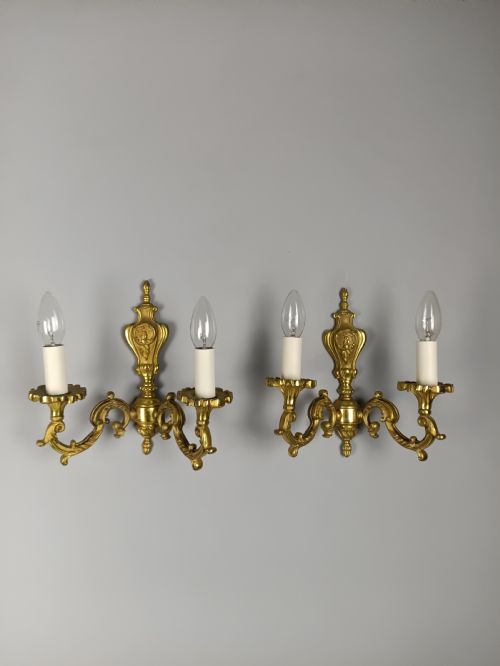
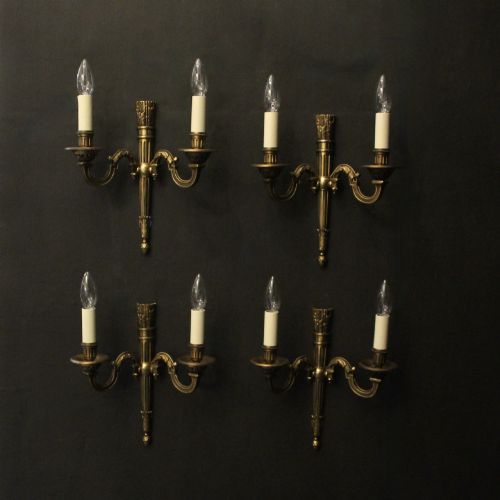
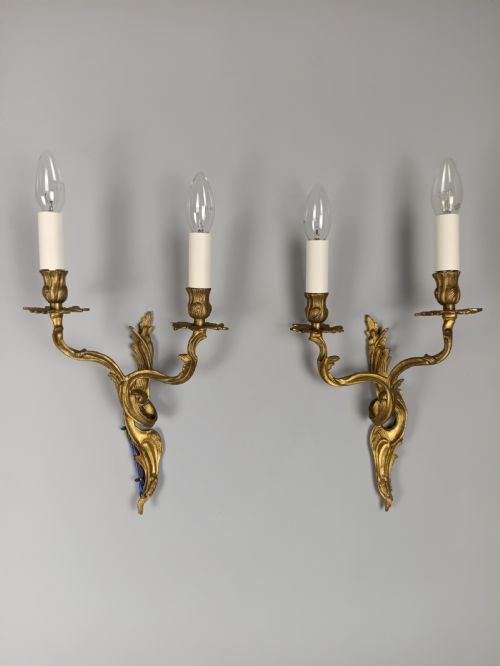
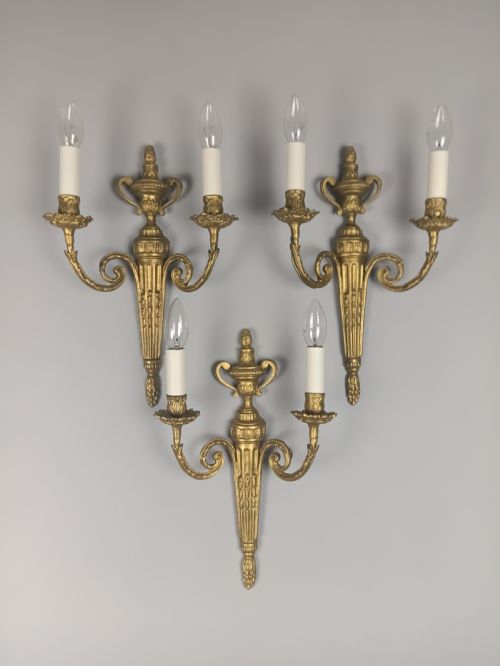
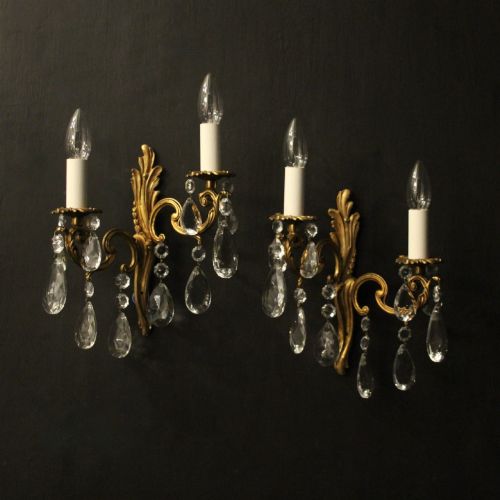
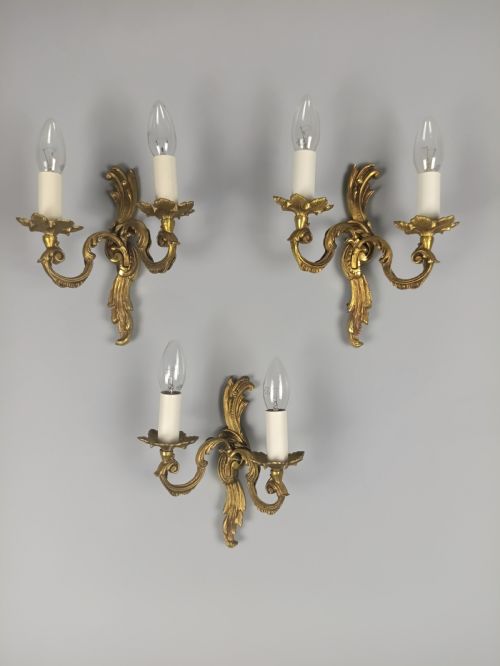
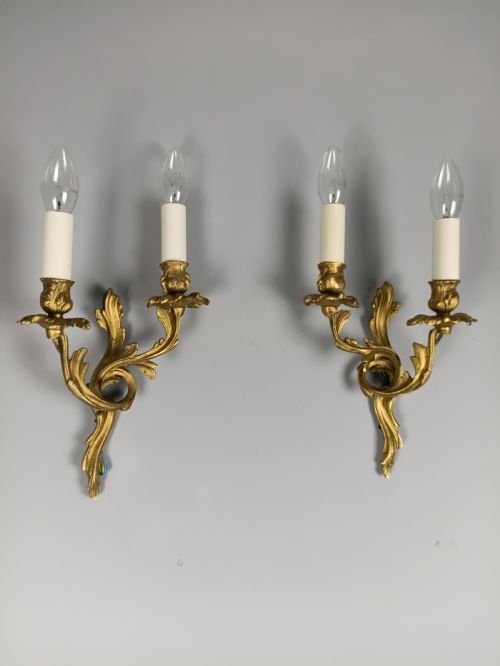
French double sconces are wall-mounted lighting fixtures designed with two arms to hold candles or electrical globes, appearing frequently in pairs or sets of four. When searching for french double sconces, buyers encounter designs spanning the nineteenth and early twentieth centuries, including the nineteen-twenties and nineteen-thirties.
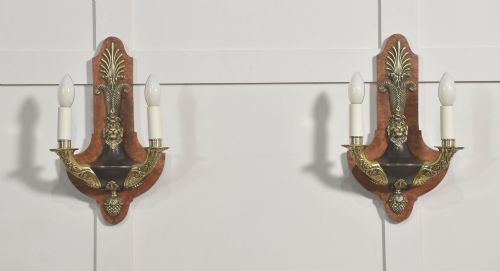
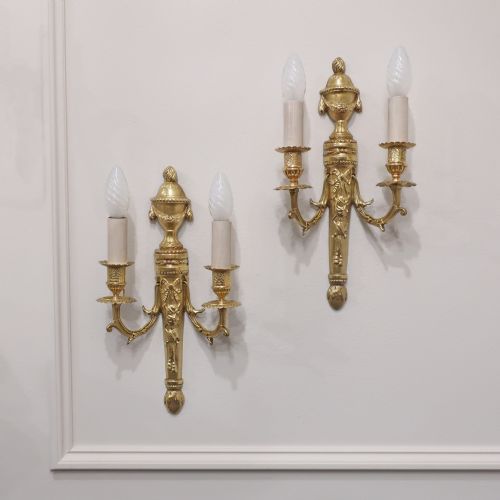
The dominant forms on this page include twin-arm wall lights, two-branch sconces, and double candlesticks adapted for wall suspension. These pieces draw upon established decorative repertoires such as French Rococo, Neoclassical, and Empire styles, originating predominantly from French workshops.
How they were made
Metalworking forms the basis of these pieces, utilising cast bronze, brass, or ormolu alongside silver-plated and silver-gilded surfaces. Many examples apply a layer of gilding over bronze or brass to achieve a reflective, uniform finish.
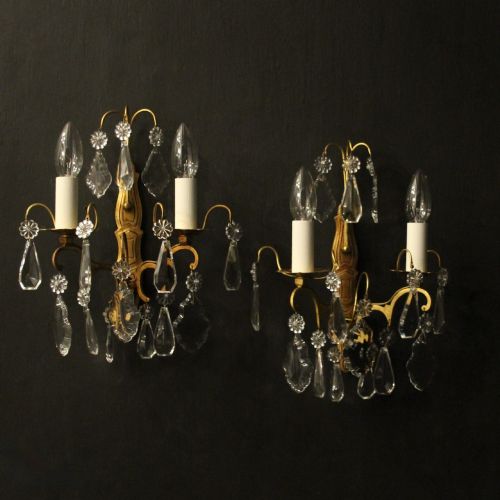
Detailing is achieved through varied secondary elements, incorporating carved wooden frames, crystal drops, burr walnut, and glass components set into the metal armature. Construction methods rely on heavy casting for the backplates and arms, joined securely to support the weight of the twin branches.
French Double Sconces Retail Price Guide 2026
Typical asking prices for french double sconces among the pieces listed under this phrase on Sellingantiques today, from the lower quarter to the upper quarter. They describe what is for sale here now, not the wider market.
Periods represented span the nineteenth century through the 1930s, encompassing Regency, Victorian, and early twentieth-century production.
What varies in quality
Quality reveals itself in the crispness of the casting and the depth of the metalwork, where finely chased details on Rococo scrolls or Empire motifs separate superior pieces from simpler productions. The integrity of the original surface finish, whether aged gilding or patinated bronze, dictates the visual authority of the sconce on the wall.
Construction weight and the solidity of the mounting backplates also distinguish the range, as heavier cast bronze and gilt bronze examples offer greater structural rigidity than lighter brass or alternative metal variants.
Casier
The French Double Sconces Glossary
- Ormolu
- Finely ground high-carat gold applied to a bronze base through a mercury amalgamation process, or simply a term for gilded bronze. This finish creates a rich, warm lustre characteristic of fine decorative metalwork.
- Empire Style
- A neoclassical design movement spanning the early nineteenth century, drawing inspiration from ancient Roman, Greek, and Egyptian motifs. Pieces in this style utilise symmetrical geometry, laurel wreaths, and classical ornaments.
- Rococo Revival
- A nineteenth-century artistic movement reviving the asymmetrical scrolls, C-curves, and naturalistic plant motifs of the eighteenth-century French Rococo period. It produces lively, ornamental backplates for wall lights.
- Twin Arm
- A configuration where a single wall-mounted backplate supports two projecting candle or lamp branches. This layout provides balanced illumination across a wall surface.
- Backplate
- The flat or shaped metal or wooden section that fixes directly to the wall and supports the projecting arms. It serves as the primary decorative anchor for the sconce.
French Double Sconces: Frequently Asked Questions
Where should french double sconces be hung?
These fixtures suit placement flanking a mirror, fireplace, or doorway, where their twin arms create balanced illumination and visual symmetry.
Install them at eye level to ensure the light source sits comfortably and the decorative backplates remain visible within the room scheme.
How do I identify Empire style sconces?
Empire pieces display strict symmetry, classical motifs like urns and laurel wreaths, and formal architectural lines derived from antiquity.
They contrast with the flowing, asymmetrical curves typical of Rococo revival designs found across the same periods.
Were these wall lights originally wired for electricity?
Most examples originating from the nineteenth and early twentieth centuries were originally designed for candles before later conversion to electricity.
Wiring methods vary, so buyers should inspect the backplate channels and fittings to understand how the current electrical components integrate with the antique frame.
What is the difference between gilt bronze and ormolu?
In historical terms, ormolu specifically denotes mercury gilding on bronze, though the two terms are frequently used interchangeably in the antiques trade to describe gold-finished metalwork.
Both finishes provide a durable, decorative metallic surface designed to catch and reflect ambient light in a formal interior.