




French Directoire Desk
A french directoire desk offers clean neoclassical restraint, combining mahogany, brass mounts and leather writing surfaces for a balanced workspace.
French Directoire Desk
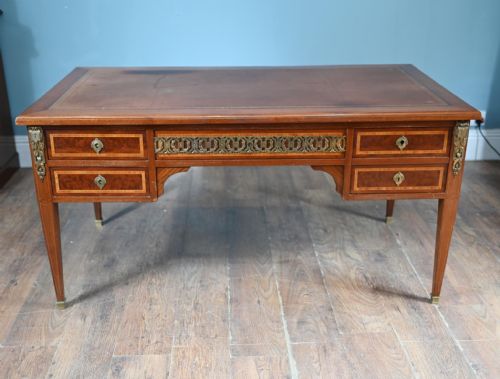
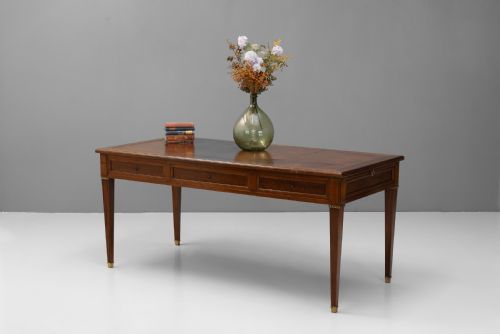
When you search for a french directoire desk, you encounter writing tables, bureau plats and cylinder desks that reflect the transitional neoclassical taste of late eighteenth and nineteenth century France. These pieces range from authentic period examples to later nineteenth century revivals carrying the characteristic straight lines and restrained proportions.
The versions most commonly met on this page include mahogany writing desks fitted with brass mounts and leather inserts, alongside walnut variants built in the same rectilinear spirit. Their forms step away from elaborate rococo curves toward architectural columns, tapering legs and subtle geometric inlay.
Makers and workshops from Paris and the broader French provinces produced these writing surfaces to serve practical domestic needs without sacrificing elegance. Whether configured as a simple bureau plat or a cylinder desk with internal compartments, each piece prioritises functional compartments and stable writing surfaces.
Materials and Construction
Cabinetmakers constructed these desks primarily using solid and veneered mahogany or walnut over sturdy framing timbers. Rich wood grains formed the primary visual field, accented by contrasting stringing and brass mounts.
Gilding and ormolu details accent key structural points such as sabots, drawer pulls and corner mounts. Leather inserts, often tooled or plain, provide the traditional writing surface set into the wooden top.
French Directoire Desk Retail Price Guide 2026
Typical asking prices for french directoire desk among the pieces listed under this phrase on Sellingantiques today, from the lower quarter to the upper quarter. They describe what is for sale here now, not the wider market.
Listings feature pieces spanning the late eighteenth century through to the early twentieth century, utilising mahogany, walnut, ormolu and brass.
Judging Quality and Execution
The standard of timber selection and veneer matching defines the baseline of a desk's appeal. Superior examples employ finely figured mahogany or walnut with harmonious grain patterns across the top and drawer fronts.
The crispness of the ormolu mounts and the precision of the brass inlay distinguish finer pieces from standard production. Well-executed joinery ensures drawers run smoothly and the frame maintains absolute rigidity over decades of use.
Gamichon A Paris·Sacre
The French Directoire Desk Glossary
- Bureau Plat
- A freestanding writing table fitted with one or more drawers across the frieze. This form stands away from the wall and displays finished woodwork on all sides.
- Ormolu
- Gilded bronze ornamentation applied to furniture mounts and decorative hardware. The technique involves mercury gilding on historical pieces to create a lasting metallic lustre.
- Sabot
- A metal sleeve fitted to the foot of a furniture leg. It protects the lower wood from damage and adds a decorative termination to tapering legs.
- Cylinder Desk
- A writing desk featuring a quarter-cylinder rolling shutter that encloses drawers and pigeonholes. It conceals the writing surface when not in use.
French Directoire Desk: Frequently Asked Questions
How do I identify a Directoire desk?
Look for straight, tapering legs, restrained neoclassical brass mounts and rectilinear proportions rather than curved rococo shapes. The design sits between Louis XVI and Empire styles, favouring geometric simplicity.
Mahogany and walnut woods dominate these pieces, often paired with inset leather writing surfaces and subtle stringing inlay.
Were these desks used for writing?
These pieces served as functional writing tables and workspaces for correspondence and administration in studies or salons. Drawers provided storage for paper, ink and quills.
Cylinder desks and bureau plats offered secure storage behind locking shutters or frieze drawers while maintaining a polished appearance in formal rooms.
How do I care for the leather top?
Maintain the leather insert by dusting gently and applying a suitable leather balsam periodically to prevent cracking. Avoid placing hot cups or liquids directly on the surface.
Protect the surrounding mahogany or walnut woodwork with traditional beeswax polish, applied sparingly and buffed to a soft sheen.
Are nineteenth-century copies common?
Revival pieces built during the late nineteenth century appear frequently alongside pieces from around eighteen hundred. Cabinetmakers continued producing furniture in the Directoire style to meet steady demand for neoclassical design.
Construction methods and timber characteristics help differentiate original period items from later interpretations.