


French Deco Globe Lamp
A French deco globe lamp brings striking geometric form and warm illumination into a room, capturing the distinct design spirit of the interwar period.
French Deco Globe Lamp
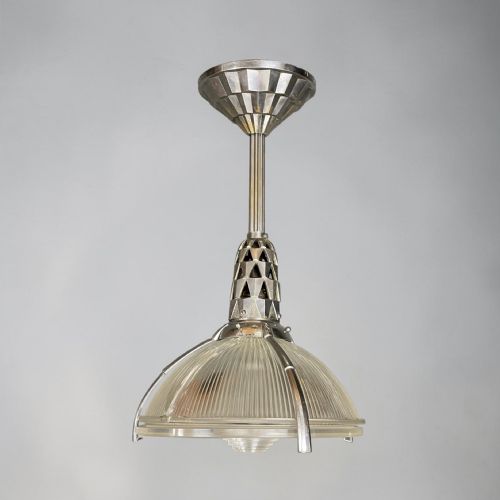
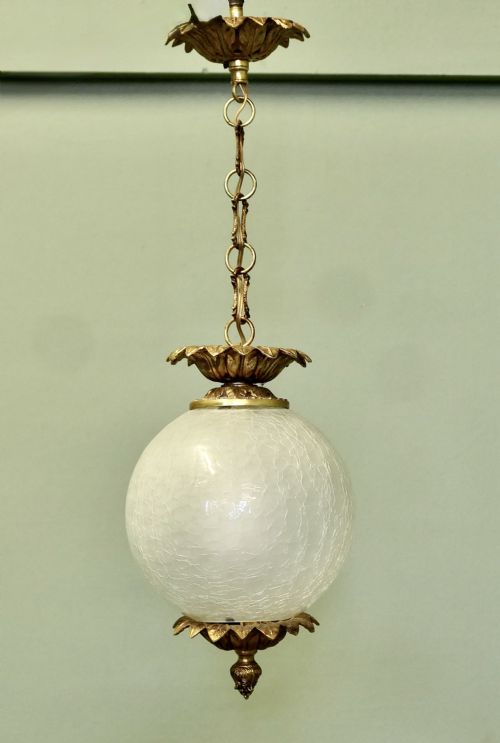
When you search for a french deco globe lamp, you are looking at lighting fixtures defined by the bold geometry and streamlined aesthetics of the 1920 and 1930 periods. These pieces range from substantial table lamps featuring spherical or domed shades to hanging pendant lights designed to anchor a room.
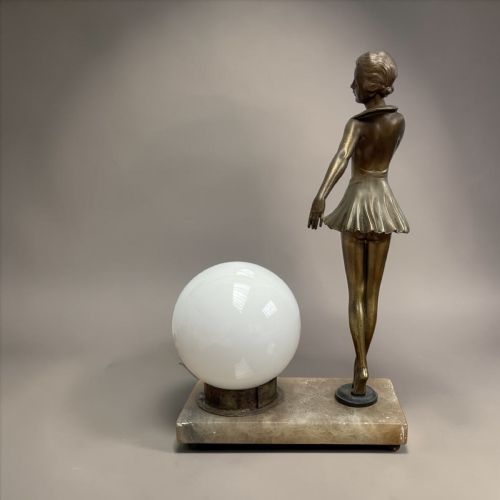
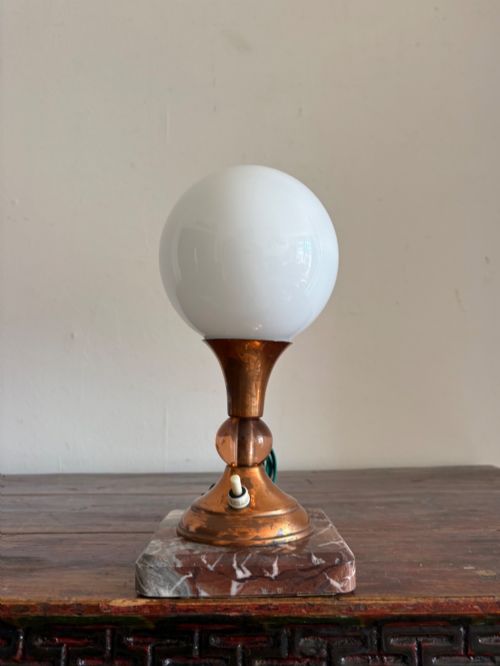
The versions you are most likely to meet on this page combine functional illumination with figurative or architectural bases. Many examples pair glowing glass globes with metal and marble supports, showing the characteristic French Art Deco taste for contrasting textures.
Object types stretch beyond standard table lighting to include ceiling lights, night lights, and pendant lighting. Figures such as animals or human characters frequently accompany the marble bases, grounding the glowing globe in sculptural form.
Materials and Construction
Makers constructed these lamps using heavy minerals and mixed metals to create stable, enduring bases. Marble, granite, brass, bronze, copper, chrome, and spelter provide the structural weight beneath the glass elements.
The illumination relies heavily on specialist glass treatments characteristic of the era. Frosted glass, opaline, crackle glass, and etched crystal diffuse the light to create a soft, atmospheric glow from the globes and shades.
Materials span marble, glass, bronze, spelter, crackle glass, brass, chrome, and frosted glass.
Assessing Quality and Execution
The refinement of the figural elements and the choice of base materials set the finer examples apart. Heavier marble foundations combined with detailed bronze or brass components indicate a higher standard of manufacture.
The quality of the glass shade dictates much of the visual impact. Etched crystal, mottled opaline, and crackle glass display superior craftsmanship compared to standard plain glass configurations.
Émile-Jacques Ruhlmann
The French Deco Globe Lamp Glossary
- Spelter
- A zinc alloy commonly used as a cost-effective substitute for bronze in decorative metalwork. It frequently appears on figural lamp bases finished to resemble darker metals.
- Opaline glass
- A type of semi-translucent glass that diffuses light evenly across the surface. It is often found in white or tinted variants on period shades.
- Crackleglass
- Glass deliberately subjected to thermal shock during production to create a web of internal fractures. This technique adds distinctive texture and pattern to the lamp globe.
- Night light
- A smaller form of decorative domestic lighting designed for low-level illumination. These pieces often feature figurative animal or human subjects mounted beside a small glowing globe.
French Deco Globe Lamp: Frequently Asked Questions
How do I identify a 1920s lamp?
Pieces from the 1920s frequently exhibit distinct early Art Deco styling, often combining geometric metalwork with patterned glass shades or figurative spelter elements.
Examining the construction methods and the specific mix of materials, such as bronze paired with marble bases, helps distinguish these earlier creations from later decades.
What materials make up the base?
Bases are constructed from a variety of heavy materials designed to anchor the weight of the glass globes. Common foundations include polished marble, granite, brass, bronze, copper, and chrome.
Figurative elements mounted on these bases are frequently cast in bronze or spelter, depicting human figures or animals.
Where should I place a night light?
These smaller decorative lamps suit spaces requiring soft, ambient illumination rather than direct task lighting. They work well on bedside tables, sideboards, or low shelves.
The compact form allows the glowing globe and sculptural figures to be appreciated up close in a quiet room.
How does frosted glass affect light?
Frosted and opaline glass treatments diffuse the bulb's output to eliminate harsh glare. This creates a warm, even radiance characteristic of period French lighting.
The treated surface softens the overall aesthetic while highlighting the geometric form of the globe.