
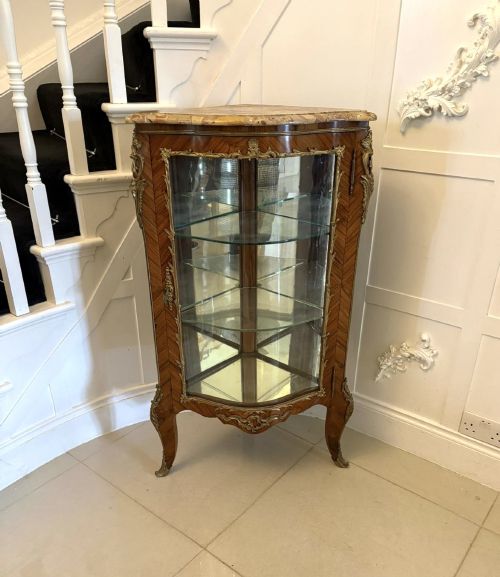
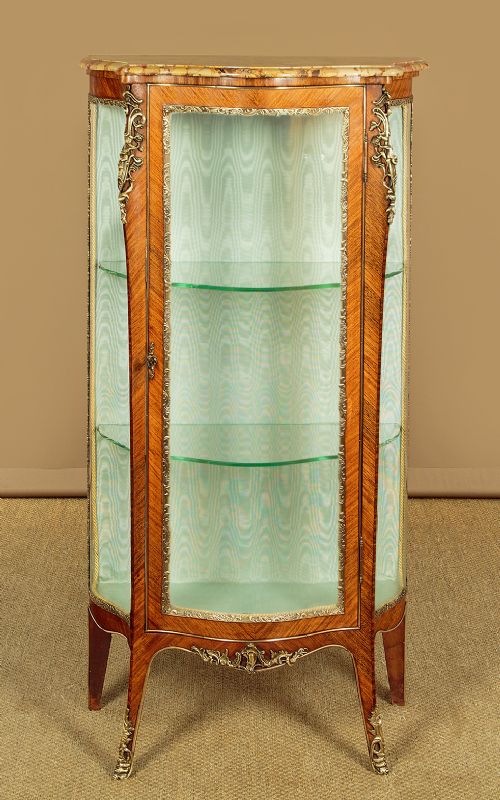

French Curved Cabinet
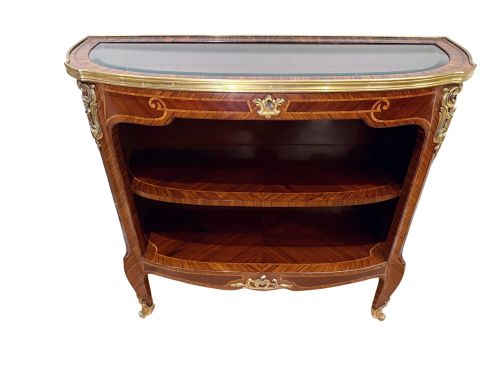
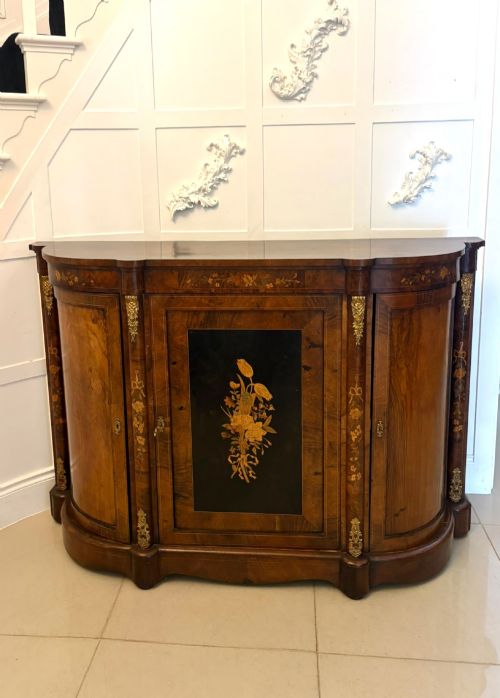
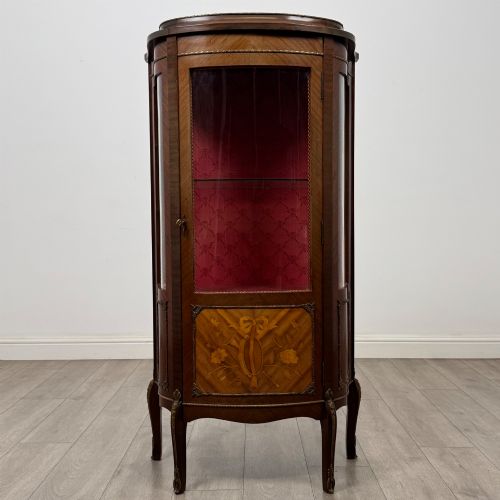
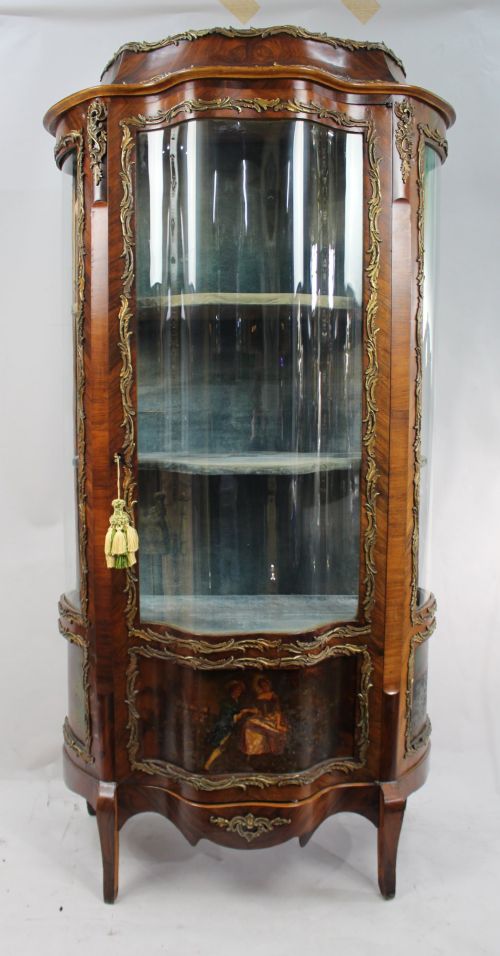
A french curved cabinet brings sweeping lines and rich veneers into a room, offering display space wrapped in shaped timber and mounts.
French Curved Cabinet
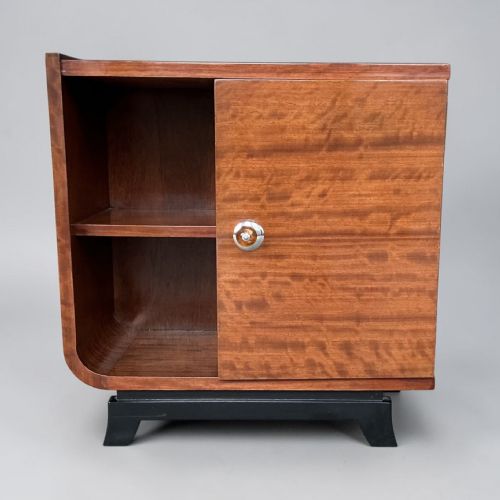
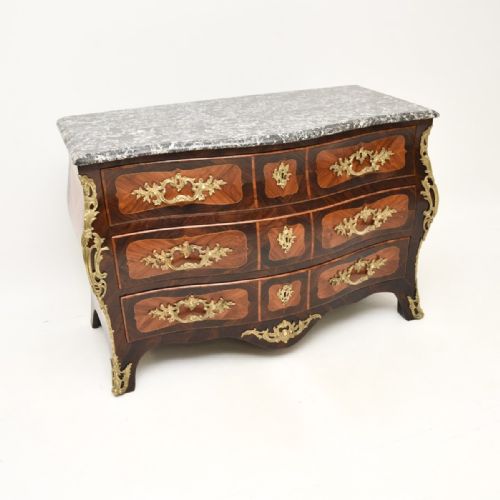
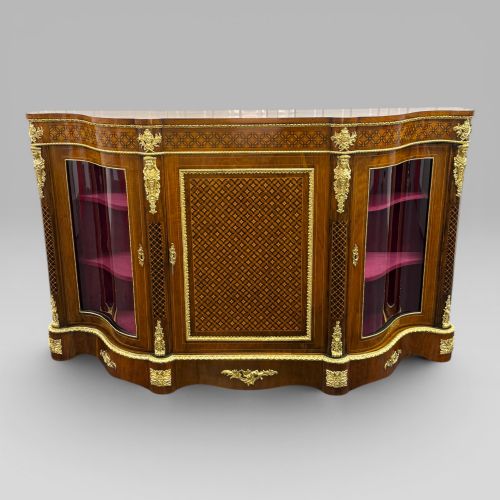
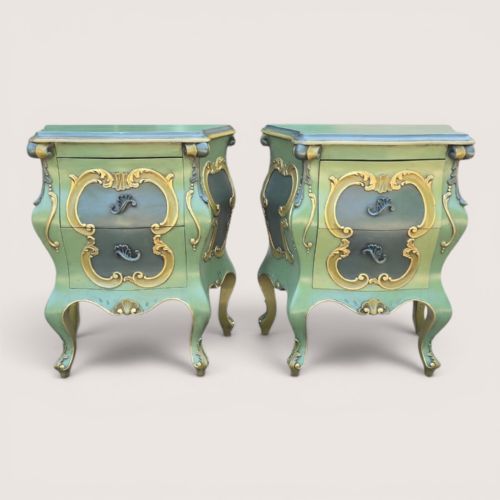
Nineteenth-century examples frequently combine walnut, kingwood, or burr walnut with marble tops and cast ormolu mounts, leaning heavily into Louis XV and Rococo revivals. Twentieth-century alternatives appear more restrained, utilising art deco lines or simpler painted finishes while retaining the characteristic curved silhouette.
How they were made
Cabinetmakers constructed these pieces using dense hardwoods like mahogany, walnut, and kingwood as foundations for intricate marquetry and veneering. Curved surfaces required steaming and laminating timber carefully to maintain the sweeping shapes demanded by revival styles.
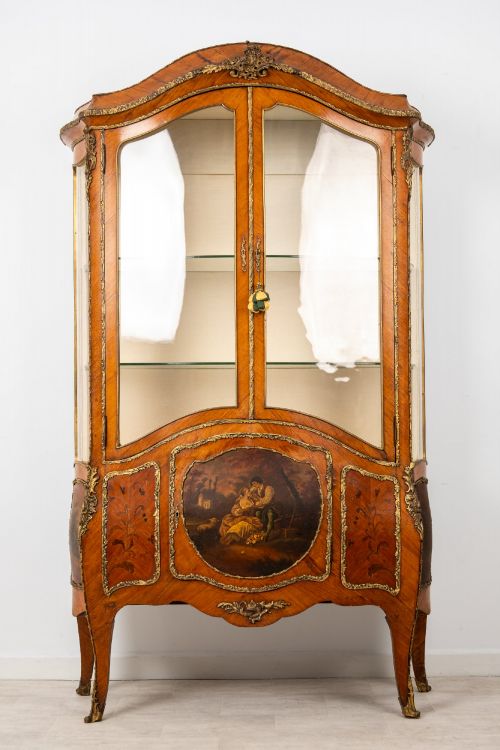
Gilded bronze ormolu mounts were cast and chased to accent the corners, feet, and friezes, whilst marble slabs were cut and polished to fit exact serpentine or bowed top profiles. Vernis Martin panels and glazed doors completed the construction, combining translucent varnishes with intricate painted scenes.
Periods represented span from the mid-nineteenth century through to art deco designs of the nineteen-thirties.
What varies in quality
The distinction between standard and exceptional pieces rests in the handling of the curved timber and the crispness of the cast mounts. Finer examples display seamless veneer matching across difficult bowed surfaces, where grain patterns flow naturally around bends without buckling.
The weight, depth of chasing, and secure attachment of ormolu elements separate workshop standards, as do the thickness and natural figuring of the fitted marble tops. Superior cabinetry conceals its joinery while maintaining structural rigidity across sweeping serpentine frames.
Jacques Bircklé·Maison Gagneau·Paul Sormani
The French Curved Cabinet Glossary
- Ormolu
- Gilded bronze mounts cast and finished by hand to ornament furniture corners, feet, and friezes. This technique adds metallic contrast to dark wood surfaces.
- Marquetry
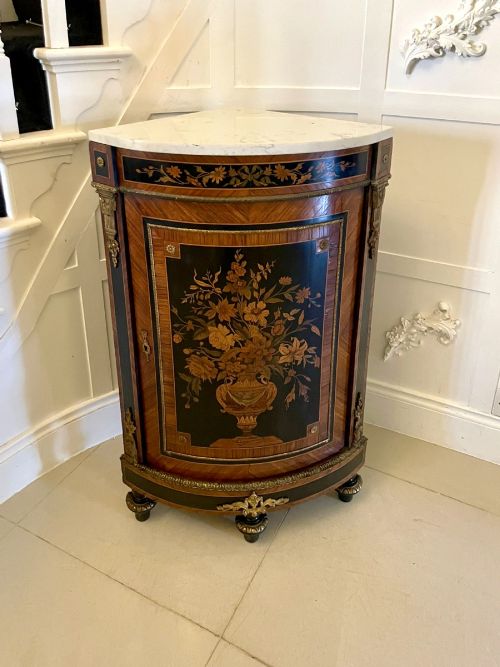
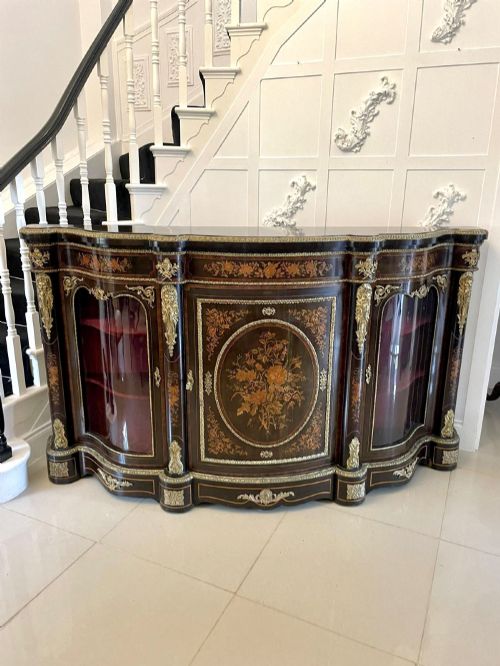
- The art of applying decorative veneer slices in floral or geometric patterns onto a carcass. Craftsmen utilised contrasting timbers to create pictorial designs.
- Serpentine
- A furniture front or top shaped with a double-curved line, curving outward in the centre and inward at the sides. This profile defines many nineteenth-century display pieces.
- Vitrine
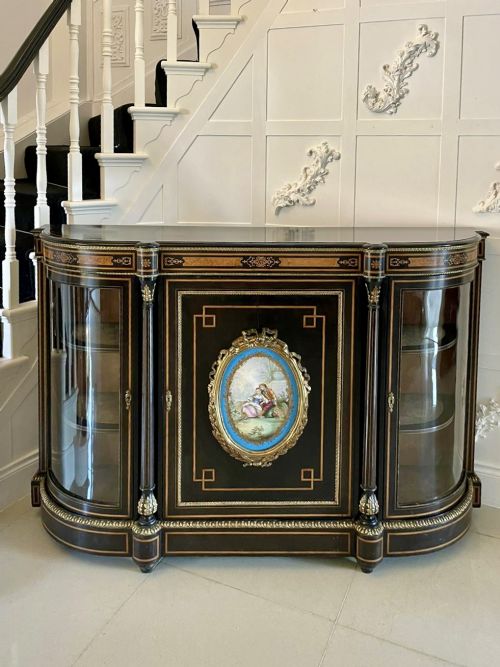
- A glass-fronted display cabinet designed to showcase porcelain, books, or curiosities. These pieces often feature curved side glass to maximise visibility.
- Vernis Martin
- A simulated Japanese lacquer technique developed in the eighteenth century using multiple layers of translucent varnish. It often appears on decorative lower panels of display cabinets.
French Curved Cabinet: Frequently Asked Questions
What rooms suit a curved display cabinet?
These cabinets suit reception rooms, living spaces, or hallways where their bowed glass and polished timber can catch natural light without blocking walkways.
Their curved profiles soften hard architectural corners and provide an elegant focal point against plain walls.
How do I distinguish Louis XV revival from art deco pieces?
Louis XV revival pieces rely on heavy ormolu mounts, floral marquetry, and serpentine marble tops typical of nineteenth-century craftsmanship.
Art deco examples abandon ornamental scrolls in favour of clean, streamlined geometric forms and simpler wood grains.
Are marble tops original to these cabinets?
Most marble tops on nineteenth-century pieces are original, cut precisely to match the serpentine or bowed wooden carcass underneath.
Replacement marble is sometimes fitted if the original top suffered damage, though the edge profile usually reveals its age.
How should I clean the ormolu mounts?
Ormolu mounts require gentle dusting with a soft dry cloth to prevent accumulation of dirt in the recessed chased areas.
Harsh metal polishes must be avoided entirely, as they strip the original fire-gilt finish from the bronze.