


French Crystal Box
These French crystal box pieces are heavy trinket holders, jewellery caskets and liquor sets mounted in bronze or ormolu that bring sparkle and fine metalwork to a room.
French Crystal Box
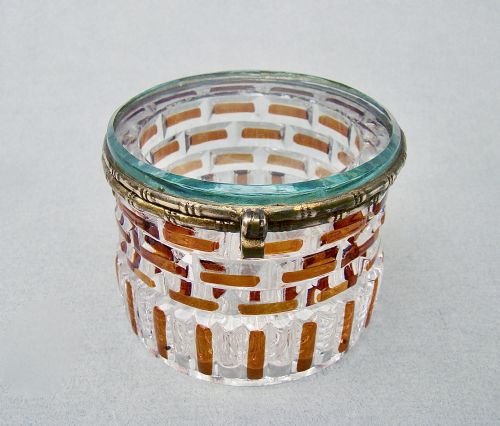
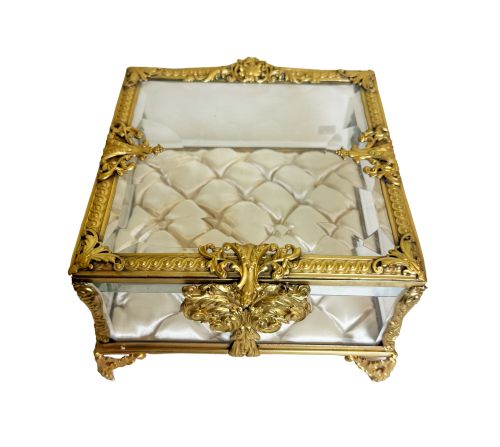
A french crystal box combines heavy glass or lead crystal with cast metal mounts such as ormolu, gilt bronze, brass and silver gilt. These pieces serve as trinket holders, powder boxes, jewellery caskets, scent caskets and tantalus sets for spirits.
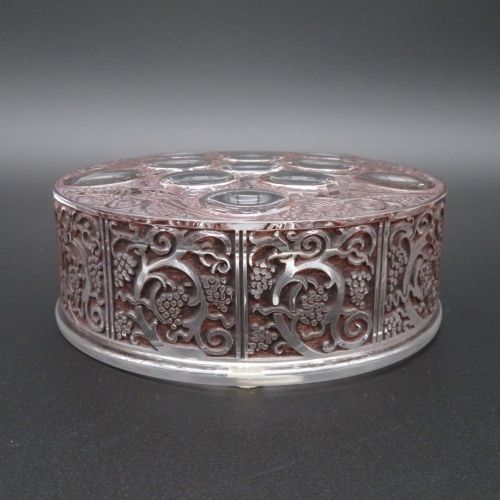
The most frequent examples on this page date from the nineteenth century, including the Napoleon III and Belle Epoque periods, alongside later Art Deco designs. Makers such as Baccarat, Lalique and Daum appear among the glass vessels.
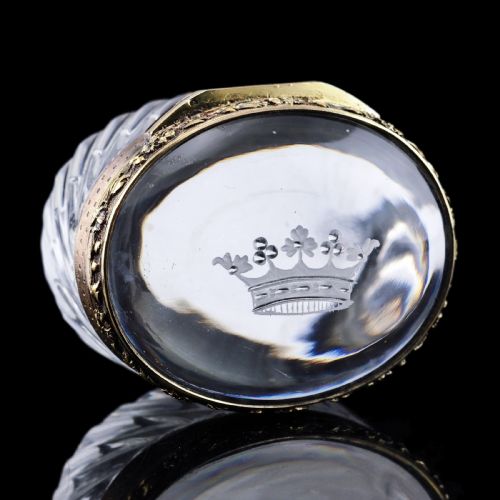
Forms range from simple hinged glass caskets with bronze frames to elaborate figural boxes featuring elephant heads, doves, or coronets. Many house original scent bottles or liquor decanters inside fitted interiors.
Materials and Making
Makers shaped the heavy glass and crystal bodies through moulding, blowing and deep cutting, producing clear, amber, emerald and pâte de verre surfaces. Lead crystal provided the high refractive index and weight characteristic of these vessels.
Metal mounts in ormolu, gilt bronze and brass were cast separately, chased by hand to sharpen the detail, and then secured to the glass edges with pins or hinges.
Several boxes sport cheeky sculpted animal mounts, including a carved elephant head and a pair of emerald glass shells.
Quality and Distinction
Quality rests primarily in the weight and clarity of the crystal and the crispness of the bronze or ormolu casting. Hand-chased mounts with deep relief stand apart from softer, simpler cast frames.
Fitted interiors, complete sets of matching perfume bottles, and signed enamels or painted glass elevate a piece. The integration between the heavy glass vessel and the metal mount determines the overall solidity of the box.
Baccarat·Lalique·Daum France
The French Crystal Box Glossary
- Ormolu
- Gilded bronze used for mounts and decorative frames on nineteenth-century boxes. This technique involves applying a gold amalgam to bronze before heating.
- Cave a Liqueur
- A fitted wooden or glass liquor box housing decanters and glasses. These tantalus sets often feature elaborate ormolu frames and lockable lids.
- Pâte de Verre
- A glass-casting method using powdered glass fused in a kiln. This technique creates a textured, frosted surface with subtle colour gradients.
- Lead Crystal
- Glass containing lead oxide which increases brilliance and weight. This material allows for deep, sharp wheel-cutting.
- Scent Casket
- A decorative box designed to hold perfume bottles. They typically feature interior velvet or silk linings tailored to secure individual glass flasks.
French Crystal Box: Frequently Asked Questions
What were these crystal boxes used for?
These boxes served domestic functions on dressing tables, desks and sideboards. They held jewellery, face powder, small trinkets or sets of perfume bottles.
Larger variations functioned as liquor cabinets, storing decanters and small glasses within secure, locked frames for entertaining guests.
How do I date a french crystal box?
Dating relies on stylistic markers from periods such as Charles X, Napoleon III, Belle Epoque and Art Deco. Heavy ormolu mounts and specific glass cutting styles point towards the nineteenth century.
Makers' marks, etched signatures on the glass or painted initials on enamel insets offer further chronological clues for specific pieces.
Are the perfume bottles inside usually original?
Many surviving caskets retain their matching set of glass perfume bottles, fitted neatly into internal trays. These bottles often share the cut patterns or stoppers of the main box.
Replacements do occur over time due to breakage, so checking the fit and glass colour helps determine if the set is complete.
How should I clean the metal mounts?
Ormolu and gilt bronze mounts require gentle dusting with a soft dry cloth to protect the underlying gold layer. Moisture and abrasive cleaners will damage the historical surface.
The crystal glass components can be washed separately with mild soapy water if removed from fragile frames.