






Crystal Powder Jar
A crystal powder jar brings elegance to a dressing table, housing cosmetic dust beneath gleaming precious metal and heavy glass.
Crystal Powder Jar
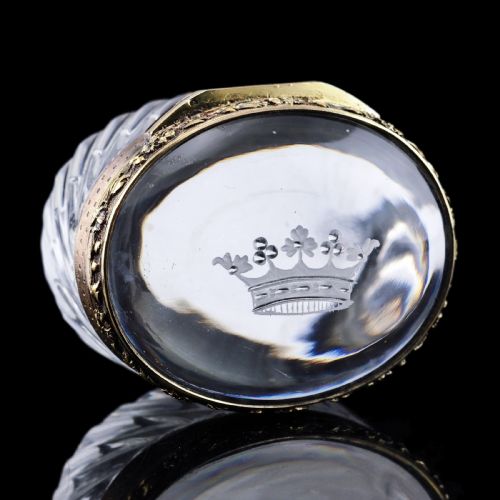
A crystal powder jar combines a lidded glass or crystal container with mounts of sterling silver, silver gilt, or enamel. These vanity pieces served dressing tables for holding loose cosmetics and trinkets during the nineteenth and twentieth centuries.
The pieces appearing on this page span several distinct eras, from Victorian and Edwardian examples to Art Deco and mid-century designs. Collectors encounter French nineteenth-century mountings alongside English sterling silver lids and German silverwork.
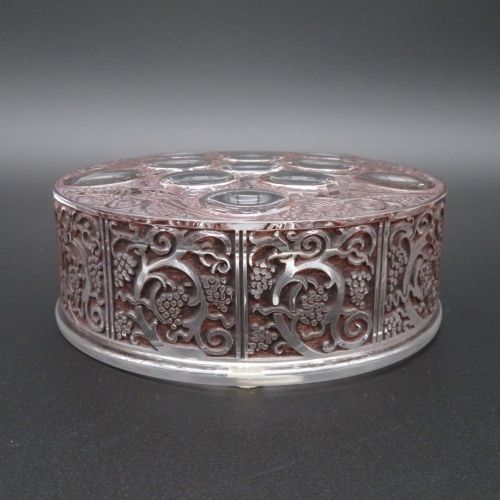
Forms vary from circular powder boxes and heart-shaped receptacles to dressing table jars and lidded bowls. Many incorporate blue enamel, frosted glass, or tortoiseshell accents upon cut crystal bases.
Materials and construction
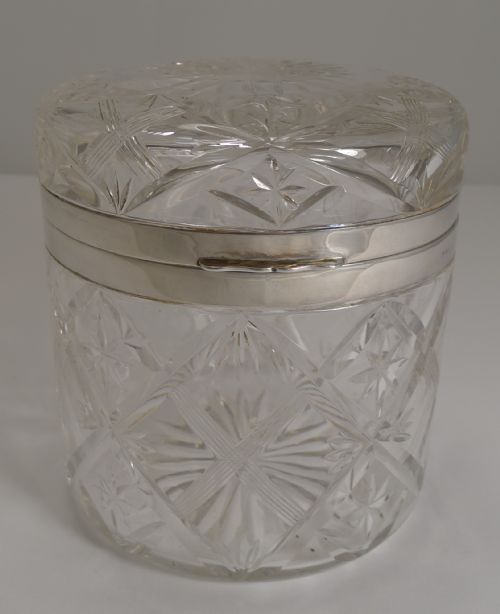
Cutter artisans shaped heavy lead glass and crystal through wheel-cutting, creating deep facets and geometric patterns that catch the light. These robust glass bodies provide a heavy foundation for metal lids.
Silversmiths formed matching mounts, hinged collars, and decorative tops from sterling silver and silver gilt, frequently applying vitreous enamel in shades of blue. Some examples integrate tortoiseshell panels set directly into the silver lid.
Crystal Powder Jar Retail Price Guide 2026
Typical asking prices for crystal powder jar among the pieces listed under this phrase on Sellingantiques today, from the lower quarter to the upper quarter. They describe what is for sale here now, not the wider market.
Object forms span circular powder boxes, heart-shaped trinket receptacles, and lidded vanity jars with tortoiseshell accents.
Evaluating craftsmanship
Quality rests upon the depth and crispness of the glass cutting, alongside the weight and purity of the silver mounts. Finer pieces display flawless crystal facets and substantial metalwork that fits the glass rim precisely.
The intricacy of the enamel work and the presence of maker marks or hallmarks distinguish standard production from exceptional examples. Intact hinges and undamaged enamel surfaces elevate the standing of an individual piece.
Posen of Frankfurt and Berlin·Lalique
The Crystal Powder Jar Glossary
- Cut crystal
- High-clarity glass containing lead oxide, shaped by grinding and polishing geometric patterns across the surface. This technique adds considerable weight and brilliance to the object.
- Silver gilt
- Sterling silver that has been coated with a thin layer of gold, providing a warm golden finish to the metal mounts. This treatment appears frequently on nineteenth-century French pieces.
- Sterling silver
- An alloy consisting of ninety-two point five percent silver by mass, standard for British and international decorative vanity items. Hallmarks stamped into the metal indicate the assay office and year.
- Vanity jar
- A container designed for a dressing table to hold powders, creams, or small accessories. These vessels combine decorative appeal with practical storage.
Crystal Powder Jar: Frequently Asked Questions
What were crystal powder jars used for?
These vessels held loose face powder and cosmetic preparations on dressing tables before the advent of modern compacts. Owners used powder puffs to apply cosmetic dust during daily grooming routines.
Today, they serve as decorative containers for modern vanity items, jewellery, or small keepsakes while adding period character to a room.
How do I date an antique jar?
Hallmarks stamped on the silver mounts provide the most reliable dating evidence, indicating the assay office and year of manufacture. Stylistic indicators, such as geometric Art Deco lines or ornate Edwardian scrollwork, also point to specific decades.
Glass cutting styles and manufacturing techniques help corroborate the era, distinguishing nineteenth-century French work from later twentieth-century productions.
Are these jars fragile?
The heavy cut crystal and solid silver mounts make these pieces surprisingly durable for daily use. However, the deep glass facets and protruding metal rims remain vulnerable to sharp impacts.
Enamel sections and tortoiseshell inlays require careful handling to prevent scratching or chipping during cleaning.
How should I clean silver mounts?
Silver mounts benefit from gentle polishing with a dedicated cloth to remove tarnish without touching the surrounding crystal or enamel. Polishing pastes should be kept away from glass crevices and enamel surfaces.
Glass bases can be washed in warm soapy water and dried thoroughly before replacing the silver lid.