




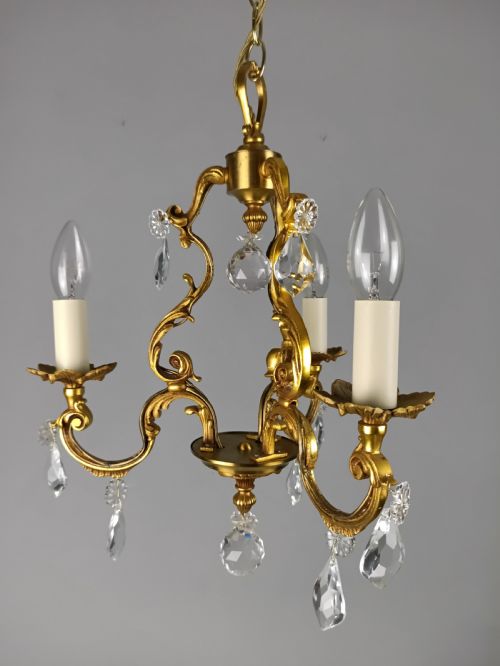


French Country Light Fitting
These french country light fitting selections bring genuine domestic character and period illumination to interiors through classic iron, crystal, and bronze forms.
French Country Light Fitting
A french country light fitting encompasses historic chandeliers and table lamps originating from France across the nineteenth and early twentieth centuries. Buyers encounter diverse regional and formal interpretations ranging from provincial ironwork to gilded chateau fixtures.
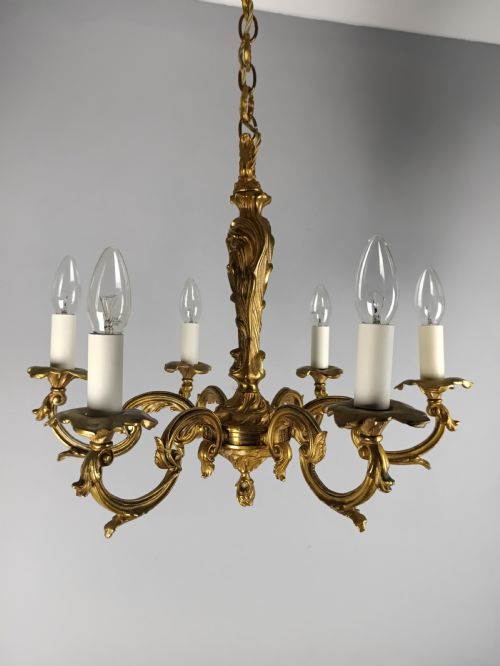
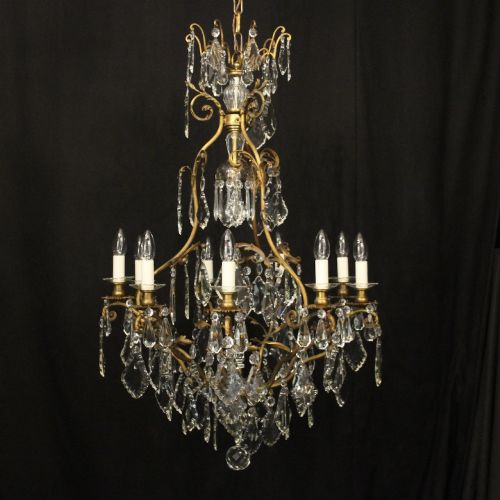
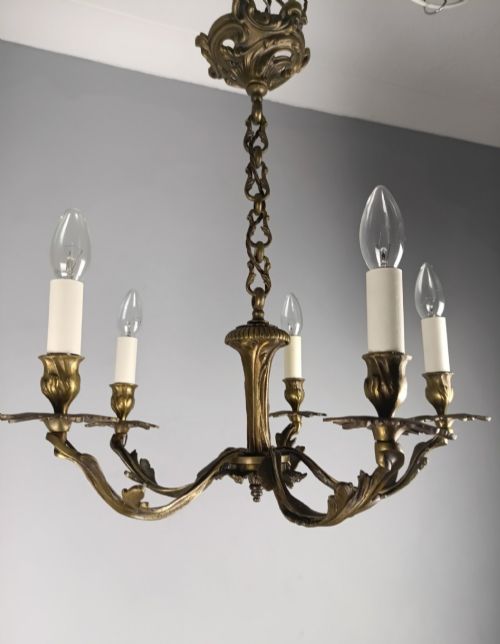
The selections on this page are predominantly multi-arm chandeliers spanning the Edwardian era back to the nineteenth century. These fixtures rely on glass drops, polychrome elements, and metal frameworks to define domestic spaces.
Materials and Construction
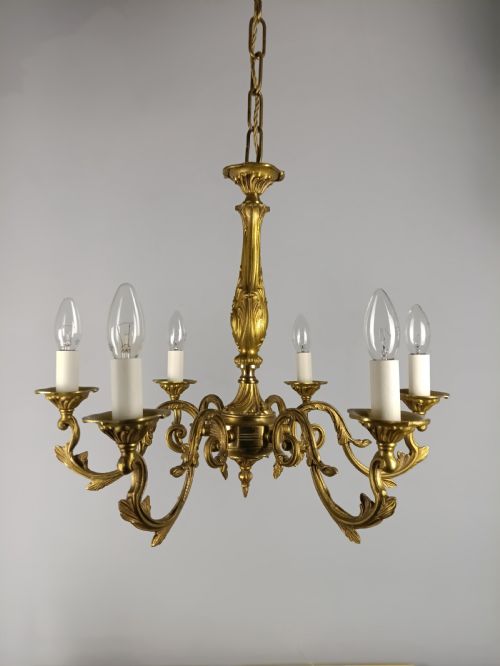
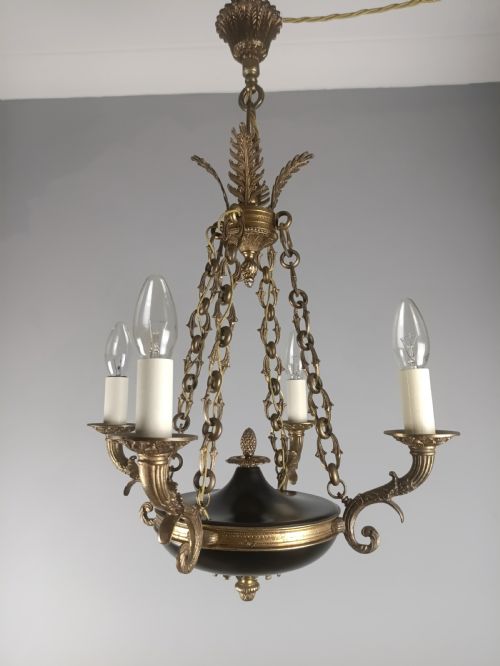
Metalwork forms the structural backbone of these fixtures, utilising cast bronze, brass, wrought iron, and painted steel. Artisans shaped these metals into branching arms and supportive frames designed to carry multiple lights.
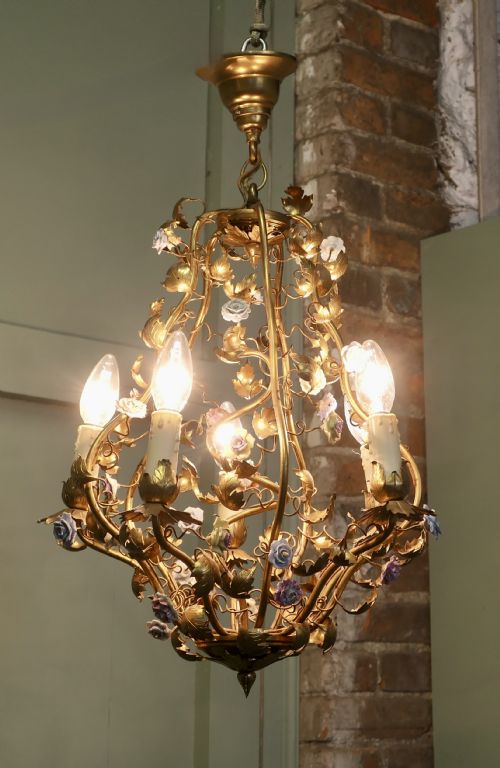
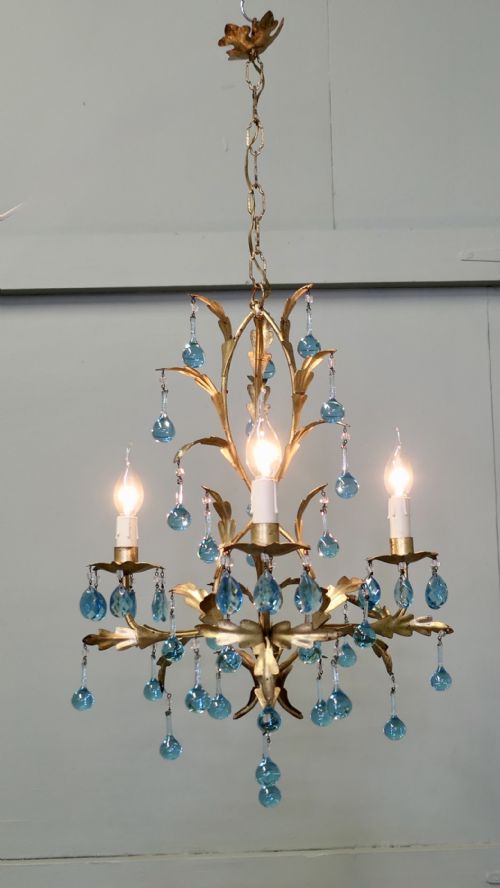
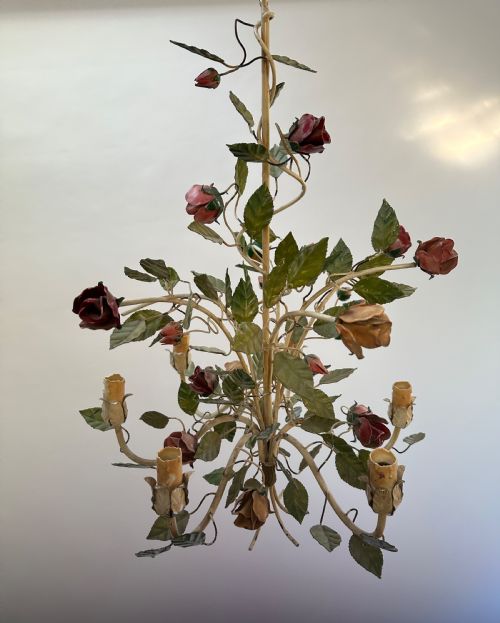
Glass and crystal components complete the assembly through drops, fruit motifs, and faceted pendants. Gilt finishes and polychrome toleware ceramic flowers add decorative surface detail to the underlying metal structures.
Coloured crystal fruits including grapes, apples, and pears dangle playfully from certain nineteenth-century iron branches.
Assessing Quality and Execution
Quality reveals itself in the fineness of the metal casting and the complexity of the arm configurations. Heavier bronze and detailed brass work reflect superior craftsmanship compared to simpler steel or iron fabrication.
The integration of decorative elements such as hand-cut crystal drops, ceramic flowers, and polychrome finishes determines the refinement of a piece. Finer examples maintain cohesive decorative schemes across all branching arms and suspension components.
The French Country Light Fitting Glossary
- Toleware
- Painted or lacquered sheet metal often shaped into floral or decorative components. It introduces vibrant colour and organic forms to lighting fixtures.
- Cage Chandelier
- An open metal framework enclosing central lights and decorated with hanging crystal drops. This classic silhouette defines many nineteenth-century designs.
- Gilt Bronze
- Bronze metal coated with a thin layer of gold or gold-coloured alloy. This technique provides a lasting lustrous finish that resists tarnishing.
- Polychrome
- The practice of decorating surfaces in multiple colours. It appears frequently on painted metal and ceramic floral elements.
French Country Light Fitting: Frequently Asked Questions
How do I hang a heavy chandelier safely?
Suspension requires securing the fixture directly into ceiling joists using rated hardware rather than relying on standard plaster or lightweight electrical boxes. Professional installation ensures the weight of multi-arm bronze or iron pieces is properly supported.
Electrical wiring must also be inspected and adapted to meet modern safety standards while preserving the historic appearance of the metal frame and arms.
What rooms suit a multi-arm chandelier?
Larger multi-arm fixtures suit dining rooms, high-ceilinged hallways, and spacious living areas where their width and drop can be fully appreciated. Smaller versions fit comfortably in bedrooms or intimate sitting spaces.
Placement should account for ceiling height to ensure adequate clearance beneath the lowest hanging crystal drops or metal components.
How should I clean antique glass and crystal?
Delicate crystal drops and glass components benefit from careful hand cleaning with a mild soap solution and a soft cloth. Removing individual drops allows for thorough washing without stressing the surrounding metal arms.
Harsh chemical cleaners must be avoided to protect the underlying gilt finishes, brass surfaces, and painted polychrome details.
Can I use modern LED bulbs in these fittings?
Modern low-wattage LED bulbs compatible with traditional candle-style sockets work well in these historic fixtures. They reduce heat output, which helps protect antique wiring, paint, and fragile crystal elements.
Selecting warm colour temperatures preserves the ambient historic glow originally intended by the makers.