




French Country Kitchen Island
These french country kitchen island options are practical utility tables and workbenches brought from European workshops into domestic cooking spaces.
French Country Kitchen Island
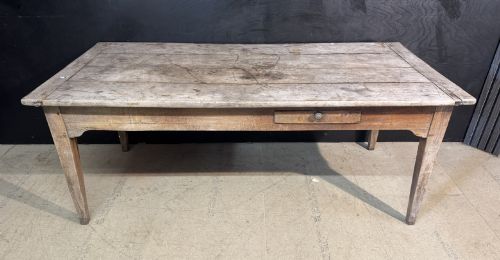
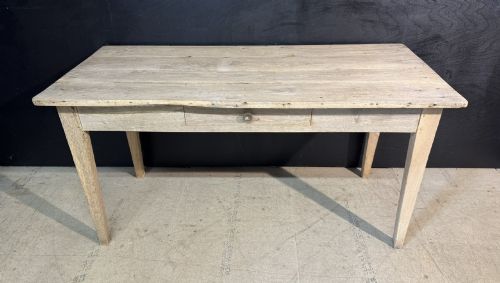
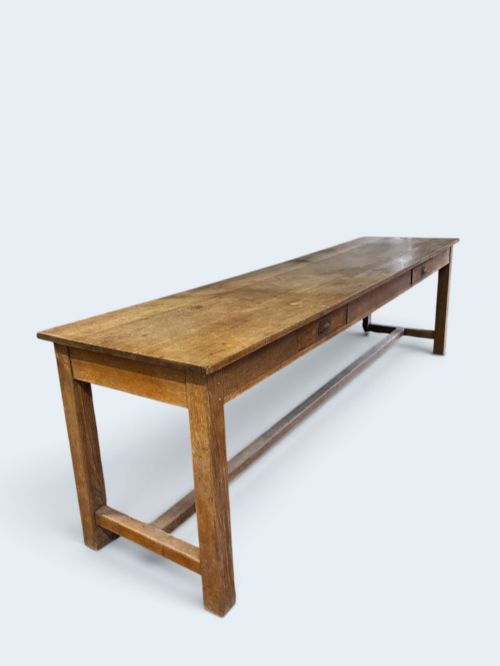
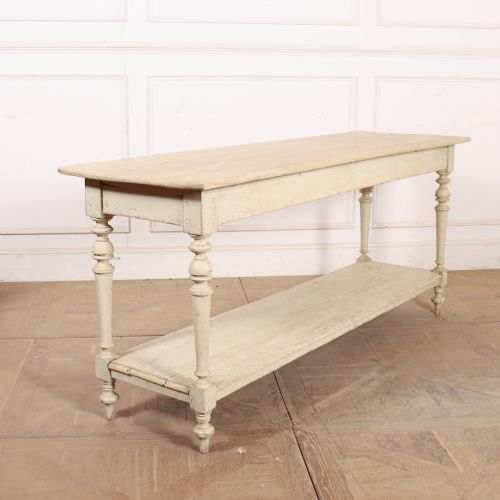
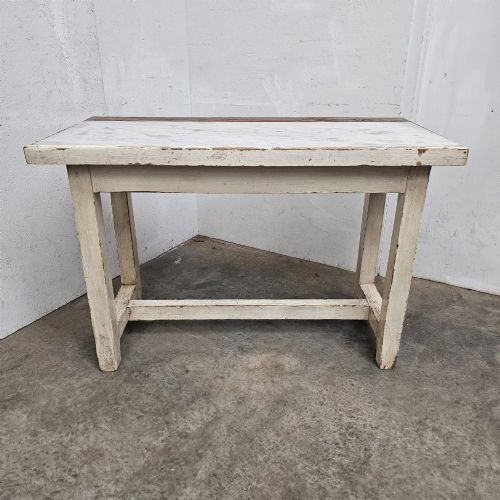
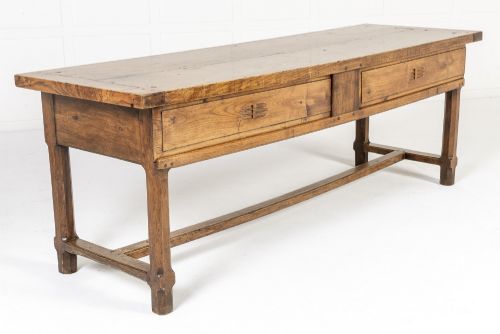
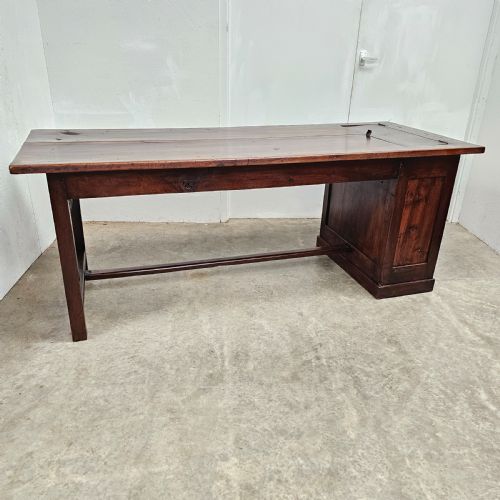
A french country kitchen island usually takes the form of a drapers table, prep table, or heavy workbench built for hard labour in domestic and commercial settings. You will frequently encounter long timber boards, pot shelves, and occasional marble or chopping block surfaces across the selection.
Origins stretch from the eighteenth century through the nineteenth century, capturing the straightforward utility of provincial French farmhouses and workshops. These items arrive in various timber states, from painted softwood to bleached oak and solid walnut.
Styles lean toward rustic farmhouse and French provincial aesthetics, prioritising working surfaces over ornamental detailing. The proportions remain generous, designed to anchor a large kitchen or serving area.
Construction and materials
Makers relied on solid hardwoods like oak, elm, and walnut alongside painted softwood for the foundational frames and legs. Tops often feature heavy two-board construction, inset marble slabs, or thick chopping blocks suited for daily food preparation.
Metal elements appear selectively, with iron and brass hardware utilised for vices, drawers, and structural reinforcement on industrial workbenches. Surfaces show the marks of historical use, reflecting decades of cutting, kneading, and serving.
Listings feature eighteenth and nineteenth century periods alongside materials including solid oak, pine, iron, brass, and marble.
Judging the build and timber
Quality rests in the integrity of the timber selection and the retention of original structural components like vices and pot shelves. Tables with dense oak or walnut frames demonstrate greater durability than lighter softwood alternatives.
The character of the surface timber dictates visual appeal, with well-earned patination and minimal modern alterations commanding attention. Original painted finishes or naturally bleached oak surfaces show superior historical preservation.
The French Country Kitchen Island Glossary
- Drapers table
- A long, narrow table traditionally utilised for folding cloth, featuring deep proportions and frequently incorporating lower pot shelves. These pieces now serve as substantial kitchen preparation counters.
- Patisserie table
- A specialised work table designed for pastry preparation, often featuring a smooth timber or marble top. They provide stable, cool surfaces well suited for rolling dough.
- Pot shelf
- A low, open wooden platform positioned beneath the main tabletop. It offers practical storage for heavy pots, pans, and kitchen utensils.
- Workbench
- A heavy-duty utility table fitted with working mechanisms such as wooden vices. Artisans originally used them for carpentry and crafting tasks.
- Two-board top
- A tabletop constructed from two wide planks joined together. This method provides a stable and expansive working area without modern multi-strip gluing.
French Country Kitchen Island: Frequently Asked Questions
How do I clean a marble top prep table?
Wipe the marble surface regularly with warm water and a mild, non-acidic soap to prevent staining from oils and food acids. Avoid harsh chemical cleaners that can dull the polished stone.
Dry the surface thoroughly with a soft cloth after washing. Periodically applying a stone sealer helps protect the marble from moisture absorption during daily kitchen tasks.
Can I use an antique workbench for daily cooking?
These robust workbenches and prep tables were originally built for heavy daily labour, making them well suited for modern kitchen tasks. The thick timber tops handle chopping and food preparation easily.
Treat the wooden surfaces with food-safe oils to maintain the timber integrity. Regular conditioning prevents the wood from drying out while preserving the historical patina.
How do I date an eighteenth or nineteenth century table?
Examine the construction methods, tool marks, and timber shrinkage to determine the age of the piece. Hand-cut joints and uneven board widths typically indicate earlier manufacturing techniques.
Compare the style of the legs and stretcher base against known regional designs. Wear patterns around the edges and drawers also offer clues regarding the intensity of historical use.