





French Console Cabinet
These french console cabinet pieces bring architectural presence and classical proportion to a room, offering surface display alongside enclosed storage.
French Console Cabinet
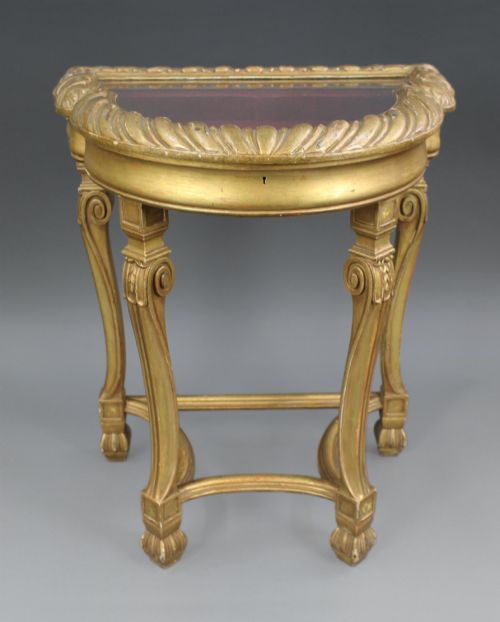
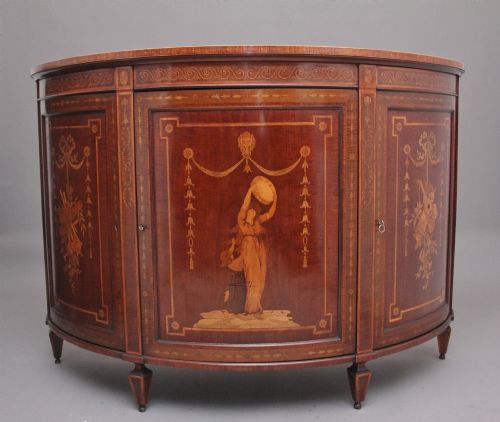
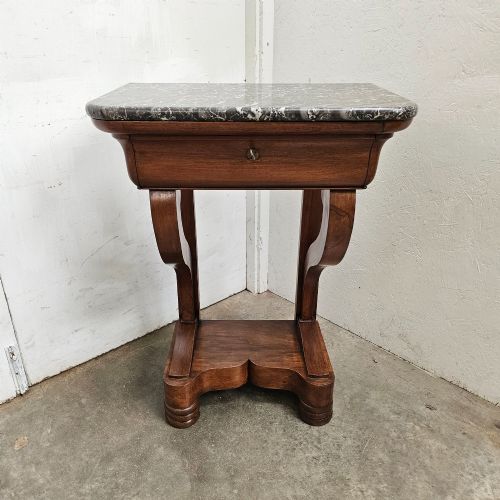
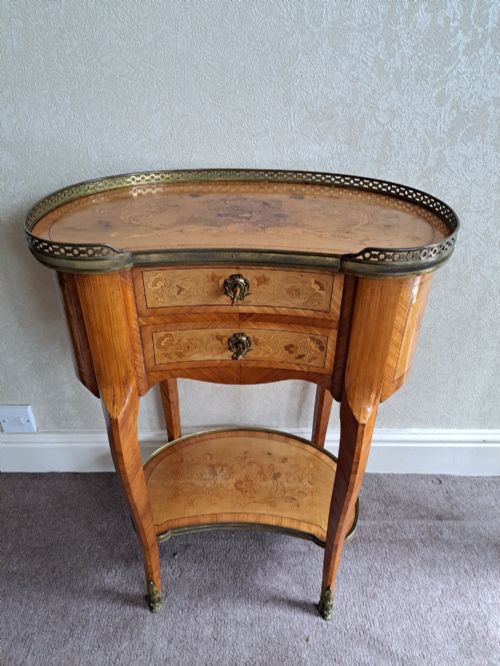
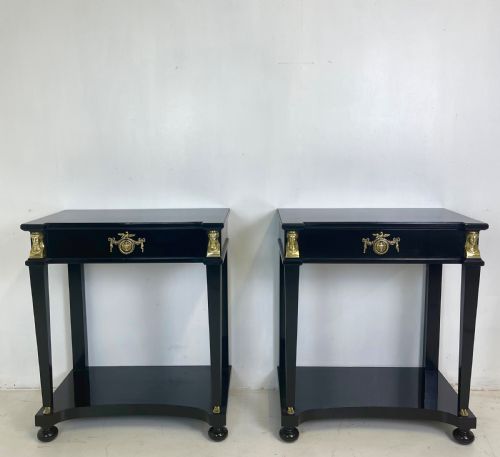
A french console cabinet combines the slender stance of a wall-mounted table with the practical capacity of a small cupboard, often fitted with a shaped marble top. The selection includes demi-lune side cabinets, marquetry chiffoniers, and display tables drawing on Louis XVI and French Empire aesthetics.
Most examples originate from the nineteenth century, ranging from earlier Empire pieces to later revival styles utilising mahogany, walnut, and satinwood. These forms served as decorative focal points in formal reception rooms and hallways, designed to display ornaments while concealing smaller items within.
Materials and construction methods
Cabinetmakers utilised dense hardwoods such as mahogany and walnut as structural carcasses, frequently applying intricate satinwood parquetry and floral marquetry veneers across curved and demi-lune surfaces. Ormolu mounts in cast brass provided structural accents and decorative borders along corners and aprons.
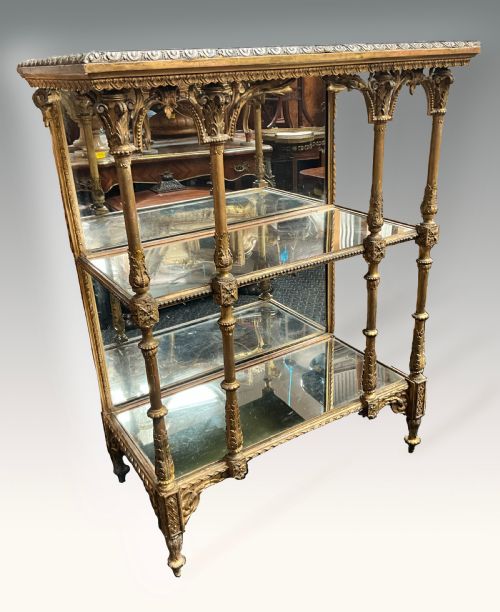
Heavy marble slabs, including fossil varieties, were precisely shaped to follow the serpentine or semi-circular contours of the timber bases. Gilt wood and gesso found application in related display shelves and tables, applying traditional surface gilding over carved wooden frameworks.
French Console Cabinet Retail Price Guide 2026
Typical asking prices for french console cabinet among the pieces listed under this phrase on Sellingantiques today, from the lower quarter to the upper quarter. They describe what is for sale here now, not the wider market.
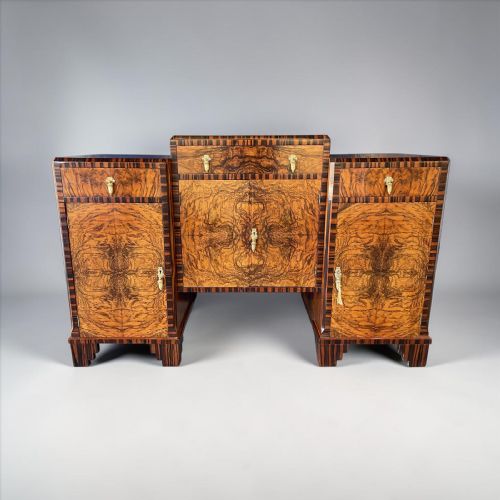
Listings feature woods including mahogany, walnut, satinwood, and burr walnut, frequently paired with marble and ormolu.
Distinguishing quality and execution
The refinement of a french console cabinet rests on the precision of its veneer work and the crispness of its cast ormolu mounts. Finer examples display seamless matching of wood grain across curved drawer fronts and side panels, where lesser pieces rely on simpler painted or less detailed surface decoration.
The integration of heavy marble tops and the structural stability of slender cabriole or tapered legs dictate the overall calibre of the piece. Superior construction ensures that joints remain tight and doors or drawers operate smoothly despite changes in atmospheric humidity.
François Linke
The French Console Cabinet Glossary
- Ormolu
- Gilded bronze or brass mounts used extensively in French furniture decoration. These metal elements were cast and chased to add decorative highlights to corners, legs, and aprons.
- Demi-lune
- Half-moon shape, describing furniture designed with a flat back to sit flush against a wall and a curved front. This outline is common in console tables and side cabinets.
- Marquetry
- Decorative technique applying small pieces of veneer to form geometric or pictorial patterns on a wooden surface. Craftsmen used various coloured woods to create contrast.
- Credenza
- A sideboard or display cabinet originating in Italy and adopted across Europe. In this context, it provides enclosed storage beneath a display surface.
- Parquetry
- Geometric mosaic pattern formed by wood veneers fitted together on a floor or furniture surface. It differs from marquetry by sticking strictly to angular and repeating motifs.
French Console Cabinet: Frequently Asked Questions
What is a french console cabinet?
A french console cabinet is a decorative storage piece designed to stand against a wall, typically featuring a flat back, a stone or timber top, and enclosed lower shelving.
These items combine the decorative qualities of a side table with the utility of a small cupboard, often incorporating classical French revival styling.
Where were these cabinets placed?
Historically, these pieces occupied prominent positions in entrance halls, formal reception rooms, and parlours where they could display decorative objects.
Their shallow depth allowed them to furnish narrow corridors or spaces between windows without obstructing pathways.
How do I care for marble tops?
Marble surfaces require regular wiping with a damp cloth and gentle soap to prevent staining from acidic liquids or oils.
Avoiding harsh abrasives preserves the natural polish of the stone over decades of domestic use.
How do I identify a revival style?
Revival pieces borrow decorative vocabulary from earlier periods like the reign of Louis XVI, incorporating classical motifs, tapered legs, and symmetrical proportions.
Examining the construction methods and secondary timbers helps determine whether a piece dates to the original period or a later nineteenth-century revival.