
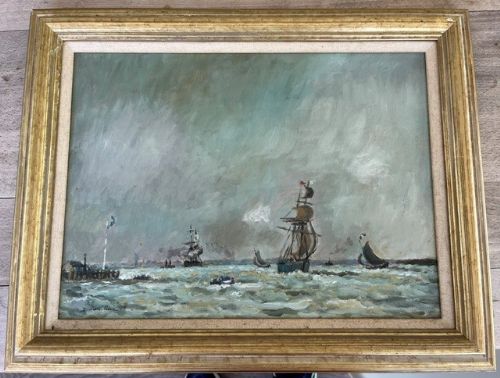


French Coastal Marine Painting
These pieces of french coastal marine painting capture harbours and shores through oils and watercolours spanning the nineteenth and twentieth centuries.
French Coastal Marine Painting
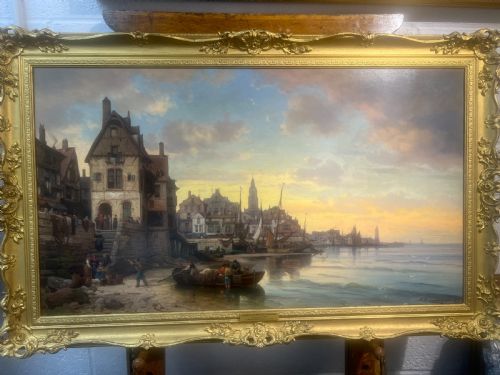
A french coastal marine painting records harbours, cliffs and fishing ports along the shores of Normandy, Brittany and the Côte d'Azur. Buyers seek these works to bring the light and atmosphere of the sea into domestic interiors through historical artistic interpretations.
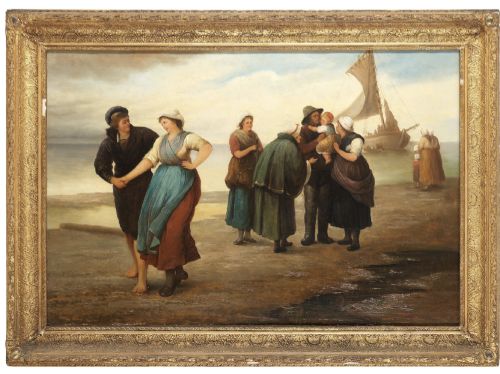
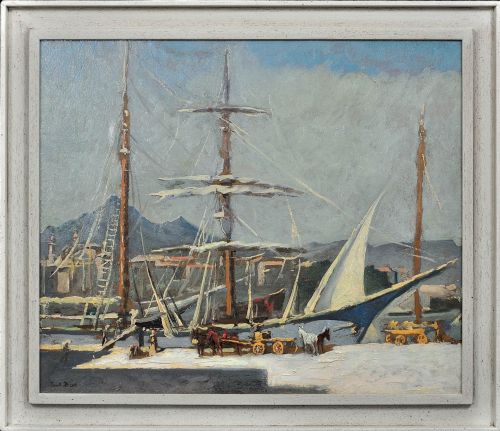
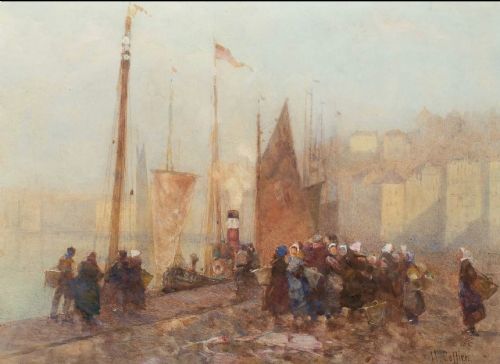
The selections encountered here stretch from nineteenth century academic scenes to twentieth century post-impressionist and modernist interpretations. Canvases and panels depict fishermen, moored boats and rocky inlets under changing coastal skies.
How They Were Made
Artists applied oil paint or watercolour onto prepared canvas, wooden panels, or heavy paper sheets fixed within traditional wood frames. Brushwork ranges from tight academic realism to loose, expressive strokes characteristic of impressionist and post-impressionist movements.
The application of pigment reflects outdoor observation, capturing natural light on water, rocks, and sails. Supports include wood board and canvas stretched over wooden frames, often paired with contemporary or period frames.
Several canvases record the exact moment seaweed gatherers trudged across Breton shores over a century ago.
What Varies in Quality
Quality rests upon the confidence of the brushwork and the artist's ability to render light and atmospheric depth across the marine landscape. Stronger compositions reveal assured handling of pigment, particularly in complex areas like churning water or sunlit harbour walls.
The preservation of the original paint surface and the integrity of the support material influence the standing of an individual piece. Works that retain their original wooden frames and unblemished pigment layers command greater attention from collectors.
Paul Bret·Hector Caffieri·Charles Euphraisie Kuasseg·Louis Suire·Gustave Vidal·Raymond Picque·William Lee Hankey·Charles Malfroy·Roger de la Corbiere·Edward Henry Holder·Henri Ottman·Paul-Louis Barruel·Henri Cadiou
The French Coastal Marine Painting Glossary
- Post-Impressionism
- An artistic movement developing from impressionism that extends its use of vivid colours and thick application while emphasising geometric forms or expressive content.
- Seascape
- A work of fine art depicting the sea, coastal views, or marine subjects.
- Watercolour
- A painting method in which the paints are made of pigments suspended in a water-based solution, typically executed on paper.
- Provenance
- The chronological history of the ownership of a work of art, establishing its authenticity and origins.
- Support
- The underlying material, such as canvas, wood panel, or paper, upon which the paint is applied.
French Coastal Marine Painting: Frequently Asked Questions
How do I date a french coastal marine painting?
Dating relies on the stylistic markers of the brushwork, the type of support used, and biographical details of the painter where known. Nineteenth-century works often favour tighter academic detail, whereas twentieth-century examples lean towards impressionistic or modernist freedom.
Framing can also offer clues, though many canvases have been reframed over the decades. Signatures and exhibition labels on the reverse provide definitive chronological anchors.
Where were these coastal scenes typically painted?
The locations concentrate heavily along renowned French maritime regions such as the rocky cliffs of Normandy, the harbours of Brittany, and the sunlit waters of the Mediterranean Côte d'Azur. Artists travelled to these ports to capture the local fishing fleets and distinct coastal light.
Occasional works depict neighbouring Mediterranean or Atlantic shores visited by French painters during their travels.
Are these paintings executed on canvas or wood?
Both supports appear frequently across the selection, alongside works executed on paper or card. Canvas stretched over wooden frames was standard for larger compositions, allowing for dynamic brushwork.
Wooden panels and boards were often utilised for smaller plein air studies painted directly on location by the coast.
How should I care for an oil painting on canvas?
Keep the artwork away from direct sunlight and dramatic fluctuations in room temperature and humidity to prevent the canvas from slackening and the paint from cracking. Dust the surface gently with a soft, dry brush without applying pressure.
Avoid using any liquid cleaners on the paint layer and consult a professional art conservator if cleaning becomes necessary.