


French Clock with Cherub
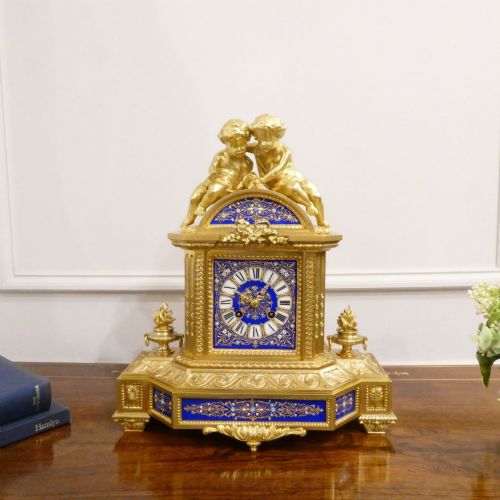
A French clock with cherub brings sculptural romance into a room, pairing timekeeping with figures of putti and cupid cast in bronze and ormolu.
French Clock with Cherub
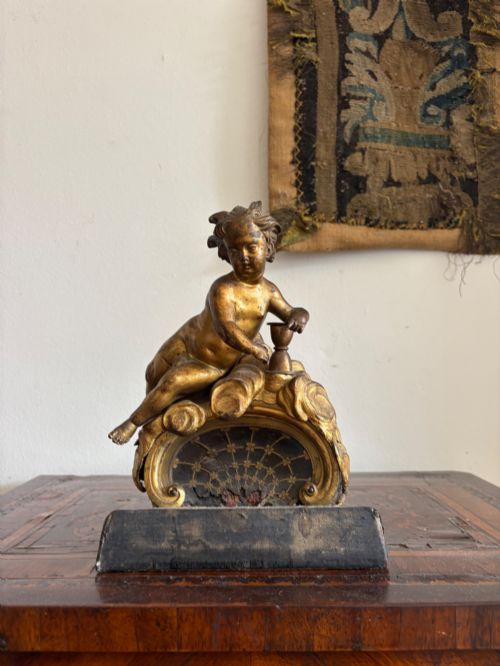
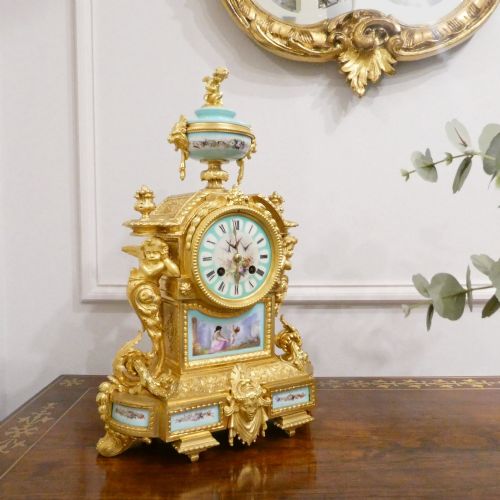
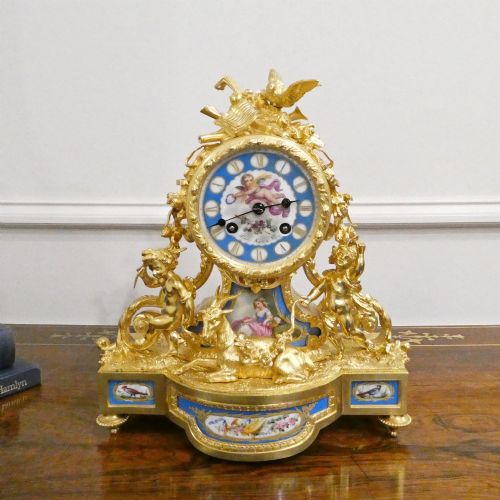
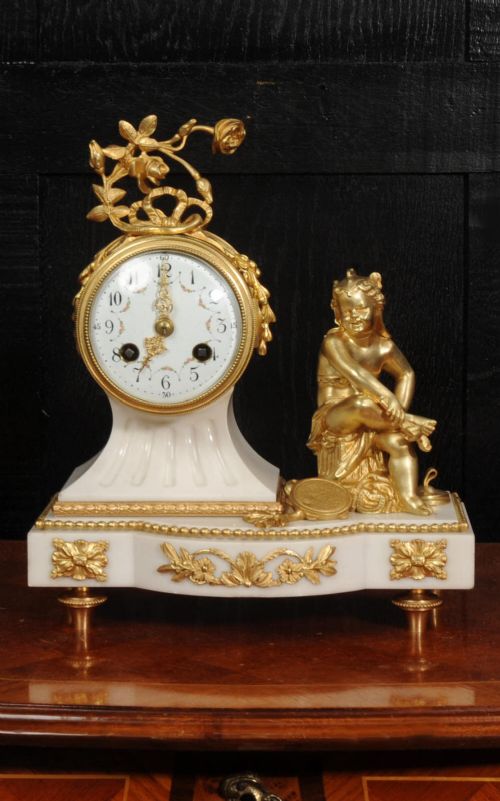
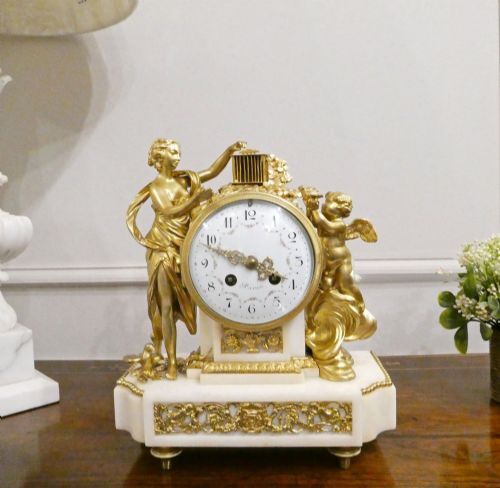
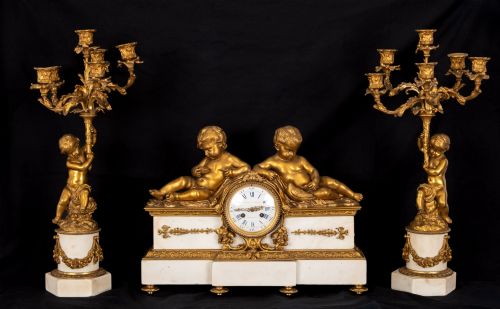
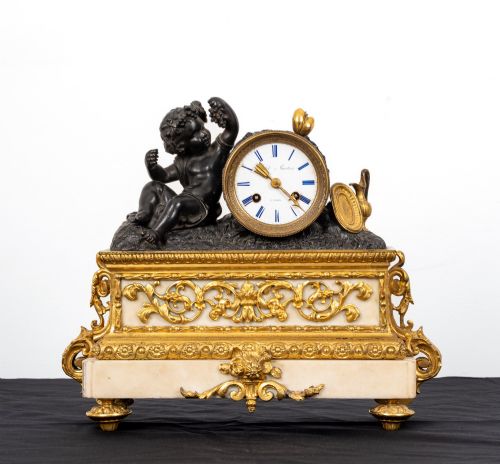
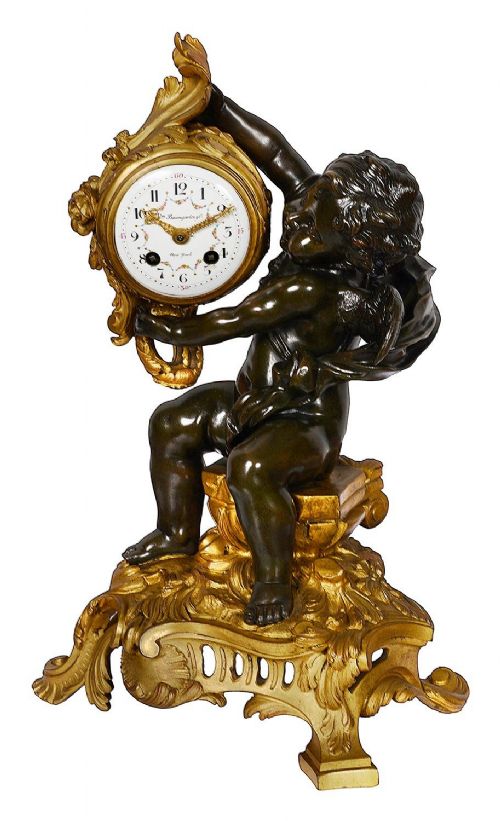
A French clock with cherub is a mantel timepiece dominated by figural sculpture depicting putti, cherubs, or cupids alongside traditional clock cases. These ornamental objects emerge chiefly from nineteenth-century workshops operating across periods such as the Second Empire, Louis XVI Revival, and Rococo Revival.
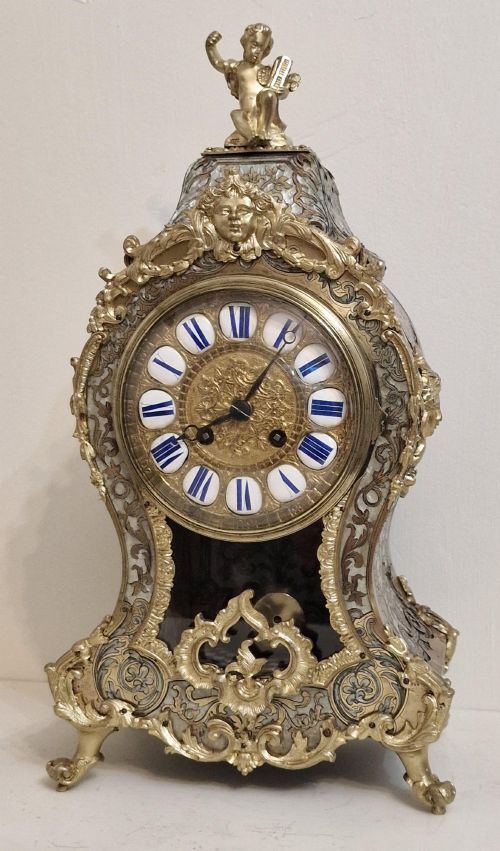
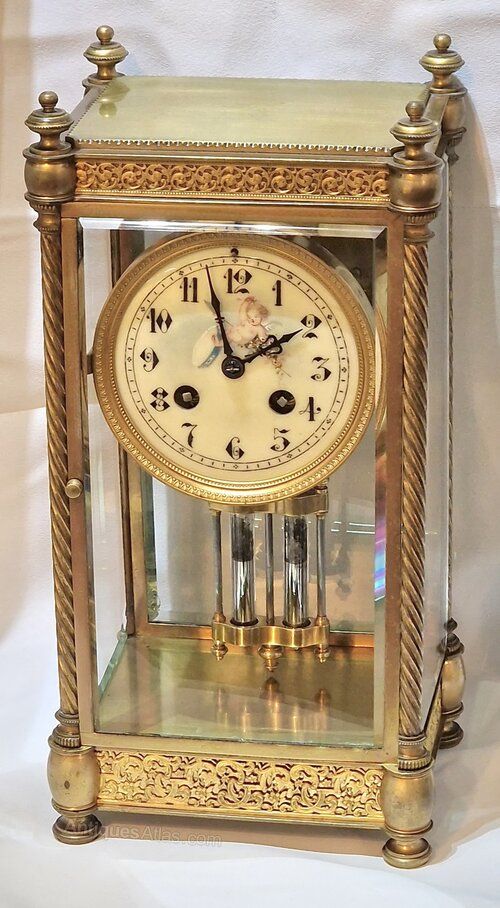
Buyers encountering this search phrase will frequently find mantel clocks cast from gilt bronze, patinated bronze, and ormolu, often paired with substantial marble or glass housings. Many examples incorporate intricate decorative elements such as portrait plaques, visible pendulums, swinging movements, and detailed floral or animal motifs.
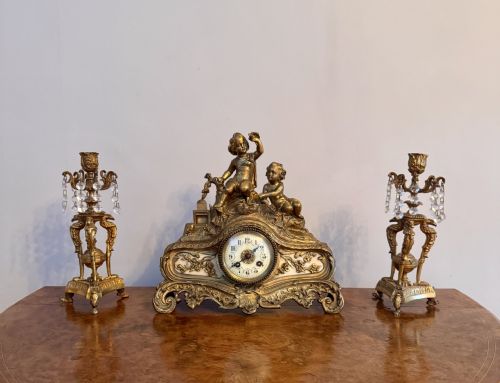
The forms range from miniature gilt bronze figural pieces to large clock sets mounted on variegated marble stands. These horological works combine mechanical timekeeping with high sculptural artistry typical of French domestic decoration from the eighteen-fifties through the early twentieth century.
Materials and construction
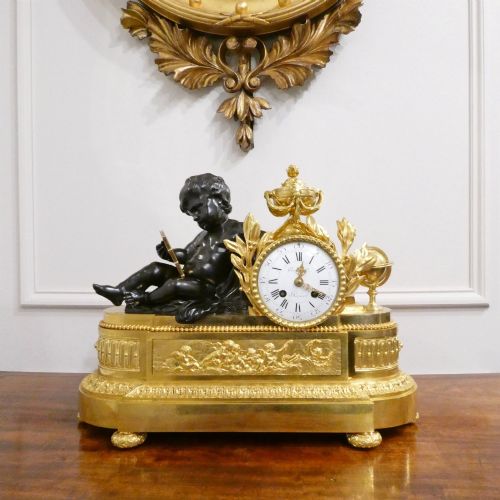
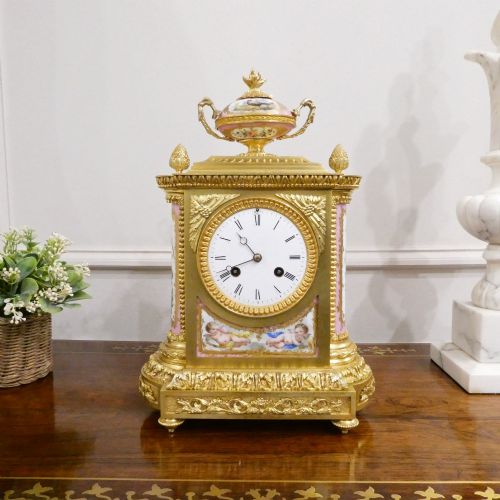
Foundry work relied heavily on casting bronze and brass, which workers then finished with mercury gilding or ormolu to achieve a bright, durable golden surface. Patinated bronze offered a darker, contrasting tone for the cherubic figures and main case bodies.
Cases incorporate natural materials including various types of marble, rosewood, and glass panels designed to protect delicate movements while allowing views of the interior mechanics. Dials frequently utilise white enamel with painted numerals, paired with fine brass or gilt hands.
French Clock with Cherub Retail Price Guide 2026
Typical asking prices for french clock with cherub among the pieces listed under this phrase on Sellingantiques today, from the lower quarter to the upper quarter. They describe what is for sale here now, not the wider market.
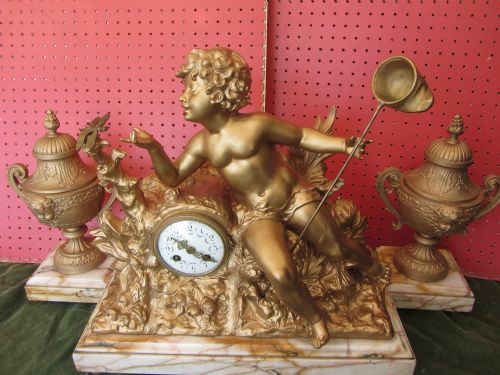
One winged cherub balances a playful companion dragonfly atop a heavy variegated marble stand.
Distinctions in quality
The choice of housing materials also indicates tier, where solid specimen marble bases and heavy gilt bronze outshine lighter brass and wood constructions. The inclusion of signed movements by recognised makers adds substance to the horological engineering.
Leon Message·Jollet et Cie·BELLENOT PARIS·Henry Berkeley Square London·Dumont·F Marti·Farcot·P.H. Mourey
The French Clock with Cherub Glossary
- Ormolu
- Finely ground high-carat gold applied to a bronze base using a mercury amalgamation process. This technique creates a rich, lasting metallic lustre seen on nineteenth-century clock mounts.
- Putto
- A plump, naked male child figure often depicted as a cherub or cupid in classical art. These sculptural figures form the central decorative motif of the pieces on this page.
- Silk suspension
- A method of hanging the pendulum from a fine thread of white silk inside the movement. This traditional mechanism appears on earlier nineteenth-century French timepieces.
- Enamel dial
- A metal dial fused with powdered glass fired at high temperatures to produce a glossy, smooth white surface. Numerals are painted onto this durable ground.
- Fuzze
- A conical drum used in spring-driven clocks to ensure even tension as the mainspring unwinds. This mechanical element helps maintain steady timekeeping accuracy.
French Clock with Cherub: Frequently Asked Questions
How do I wind a French mantel clock?
Winding requires inserting the appropriate key into the dial holes and turning gently until resistance is felt. Most nineteenth-century movements use an eight-day spring mechanism that needs attention weekly.
Care must be taken not to over-wind the springs, which can damage the internal gearing. Keeping the clock level on its marble or wood stand ensures the pendulum beats evenly.
What is a visible pendulum clock?
A visible pendulum design incorporates glass panels or open architecture that allows the swinging motion to be seen from the front. This feature showcases the kinetic movement alongside the static bronze cherub sculptures.
Such clocks were designed to add dynamic visual interest to a mantelpiece. The regulated swing provides both decorative movement and reliable timekeeping.
How do I identify a nineteenth-century French clock?
Nineteenth-century pieces often display cast foundry marks, maker signatures on the movement backplates, and distinct stylistic revivals such as Louis XVI or Rococo. The use of fire-gilt ormolu and hand-painted enamel dials points toward this era.
Examining the casting quality of the cherub figures and the construction of the marble or bronze case helps confirm the period. Many examples also bear stamped serial numbers or exhibition medallions.
Where should I place a heavy marble clock?
Heavy marble and bronze clocks require a sturdy mantelpiece, shelf, or table capable of supporting substantial weight without sagging. Placement should avoid direct sunlight and damp areas to protect the enamel dials and gilded surfaces.
Positioning the clock on a level surface is essential for the escapement and pendulum to function correctly. A stable foundation also prevents accidental tipping of dense bronze and stone objects.