




French Cherub Sconces
French cherub sconces bring exuberant figures and warm metalwork to a room, offering both illumination and sculptural presence.
French Cherub Sconces
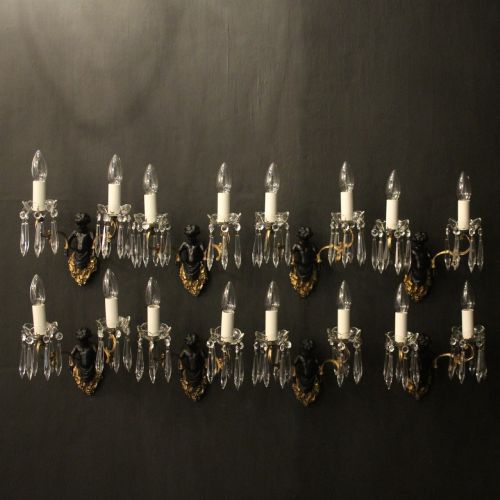
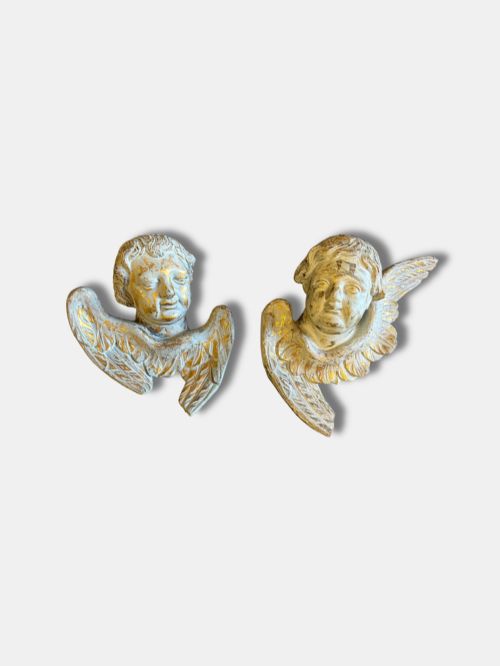
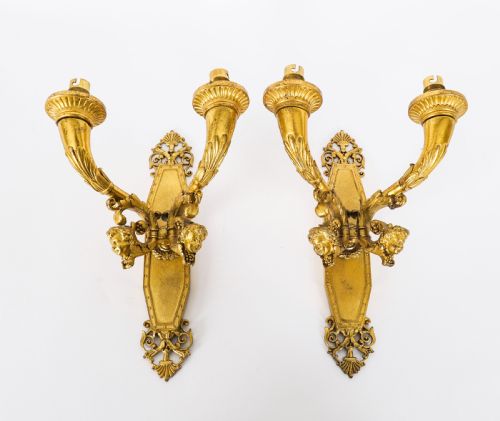
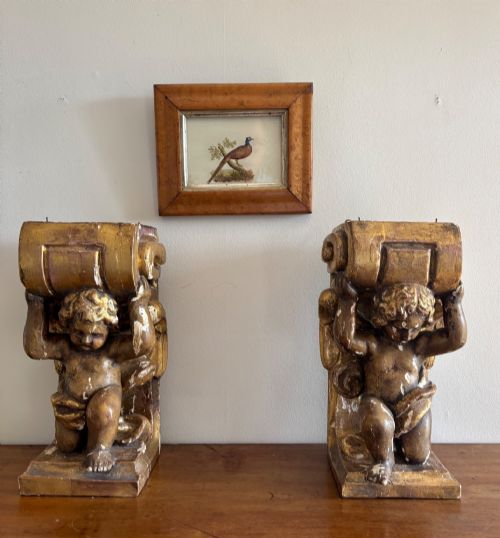
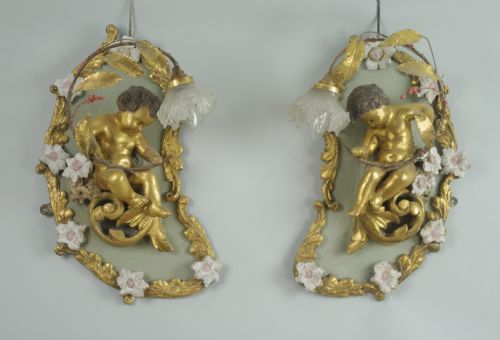
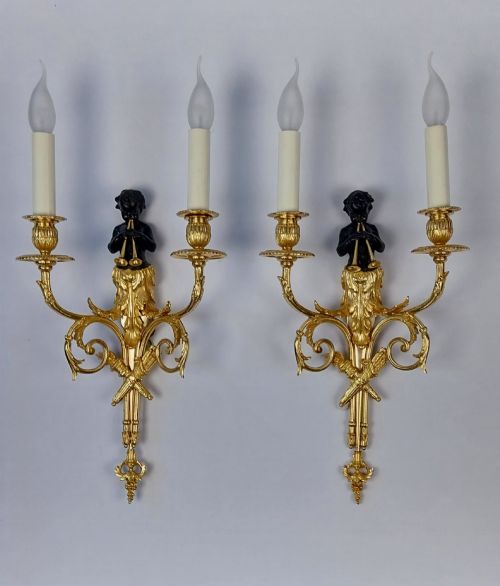
French cherub sconces are decorative wall-mounted light fittings and brackets featuring carved putti or cherubic figures. These pieces primarily manifest as pairs or sets of wall lights, wall sconces, and occasionally candlesticks adapted for walls.
The objects span from the Regency era and the nineteenth century into the early twentieth century. Common stylistic expressions include Rococo Revival, Louis XIV Revival, and Louis XVI designs, often reflecting French Chateau aesthetics.
Most examples function as two-branch or multi-branch light fittings, combining functional wall illumination with figurative sculpture. Buyers encounter these fixtures in configurations ranging from single pairs to larger sets of four or eight.
Materials and construction
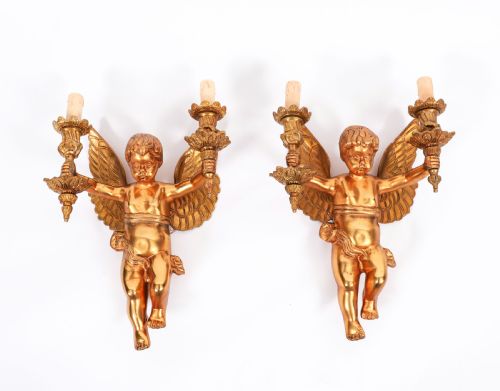
The construction of these pieces relies heavily on cast metals such as gilt bronze, ormolu, brass, and patinated metal. Artisans shaped these metallic elements into intricate flying cherubs, acanthus scrolls, and elaborate backplates.
Woodwork also plays a significant role, with craftsmen utilising carved giltwood, gesso, and glass elements like lustres. Gilding and bronze work provide the characteristic golden sheen and durable surfaces seen across the nineteenth and early twentieth century pieces.
French Cherub Sconces Retail Price Guide 2026
Typical asking prices for french cherub sconces among the pieces listed under this phrase on Sellingantiques today, from the lower quarter to the upper quarter. They describe what is for sale here now, not the wider market.
Several cherubs are caught mid-flight, holding up light branches as if defying gravity.
Judging quality and execution
The choice of materials dictates the baseline of execution, with heavy gilt bronze and fire-gilt ormolu sitting at a different level of craftsmanship compared to standard brass or gesso. Matching sets and intact glass lustres further elevate an individual piece.
Proportion and architectural harmony separate standard production from exceptional examples. The integration of the cherub figures with the scrolling arms and backplates demonstrates the designer's skill in balancing sculptural form with lighting utility.
The French Cherub Sconces Glossary
- Ormolu
- Finely ground high-carat gold applied to a bronze base using a mercury amalgamation process. This technique creates a rich, durable golden finish characteristic of high-end French metalwork.
- Putti
- Depictions of chubby, winged infant boys used as decorative motifs in art and sculpture. They appear frequently supporting the arms of these wall lights.
- Rococo Revival
- A nineteenth-century design movement favouring asymmetrical curves, C-scrolls, and naturalistic ornamentation. It draws inspiration from the eighteenth-century French Rococo style.
- Giltwood
- Timber that has been coated with a thin layer of gold leaf or gold paint. Carved wooden wall brackets and sconces often utilise this finish.
- Appliqué
- A French term used to describe wall lights or sconces mounted directly onto vertical surfaces. These fixtures project outward to provide ambient room illumination.
French Cherub Sconces: Frequently Asked Questions
How do I wire antique wall sconces for modern use?
Most antique wall lights require professional rewiring to meet current electrical standards. Electricians can usually adapt the internal channels or fit modern candle tubes while preserving the original metal or wooden exterior.
Buyers should consult a qualified electrician before installation to ensure the backplates can safely support the weight of bronze or carved wood fittings.
Where should I position cherub sconces in a room?
These fixtures work best at eye level or slightly above, flanking mirrors, fireplaces, or architectural doorways. Their sculptural nature allows them to act as independent wall art when unlit.
Placing them in pairs creates symmetry, while larger sets of four can anchor the proportions of a principal reception room or hallway.
How do I distinguish between Louis XIV and Rococo styles?
Louis XIV style pieces exhibit greater symmetry, formal architectural structure, and classical grandeur. They often feature heavier, more regimented ornamentation.
In contrast, Rococo Revival pieces embrace asymmetry, flowing C-scrolls, and organic plant motifs, creating a lighter and more playful visual movement.
How should I clean gilt bronze and ormolu?
Gilt metal surfaces require very gentle dusting with a soft, dry microfibre cloth. Harsh chemical cleaners, abrasive polishes, and water will strip the delicate gilt layer.
Keeping these fittings away from direct moisture and handling them minimally helps preserve the original nineteenth-century patination and gold finish.