


French Cherub Lights
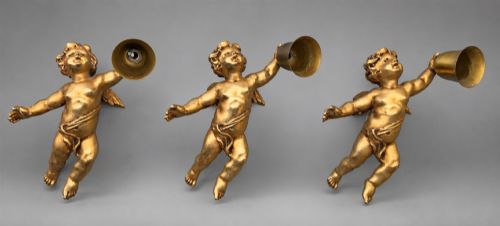
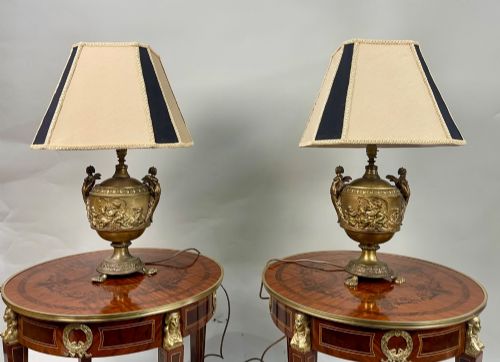
French cherub lights bring figural charm and decorative illumination to a room through cast metal figures and classical motifs.
French Cherub Lights
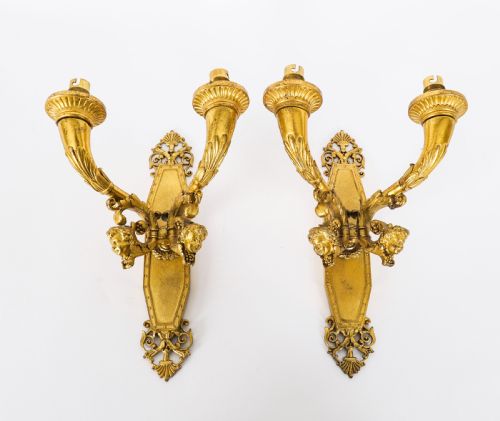
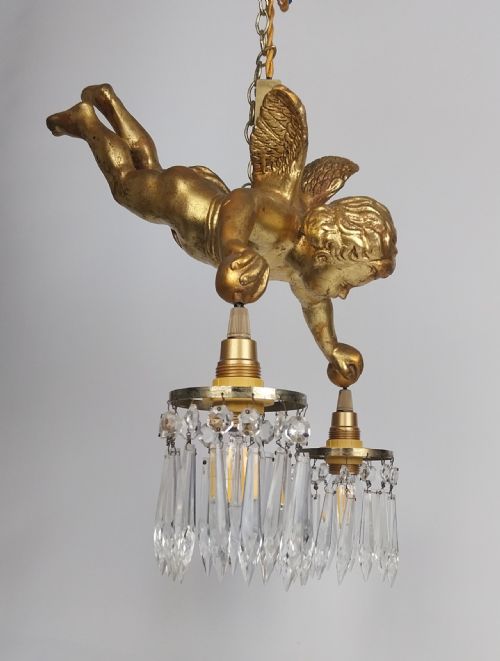
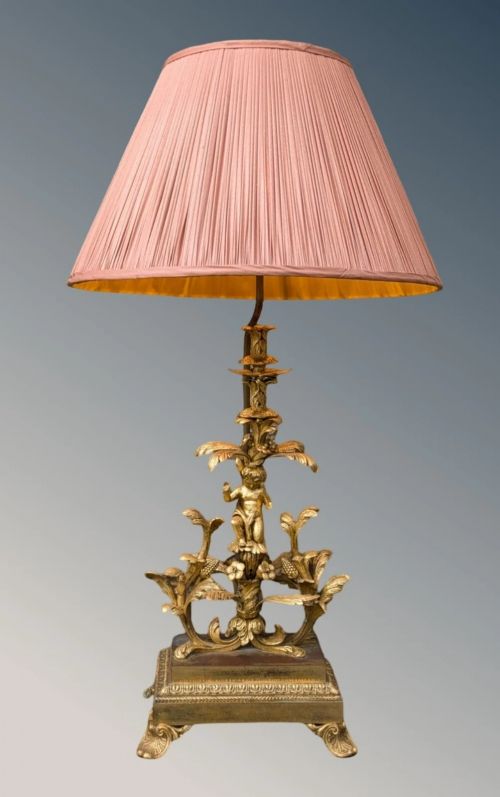
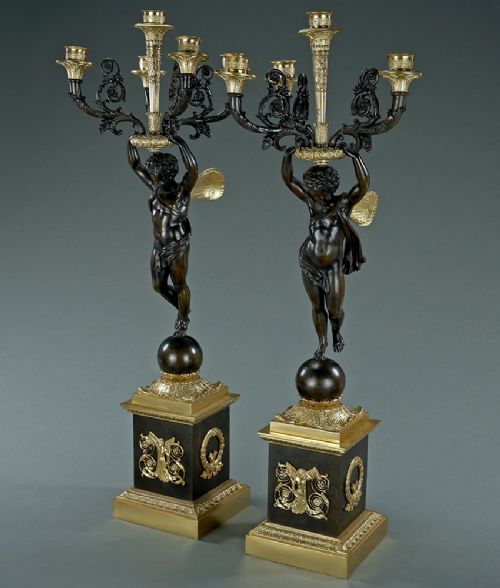
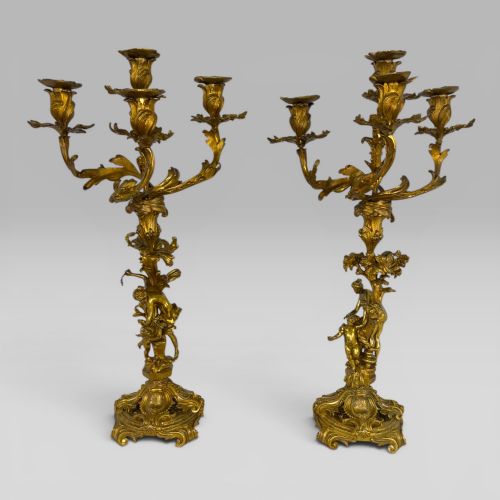
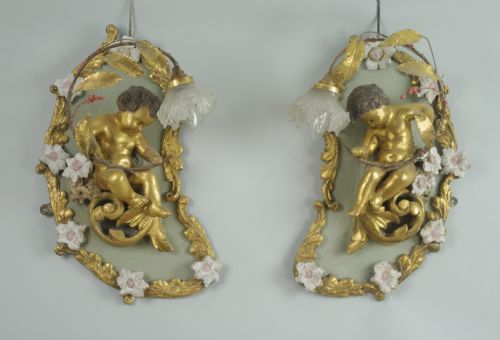
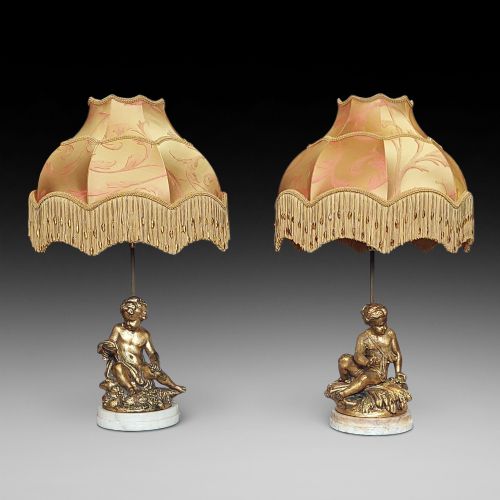
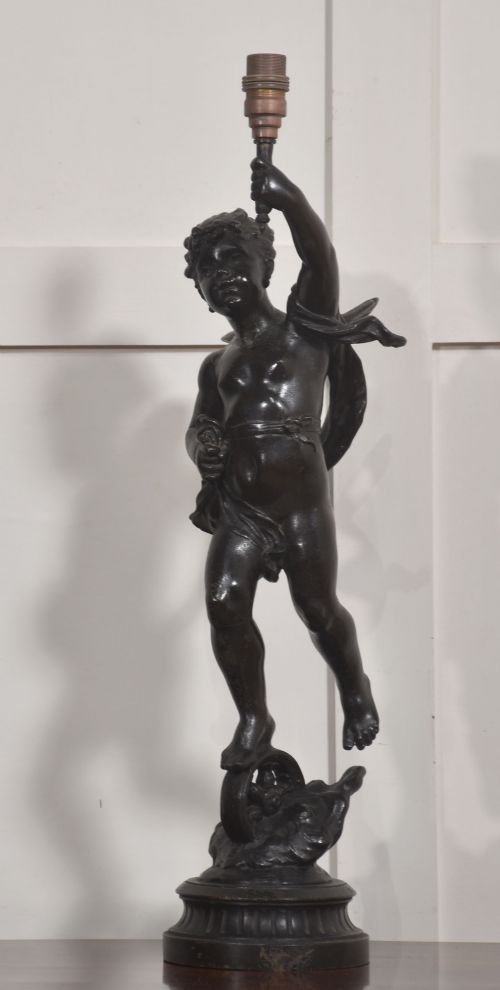
When searching for french cherub lights, buyers encounter figural lighting fixtures ranging from wall sconces and candelabra to table lamps and chandeliers. The pieces on this page span the nineteenth century through the early twentieth century, incorporating revival styles such as Rococo and Louis XVI.
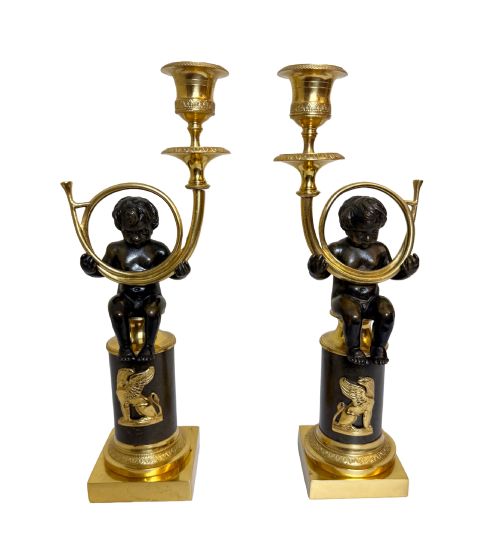
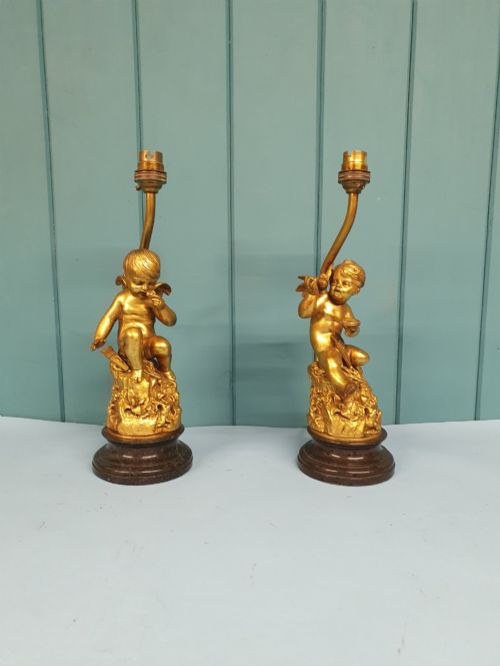
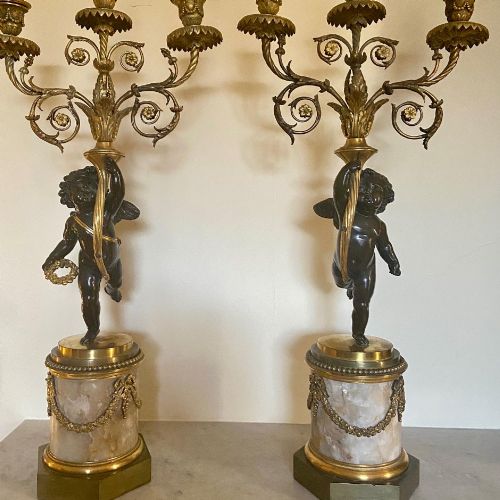
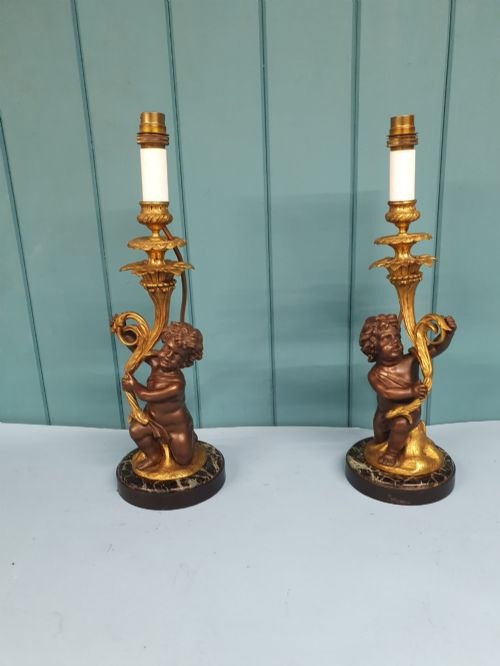
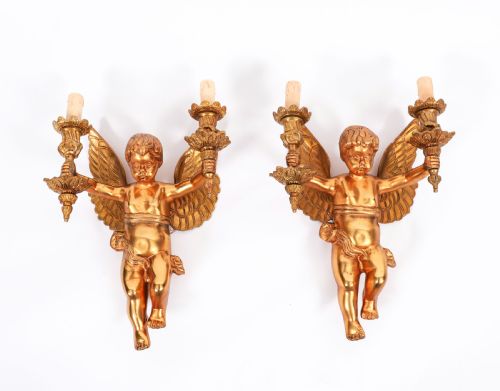
Most examples appear as pairs of wall lights, candlesticks, or candelabra featuring cast figures of putti or winged cherubs. These objects combine functional illumination with sculptural ornamentation derived from French decorative arts.
Materials and construction
Maker workshops utilised cast metals including gilt bronze, ormolu, brass, and gilt metal to form the structural bodies and figural cherub motifs. Many nineteenth-century and early twentieth-century examples mount these metal figures upon heavy bases of marble, onyx, or alabaster.
Lighting components frequently integrate glass, fabric shades, toleware, and fluorspar alongside patinated bronze or silver giltwood elements. Construction methods combine metal casting, chasing, and mounting techniques typical of French revival workshops.
French Cherub Lights Retail Price Guide 2026
Typical asking prices for french cherub lights among the pieces listed under this phrase on Sellingantiques today, from the lower quarter to the upper quarter. They describe what is for sale here now, not the wider market.
Object types seen here include multi-branch candelabra, wall sconces, and table lamps featuring winged putti.
Assessing quality and execution
The choice of secondary materials also distinguishes the range, with solid marbles and heavy gilt bronze outperforming lighter base metals and moulded plaster. Integrated decorative elements, such as multi-branch configurations and stone mounts, indicate higher standards of production.
Francois Redmond
The French Cherub Lights Glossary
- Ormolu
- Gilt bronze produced by applying a finely ground high-carat goldmercury amalgam to a bronze object. This historic technique creates a durable and rich golden surface finish.
- Putti
- Depictions of chubby male infants, frequently winged, originating in classical art. They form the central figural motif of these lighting fixtures.
- Candelabra
- Branched lighting devices designed to hold multiple candles or bulbs. They often feature sculptural figures integrated into the central column.
- Toleware
- Painted and lacquered sheet metal used historically for decorative items and lamp components. It provides colourful contrast to gilt bronze mounts.
- Fluorspar
- A halide mineral known for its vibrant natural banding and colour variations. It appears in select nineteenth-century candelabra bases.
French Cherub Lights: Frequently Asked Questions
What are french cherub lights?
These pieces are decorative lighting fixtures incorporating cast figures of putti or cherubs into wall sconces, lamps, chandeliers, and candelabra.
They reflect historical French revival aesthetics from the nineteenth and early twentieth centuries.
How were they used historically?
Owners placed these fixtures in salons, dining rooms, and parlours to provide both functional illumination and decorative status.
Many operated as candle holders before later conversion to electricity during the twentieth century.
How do I live with them?
These lamps and sconces suit traditional interiors, mantelpieces, and side tables where their figural bronze or brass work can catch the light.
Pairing them with appropriate shades or exposed bulbs preserves their period character.
How to tell periods apart?
Nineteenth-century examples frequently employ heavy gilt bronze, hand-chased details, and natural marble bases.
Early twentieth-century items often incorporate lighter metals, brass, or moulded elements reflecting later revival tastes.