

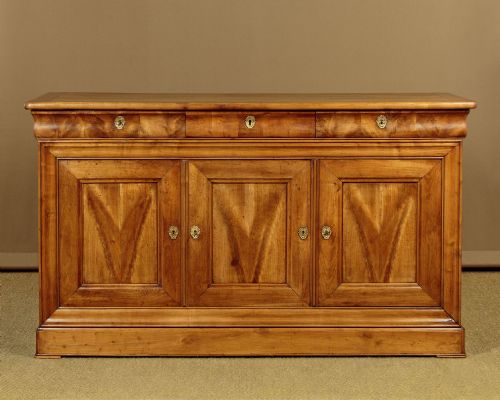
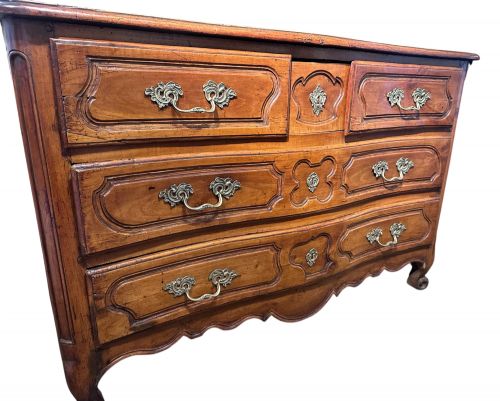


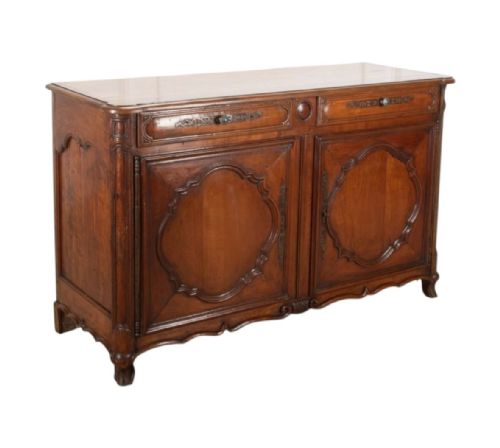


French Cherrywood Sideboard
These French cherrywood sideboard pieces bring warmth and practical storage to a room, crafted in regional workshops from rich fruitwood.
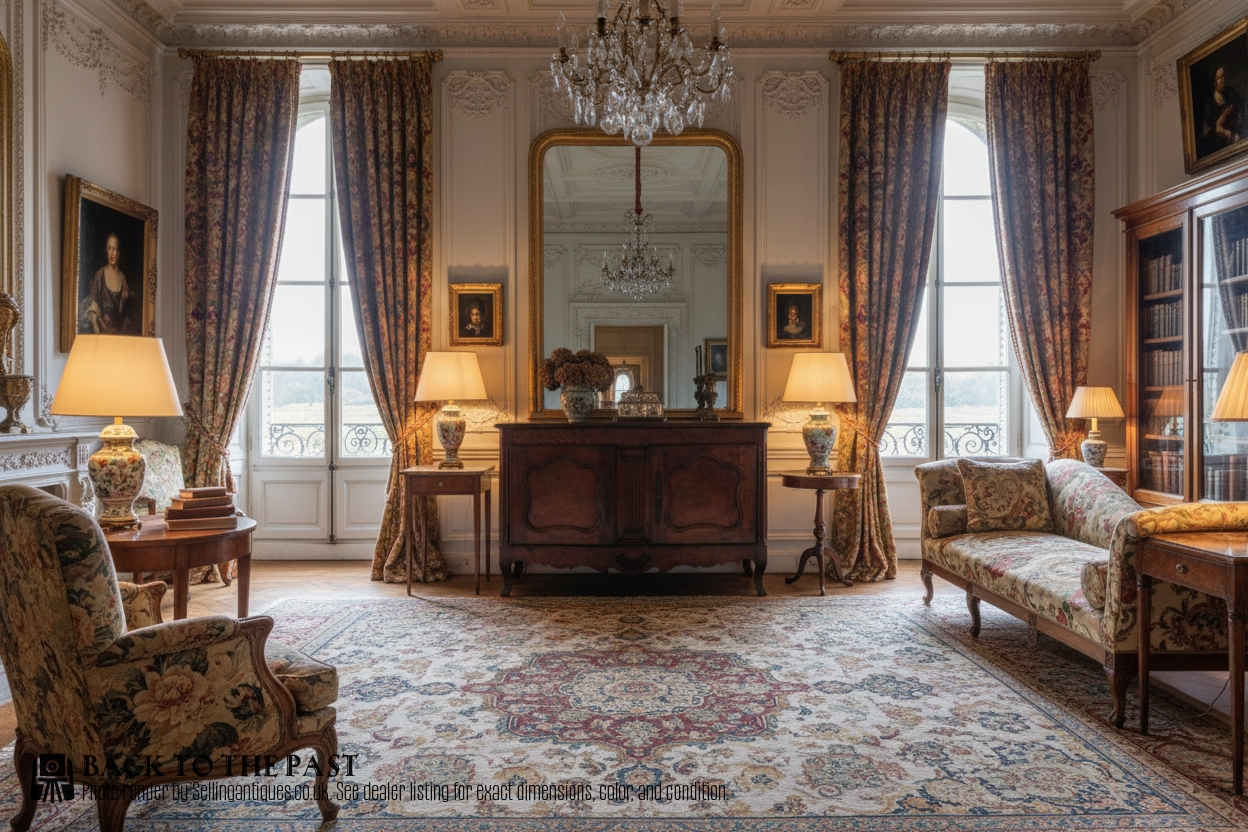
French Cherrywood Sideboard
A French cherrywood sideboard offers deep storage and a robust timber top, taking forms such as enfilades, commodes, buffets and dresser bases. These items span the eighteenth and nineteenth centuries, emerging from provincial French regions in styles that include Directoire and traditional provincial designs.
Buyers will most frequently encounter long enfilades and commodes dating from the eighteenth and nineteenth centuries. These pieces often feature durable cherrywood construction, sometimes paired with burr ash highlights, serving both dining rooms and living spaces with ample surface and cupboard space.
How they were made
Cabinetmakers constructed these pieces primarily from solid cherrywood, valuing the timber for its dense grain and capacity to take a warm patina over decades of use. Workshops occasionally combined this with burr ash for decorative contrast on drawer fronts and panels.
Structural hardware relied on hand-forged iron and brass for hinges, escutcheons and pulls. Joinery techniques of the period prioritised stability, using pegged mortise and tenon frames to support heavy timber tops and doors.
French Cherrywood Sideboard Retail Price Guide 2026
Typical asking prices for french cherrywood sideboard among the pieces listed under this phrase on Sellingantiques today, from the lower quarter to the upper quarter. They describe what is for sale here now, not the wider market.
Listings feature cherrywood alongside brass, iron, and burr ash across eighteenth and nineteenth-century forms.
What varies in quality
The distinction between standard and superior examples lies in the selection of the timber and the refinement of the provincial carving. Better pieces display a more uniform grain, rich natural colour and subtle moulding profiles rather than plain, heavy-handed construction.
Original hardware and untouched surface patination elevate a piece significantly. Finer examples retain their period brass or iron mounts and exhibit a depth of finish that comes only from age and careful maintenance.
The French Cherrywood Sideboard Glossary
- Enfilade
- A long low sideboard or buffet featuring a sequence of doors along the front, designed in France for dining room service. These pieces provide extensive cupboard space beneath a continuous timber top.
- Commode
- A low chest of drawers or cabinet originating in France, often used in reception rooms or bedrooms. They typically stand on short legs and feature multiple rows of drawers.
- Directoire
- A transitional French design style spanning the late eighteenth century, characterised by cleaner lines and classical restraint following the Louis XVI period. Ornamentation becomes simpler, favouring proportion over elaborate carving.
- Provincial
- Describing furniture made in the regions outside Paris, where local cabinetmakers adapted metropolitan styles using native timbers like cherrywood. These pieces often possess a rustic charm and sturdy construction.
- Dresser base
- The lower section of a kitchen or dining room storage unit, comprising cupboards and drawers beneath a flat top. They served utilitarian purposes in rural homes.
French Cherrywood Sideboard: Frequently Asked Questions
Where were these sideboards used?
These pieces served primarily in provincial dining rooms and kitchens to store tableware, linens and food supplies. Their long tops also provided a surface for serving dishes during meals.
In larger homes, they stood in hallways or reception rooms as display surfaces. Their robust construction suited daily domestic tasks in rural French households.
How do I care for cherrywood furniture?
Protect the timber by keeping it away from direct heat sources and strong sunlight, which can fade the natural colour. Regular dusting with a soft cloth maintains the finish.
Apply a traditional beeswax polish occasionally to nourish the wood and preserve its deep lustre. Avoid modern silicone sprays that can damage the antique surface.
What is an enfilade?
An enfilade is a long sideboard featuring multiple doors, designed in France for storing dining provisions. They offer considerable length and capacity compared to standard sideboards.
Cabinetmakers built them to sit against dining room walls, providing a wide top surface. Their long horizontal proportions distinguish them from taller buffets.
How do I distinguish eighteenth and nineteenth century pieces?
Eighteenth-century examples often display hand-carved provincial details and earlier joinery methods, such as pegged frames and hand-cut dovetails. Their timber exhibits a deeper, more established patina from prolonged use.
Nineteenth-century pieces, including Directoire styles, tend towards cleaner geometric lines and slightly more standardised hardware. The overall construction remains sturdy but reflects the transition towards industrial production methods.