
French Chandelier Light Fitting
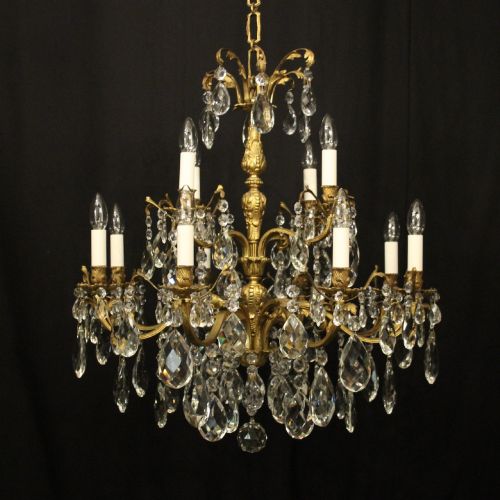
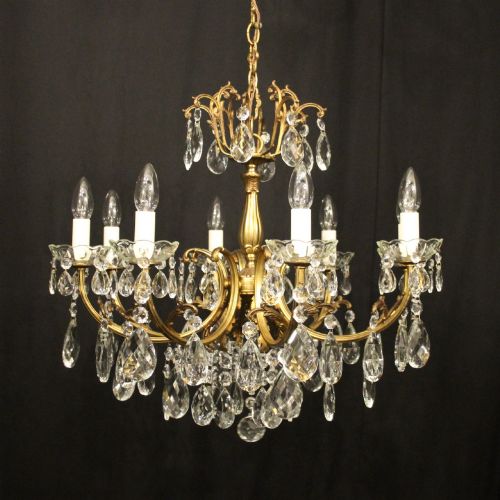
A french chandelier light fitting brings period illumination and grand overhead presence to a room, drawing the eye with sparkling crystal drops and warm gilded metal.
French Chandelier Light Fitting
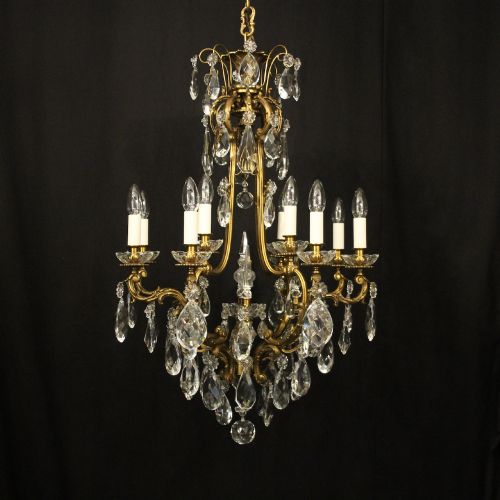
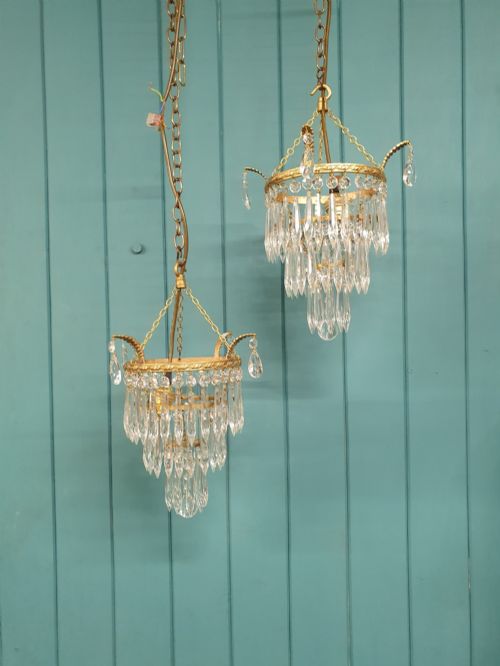
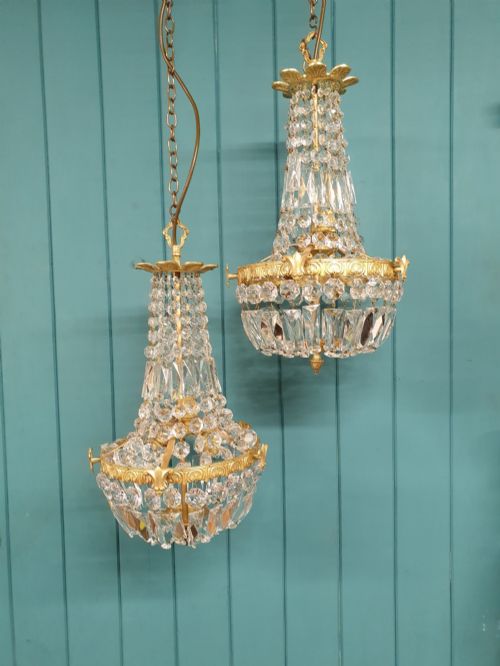
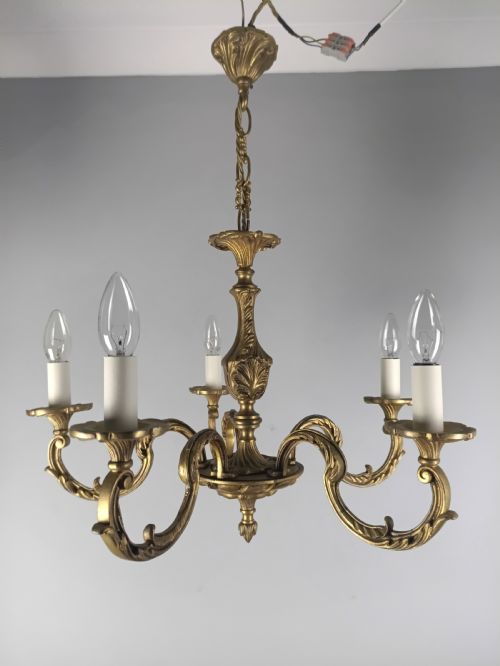
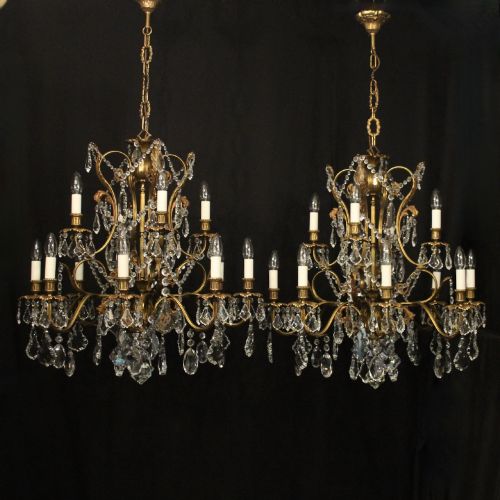
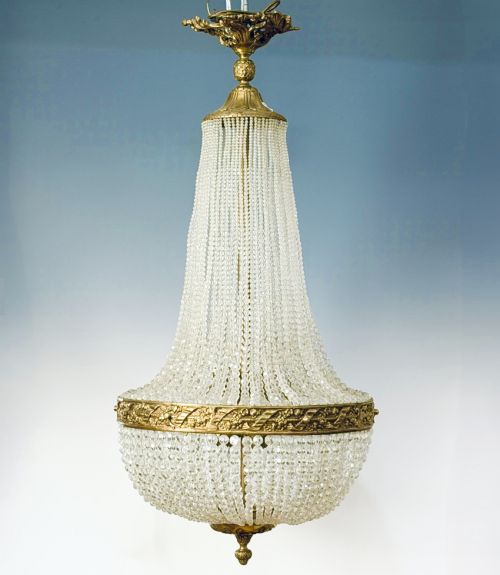
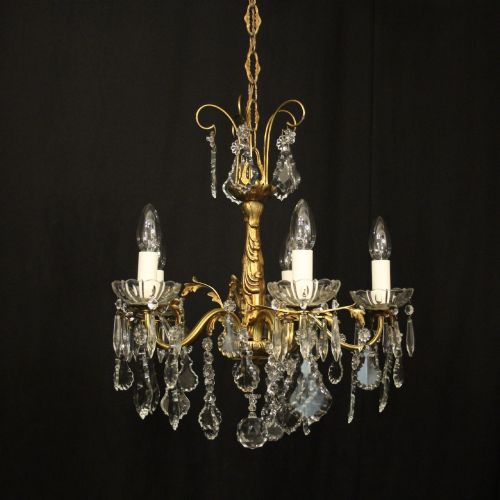
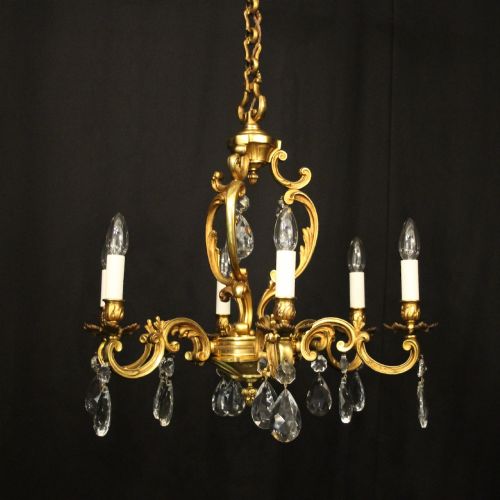
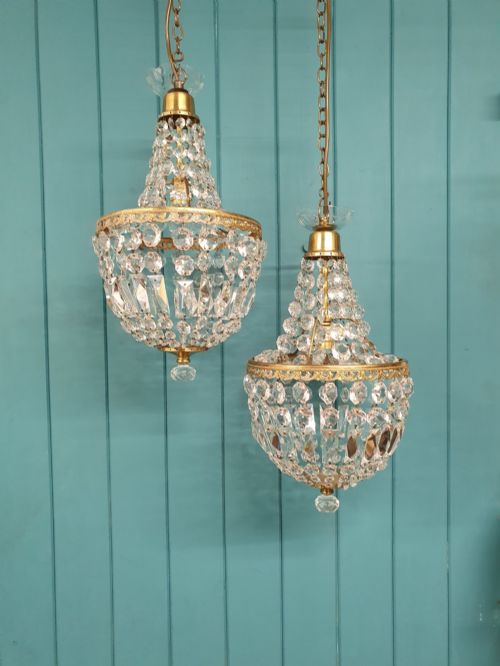
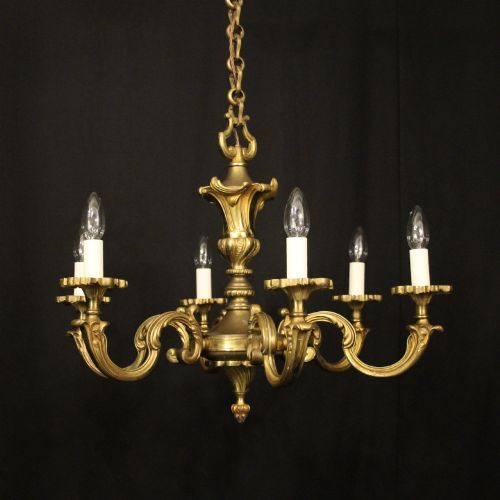
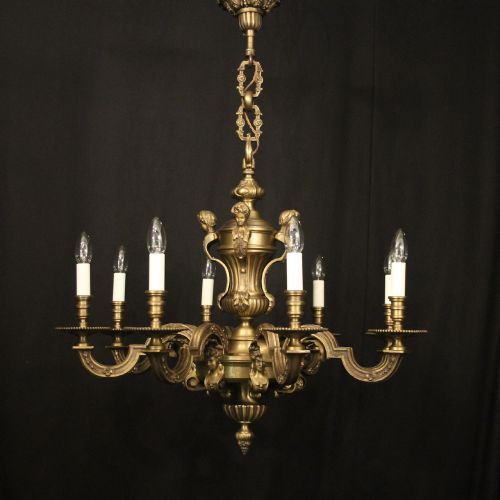
A french chandelier light fitting encompasses ceiling-suspended lighting fixtures originating from continental traditions, frequently manifesting in styles such as French Rococo, Empire, and Neoclassical. Buyers seeking these fixtures encounter multi-arm branch designs, tent and waterfall configurations, and compact spike or dome shapes designed for lower ceilings.
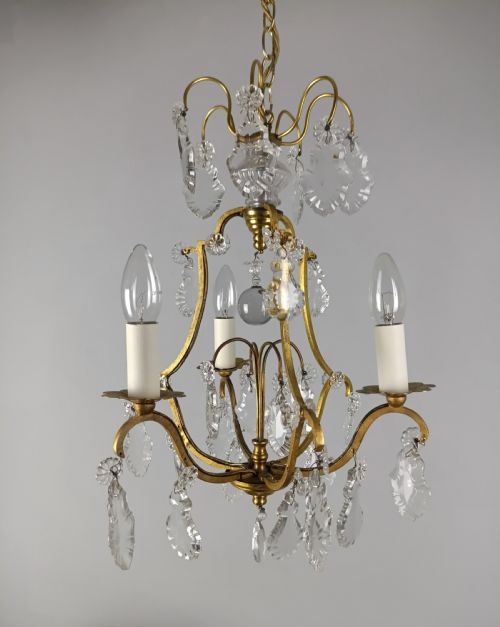
The selection ranges from robust nineteenth-century bronze and brass examples to lighter twentieth-century gilt metal and ceramic flower creations. Common forms include multi-light chandeliers and plafonieres that sit close to the ceiling while maintaining decorative glass or crystal drops.
Materials and Construction
Construction relies heavily on cast and chased bronze, brass, and spelter frames finished with gilt or silver leaf, supporting arms wired for multiple bulbs. Metal components provide the structural backbone for intricate scrollwork, lyre shapes, and cast cherubs.
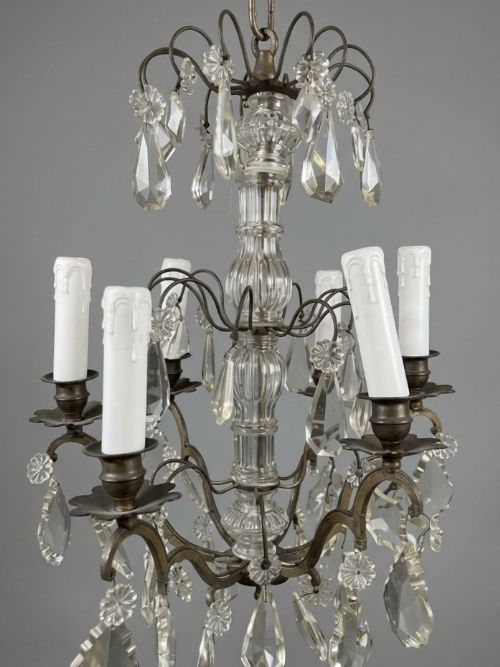
Dangling illumination relies on cut glass, lead crystal, and beaded strands assembled into tents, waterfalls, or cascading coffin prisms. Additional textural elements include carved giltwood, porcelain flowers, alabaster bowls, and painted tolewear.
Listings feature periods spanning the late nineteenth century through the Edwardian era and into the 1920s and 1930s.
Judging Quality
Quality reveals itself in the crispness of the bronze or brass casting and the depth of the gilding rather than superficial brightness. Heavier cast mounts, detailed chasing, and substantial metal armatures separate superior productions from lighter commercial alternatives.
The precision and clarity of the cut glass and crystal prisms dictate upper-tier examples, where hand-cut facets catch and refract light cleanly. Original matching components, integrated porcelain floral elements, and substantial branch counts distinguish finer decorative achievements.
The French Chandelier Light Fitting Glossary
- Tent and waterfall
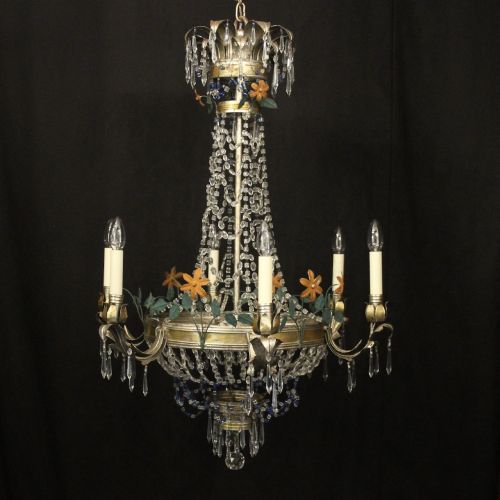
- A classic chandelier silhouette featuring an upper conical tent of glass beads cascading down into a wider waterfall of crystal drops.
- Gilt bronze
- Bronze metal treated with a thin layer of gold or gold-coloured alloy, also known as ormolu on finer antique pieces.
- Spike chandelier
- A compact hanging light fixture characterised by a central vertical spike or drop surrounded by radiating arms and crystal prisms.
- Tolewear
- Painted or lacquered sheet metal, often shaped into floral or botanical motifs on mid-period decorative light fittings.
- Plafoliere
- A shallow ceiling-mounted light fitting featuring glass panels or crystals held within a decorative brass or bronze frame.
French Chandelier Light Fitting: Frequently Asked Questions
How do I hang a heavy antique chandelier safely?
Suspension requires fixing directly into ceiling joists or using a designated structural hook capable of supporting the combined weight of the metal frame and crystal drops. Professional electrical installation ensures the internal wiring safely accommodates the multi-bulb layout.
Weight distribution matters significantly with larger multi-arm fixtures and heavy cast bronze frames. Consulting a qualified electrician guarantees the ceiling junction box meets the load requirements of a substantial antique fixture.
What is the difference between Empire and Rococo styles?
Empire style fittings draw inspiration from classical antiquity, displaying formal symmetry, military motifs, laurel wreaths, and clean architectural lines. Rococo designs favour asymmetrical curves, naturalistic scrollwork, leaf motifs, and flowing ornamental exuberance.
Identifying these aesthetics helps date a fixture and understand its decorative intent within a room. Empire pieces often utilise tents and waterfalls, while Rococo fittings emphasise organic branch arrangements.
How do I clean delicate crystal prisms?
Maintenance involves wiping individual glass drops and crystal prisms with a mild solution of warm water and professional glass cleaner using a soft cloth. Leaving components attached while cleaning prevents accidental breakage of the surrounding wire ties.
Harsh chemical solvents should be avoided to protect the underlying gilt or bronze finishes on the metal frame. Regular dusting preserves the reflective quality of the glass without risking structural damage.
Can these chandeliers be rewired for modern wiring?
Rewiring is standard practice for vintage lighting fixtures to comply with contemporary electrical safety standards and local regulations. Professional restorers replace old fabric or rubber-insulated internal wires while preserving the original exterior sockets and metal arms.
Updating the electrical components ensures the fixture operates safely with standard contemporary bulb fittings. This process maintains historical integrity whilst offering reliable daily illumination.