
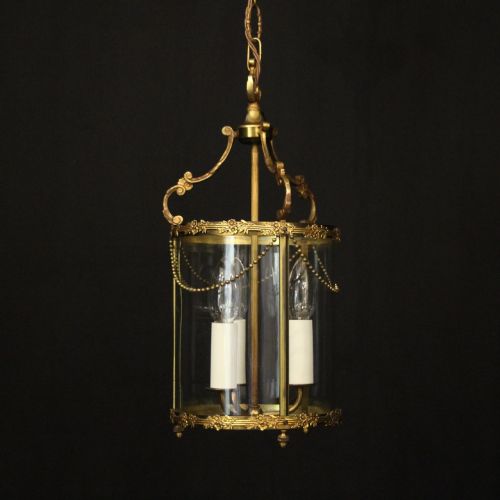
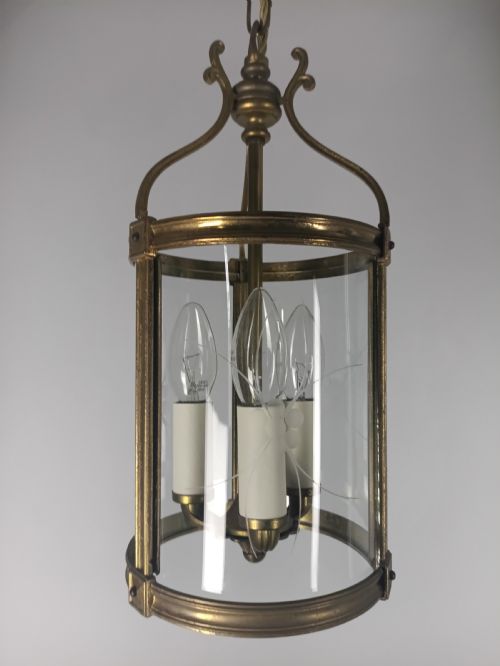
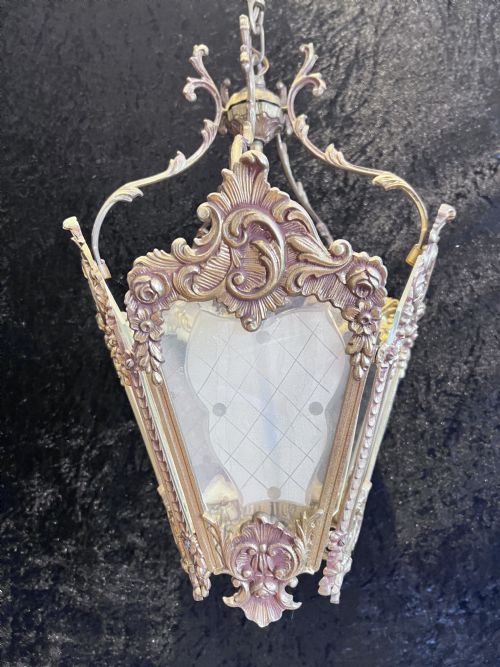
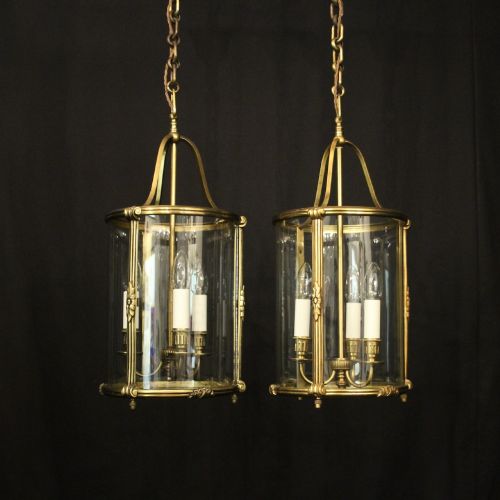
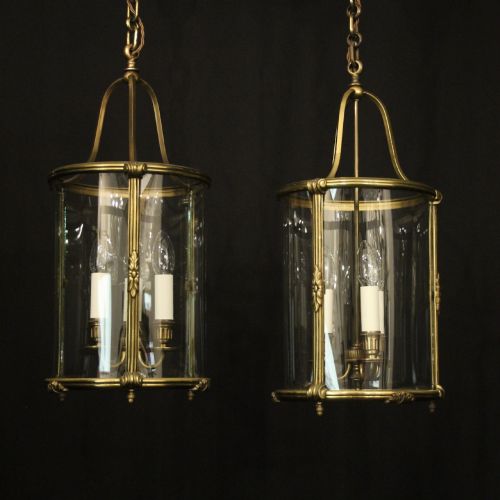
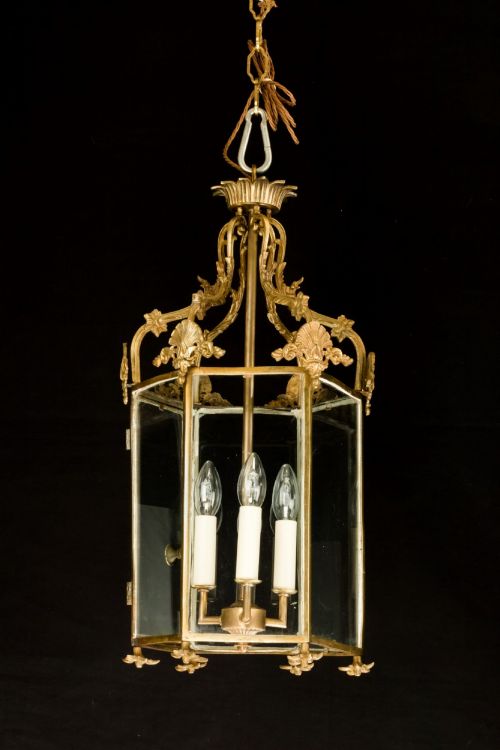
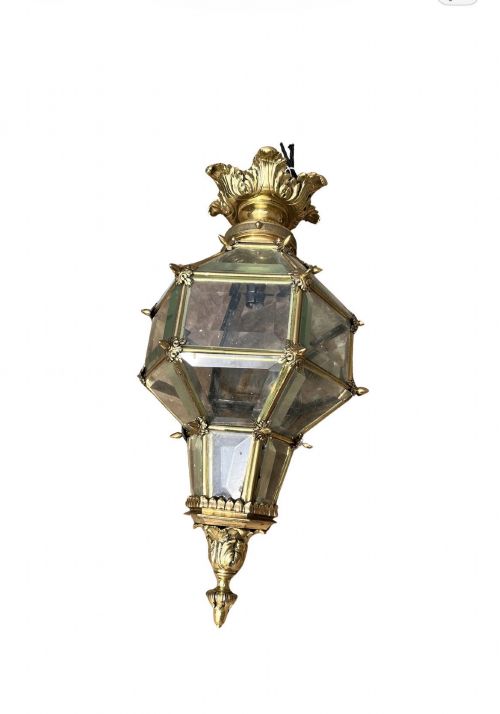
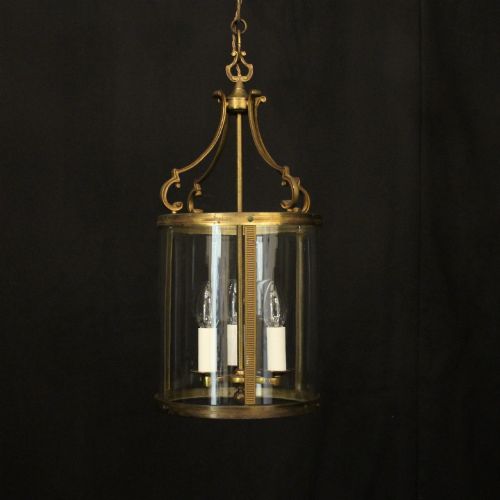
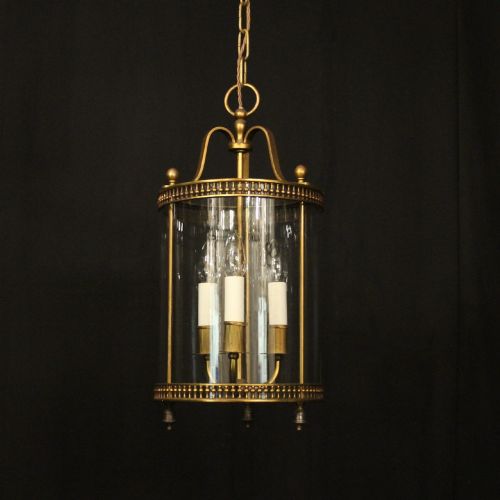
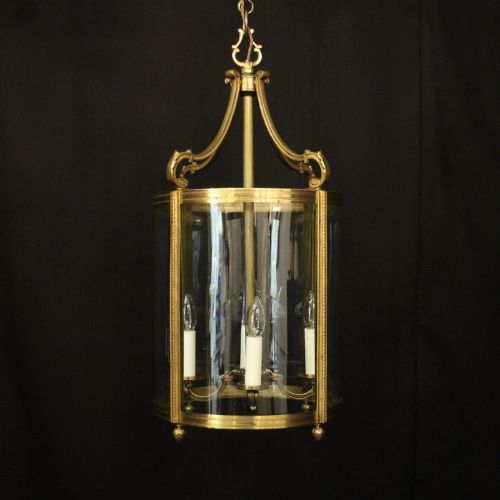
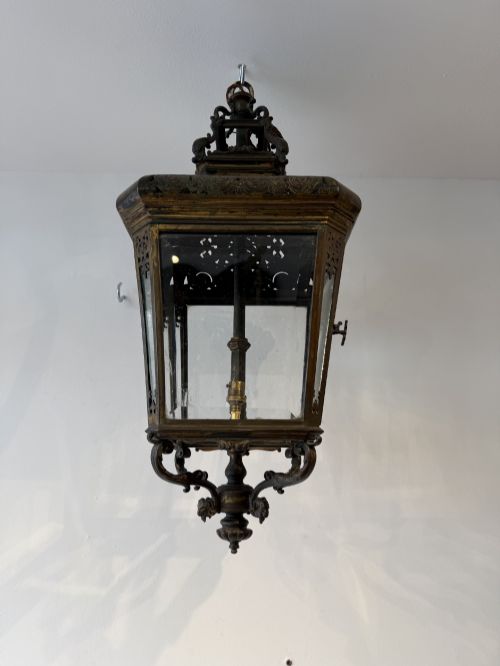
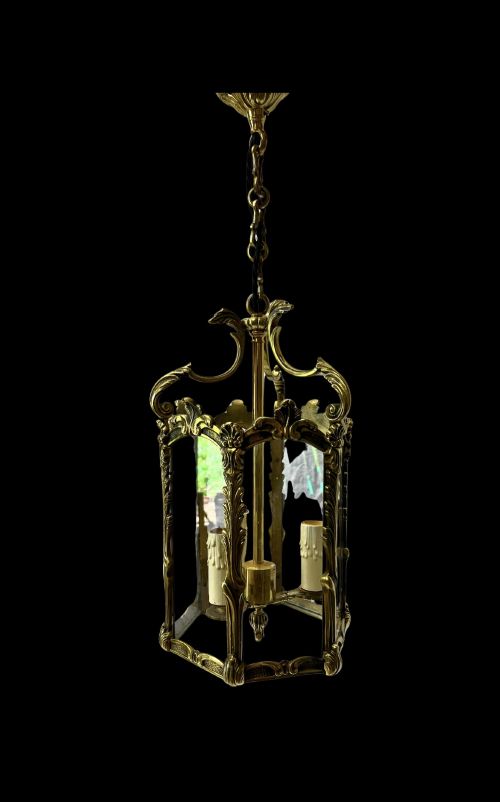
French Chandelier Lantern
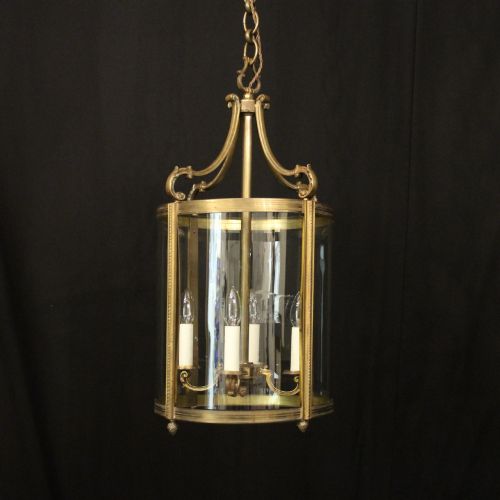
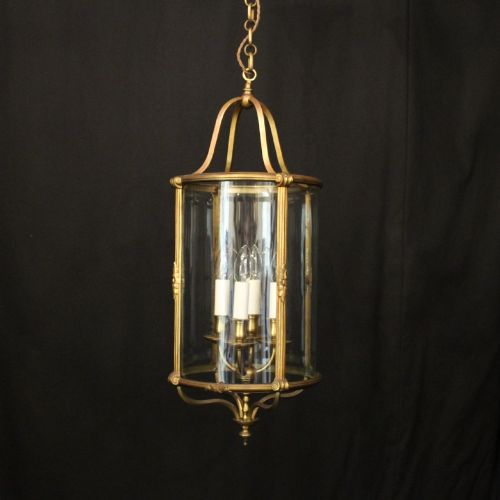
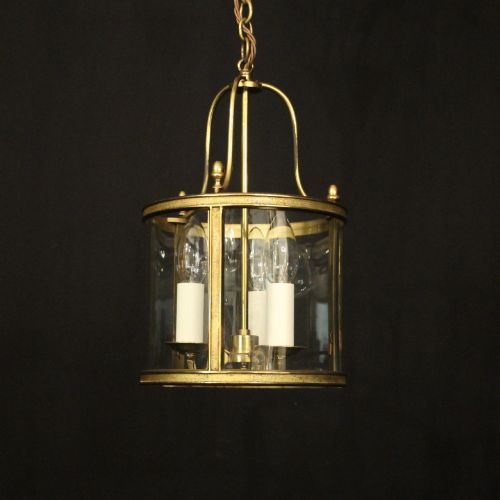
A french chandelier lantern brings immediate architectural weight and sustained illumination to a hallway or stairwell, combining metalwork and glass.
French Chandelier Lantern
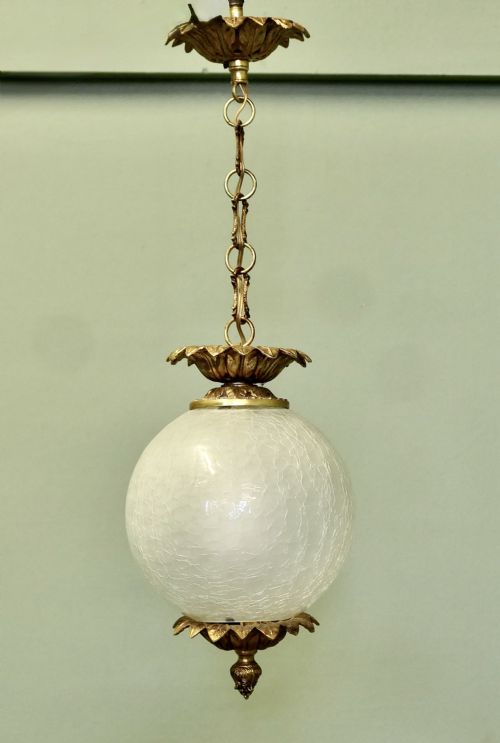
When you search for a french chandelier lantern, you find hanging ceiling light fixtures designed primarily for entrance halls, vestibules, and stairwells. These pieces originate predominantly from the nineteenth and early twentieth centuries, spanning periods from the eighteen-sixties through the nineteen-thirties.
The selections on this page appear in various configurations, including single-light pendants, multi-light chandeliers, and enclosed hall lanterns. The dominant styles draw on French classical, Neoclassical, Louis XVI, and Art Deco design vocabularies.
You will most frequently encounter brass, bronze, and gilt metal frames fitted with flat, convex, or moulded glass panels. These fixtures provide both direct downward illumination and diffused ambient light through their glazed sides.
Materials and construction
The primary structural frames are cast or fabricated from brass, bronze, steel, and gilt metal, often receiving a gilded finish to enhance reflectivity. Metal casting allows for intricate decorative mounts, crests, and classical ornamentation along the frames.
Glazing methods vary from plain bevelled panes to convex and moulded glass panels that refract the internal light source. Many examples incorporate cut glass prisms and etched glass elements to enrich the visual texture when illuminated.
Several lanterns carry the stylistic echo of Versailles, proving that even a hallway light can harbour royal ambitions.
Judging quality in hanging lanterns
Quality rests heavily on the weight of the metal casting and the crispness of the chased or moulded details on the bronze and brass. Finer examples display clean joints, heavy gauges of metal, and substantial cast mounts rather than lightweight pressed sheet components.
The glass execution further distinguishes the tier of a piece, with heavy bevelled panes or thick convex glass representing superior production. Original fire-gilding and well-preserved mercury gilding also elevate the finish far above standard applied paint or modern lacquers.
The French Chandelier Lantern Glossary
- Convex glass
- Curved glass panels that project outward to soften the internal light and widen the visual profile of the lantern. This technique requires skilled glassblowing or slumping.
- Ormolu
- Finely chased gilded bronze used for decorative mounts and structural elements on classical fixtures. The term derives from the French for milled gold.
- Bevelled glass
- Glass panes featuring an angled edge ground down around the perimeter. This treatment catches and refracts light as it passes through the frame.
- Gilt bronze
- Bronze metal treated with a gold leaf or mercury gold finish to produce a lustrous surface. It resists tarnishing better than untreated base metals.
French Chandelier Lantern: Frequently Asked Questions
Where should I hang a french chandelier lantern?
These fixtures suit tall entrance halls, high-ceilinged landings, and generous stairwells where vertical hanging space allows the piece to suspend properly. They provide a focal point upon entry while distributing ambient light across circulation areas.
Ensure adequate ceiling height so the lowest point of the lantern clears head height comfortably. Proper suspension depends on the weight of the metal frame and the structural capacity of the ceiling joists.
How do I clean the glass and metal?
Dust the metal and glass panels regularly with a soft, dry cloth to prevent grime accumulation. Avoid harsh chemical cleaners that strip historical gilt surfaces or damage aged brass patinas.
Glass panels can be removed carefully for washing with mild soapy water if the frame construction allows. Take care around fragile soldered joints and delicate bronze ornamentation during maintenance.
How do I date a brass lantern?
Dating relies on stylistic clues, construction methods, and the type of metal finishing present. Nineteenth-century examples often feature heavier sand-cast bronze frames and hand-cut glass, whereas nineteen-twenties and thirties pieces may show Art Deco geometric lines or machine-rolled glass.
Examine the screws, fixings, and internal electrical components for signs of period manufacturing techniques. Comparing the stylistic motifs against documented French design periods helps narrow the decade of production.