






French Ceramic Wall Plate
A french ceramic wall plate brings painted history and colour to a room, offering everything from tin-glazed earthenware to Paris porcelain.
French Ceramic Wall Plate
When you search for a french ceramic wall plate, you encounter a varied selection of antique cabinet plates, chargers, plaques, and decorative dishes spanning the eighteenth to early twentieth centuries. These pieces cross several styles, notably French Provincial, French Rococo, and Rococo Revival, alongside regional earthenwares and fine porcelain.
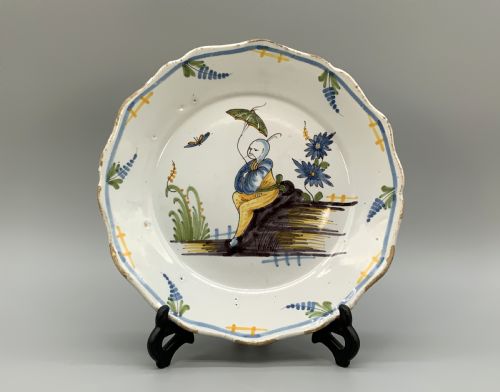
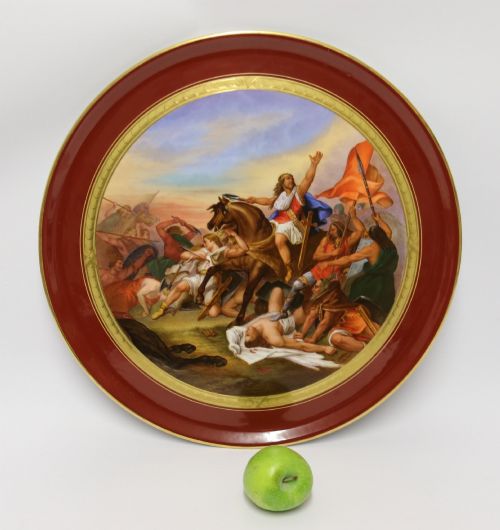
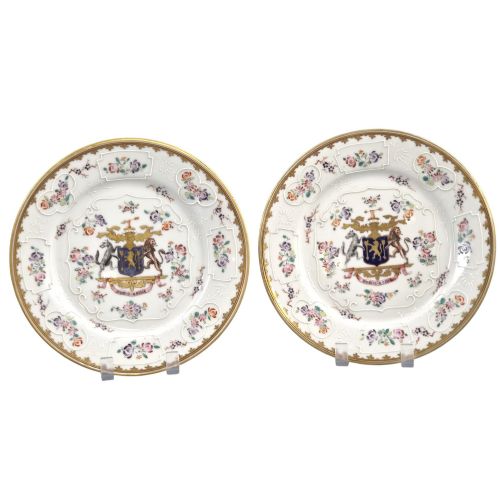
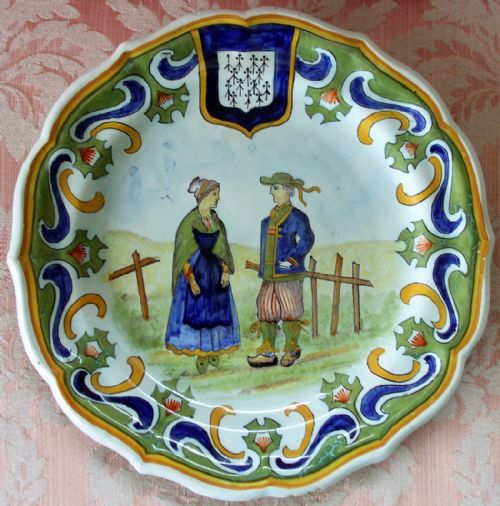
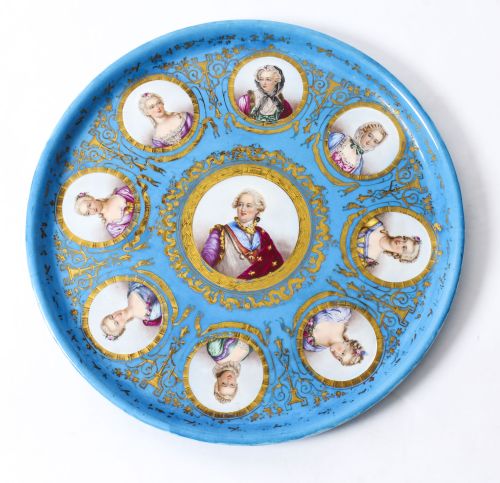
You are most likely to meet nineteenth-century porcelain cabinet plates and regional faience dishes from centres such as Desvres, Quimper, Marseille, and Lille. The selection includes large chargers depicting historical scenes, armorial porcelain, and tin-glazed dishes with manganese and yellow decoration.
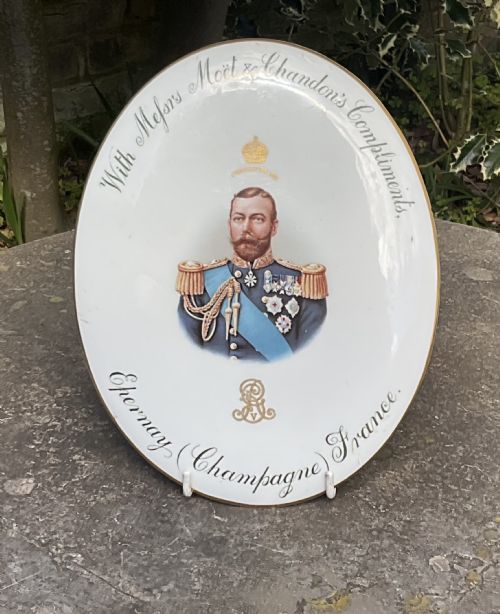
The forms range from large twentieth-century commemorative plaques to eighteenth-century faience and cabinet plates executed in the Sèvres manner. Each piece serves primarily for display, carrying hand-painted motifs that reflect the ceramic traditions of French workshops.
How they were made
Makers utilised ceramic, earthenware, and porcelain bodies, applying tin glaze or enamel to create smooth grounds for hand painting. Gold leaf appears on finer nineteenth-century pieces to highlight borders and architectural details.
Potters shaped these wares into plates, chargers, and plaques, employing traditional kiln-firing methods suited to faience and hard-paste porcelain. Artisans then hand painted subjects ranging from historical battles and armorial bearings to Chinoiserie and regional figures.
French Ceramic Wall Plate Retail Price Guide 2026
Typical asking prices for french ceramic wall plate among the pieces listed under this phrase on Sellingantiques today, from the lower quarter to the upper quarter. They describe what is for sale here now, not the wider market.
The documented forms include cabinet plates, chargers, plaques, and decorative dishes from French centres such as Paris, Desvres, Quimper, Marseille, and Lille.
What varies in quality
The distinction between standard regional output and finer work lies in the precision and detail of the hand painting. Pieces depicting complex historical narratives or intricate armorial designs demonstrate greater artistic skill than simpler floral or geometric patterns.
Materials also divide the range, as finely potted Paris or Sèvres-style porcelain commands attention alongside traditional tin-glazed earthenware. The crispness of the glaze, the brilliance of the enamel palette, and the inclusion of gold leaf further mark the upper tiers of production.
Edmé Samson & Cie·Veuve Perrin
The French Ceramic Wall Plate Glossary
- Faience
- Tin-glazed earthenware produced in France, typically featuring hand-painted decoration on an opaque white glaze. This technique allowed regional potteries to imitate tin-glazed wares from other European centres.
- Charger
- A large decorative plate intended for display rather than table use. These sizeable dishes often showcase elaborate painted scenes or armorial crests.
- Cabinet Plate
- A fine porcelain or ceramic plate made primarily for display in a cabinet or on a wall. Such pieces often exhibit high-quality painting in imitation of major factories like Sèvres.
- Tin Glaze
- An opaque white glaze containing tin oxide, applied to earthenware before painting. It provides a smooth, absorbent surface for pigments.
- Enamel
- Vitreous coloured glass applied over a fired glaze and refired to fuse with the surface. It yields rich, glossy colours on porcelain and ceramic bodies.
French Ceramic Wall Plate: Frequently Asked Questions
How do I hang a heavy ceramic charger?
Displaying a large charger safely requires a specialist wall mount or spring-loaded brass hanger designed to distribute the weight evenly across the rim. Ensure the fixing is secured directly into wall studs or uses appropriate masonry anchors.
Avoid wire attachments glued to the reverse, as historic earthenware and porcelain can be heavy and vulnerable to sudden detachment. Regular checks of the mounting ensure the piece remains secure.
Were these plates used for dining?
Most pieces catalogued as cabinet plates, plaques, or large chargers were intended strictly for decorative display rather than daily service at the table. Their painted surfaces and delicate gold leaf details made them status objects for interior decoration.
Earthenware dishes from regional centres occasionally served practical functions in earlier periods, but surviving examples with fine painted narratives are preserved primarily for their visual appeal.
How do I distinguish faience from porcelain?
Faience is an earthenware body covered with an opaque tin glaze, resulting in a slightly softer material that lacks translucency when held to the light. Porcelain, by contrast, is a dense, vitrified ceramic that is typically white, hard, and translucent.
Examining the foot rim often reveals the unglazed paste beneath, showing the porous earthenware body of faience compared to the glassy compaction of porcelain.
What is the Sèvres manner?
The Sèvres manner refers to decorative styles and painting techniques associated with the historic French national porcelain manufactory. It encompasses rich enamel colours, finely detailed figural scenes, and lavish use of gold leaf.
Plates made in this manner by other makers or independent studios emulate the luxury aesthetic of Royal French porcelain without necessarily originating from the Sèvres kilns.