




French Carved Wall Lights
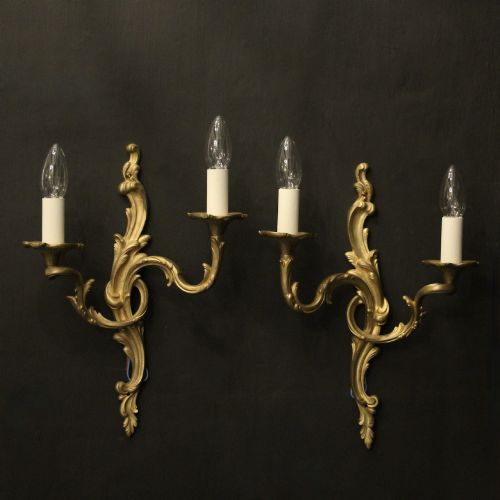
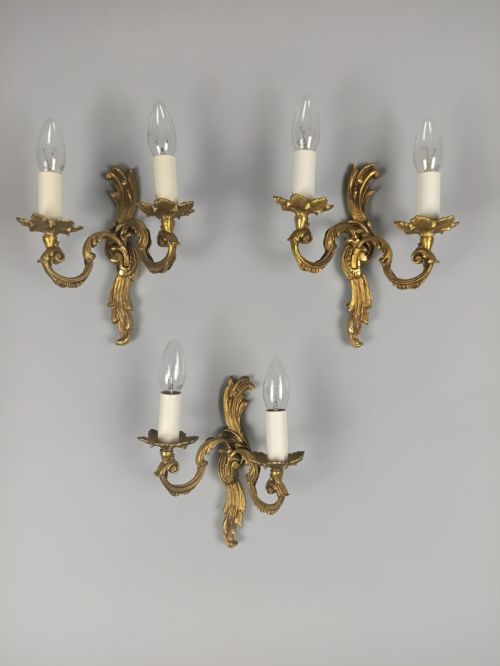
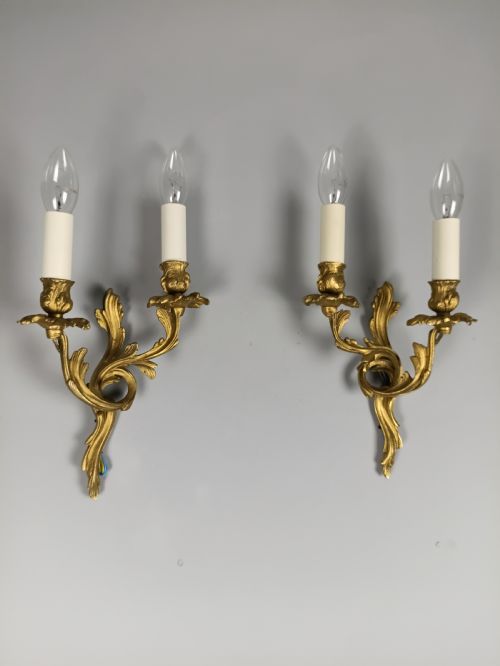
French carved wall lights bring candlelit warmth and ornate decoration to a room, appearing most often as gilded pairs from the nineteenth and early twentieth centuries.
French Carved Wall Lights
The selections span from the mid-nineteenth century through the nineteen-thirties, with many examples originating from the decades around nineteen-twenty and eighteen-eighty. These pieces frequently feature twin or triple arms designed to hold candles or electric bulbs against a wall.
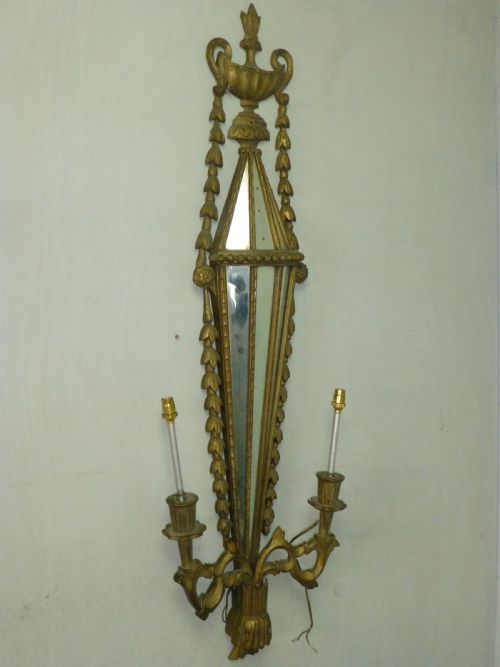
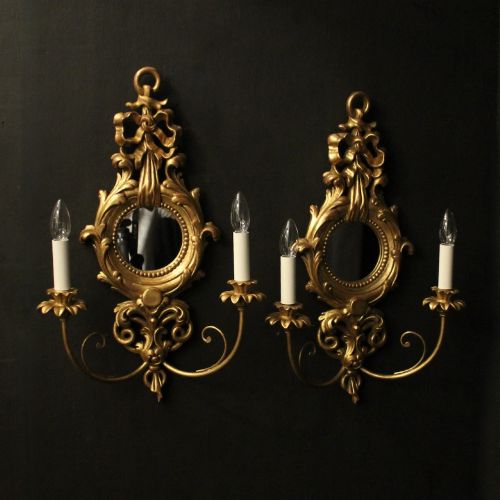
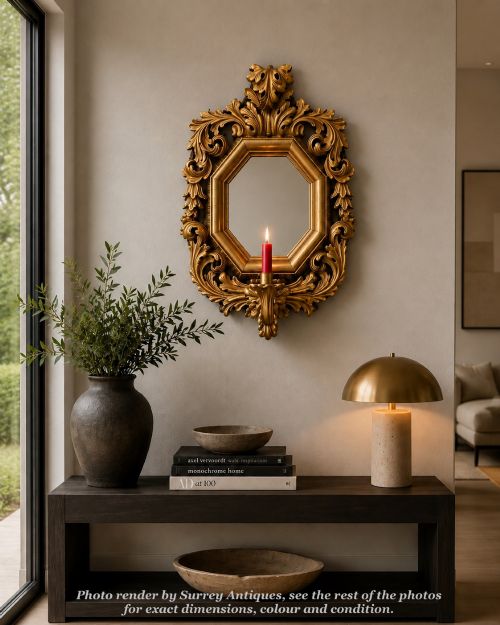
Makers and artisans produced these fixtures in wood, brass, and bronze, often applying gilt finishes to catch and reflect the ambient light. Mirrored versions integrate glass plates to amplify the glow, creating a striking visual focal point in interiors.
How they were made
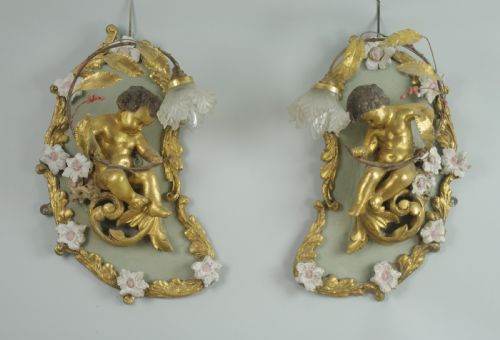
Carvers shaped the wooden foundations from oak or softer timbers, applying gesso layers to prepare surfaces for gilding with gold leaf or metallic paint. Metal components utilise cast brass, gilt bronze, and ormolu, shaped into scrolling arms, floral motifs, and putti figures.
Gilding techniques involved applying thin sheets of gold over bole or using polychrome paint finishes in fruit and floral hues. Mirrored wall lights incorporate bevelled glass plates set within carved wooden or giltwood frames, secured with traditional backing methods.
Object types recorded include wall lights, wall sconces, wall mirrors, console tables, overmantel mirrors, and girandoles.
What varies in quality
Quality shows in the depth and precision of the hand carving, where crisp acanthus leaves and fluid scrolls distinguish superior pieces from softer, mass-produced castings. The richness of the original gilding and the weight of the bronze or brass components also separate finer examples from simpler wooden alternatives.
The integration of the mirror glass within the carved frame, along with the structural stability of multi-branch arms, dictates the overall execution. Pairs with matching patination and intact original mirror plates command greater attention from collectors.
The French Carved Wall Lights Glossary
- Girandole
- A branched wall light or sconce, often incorporating a mirrored backplate to multiply the reflected light. These fixtures frequently display ornate giltwood frames with candle arms projecting forward.
- Giltwood
- Timber coated with gold leaf or gilt powder applied over a prepared gesso ground. This material defines the bright, reflective surfaces seen on many nineteenth-century French frames.
- Sconce
- A wall-mounted lighting fixture designed to carry one or more candles or electric lamps. In French antiques, these pieces feature elaborate cast metal or carved wooden arms.
- Ormolu
- Gilded bronze, where a mercury-gilding technique coats the cast bronze base with a layer of gold. This process creates the rich, metallic lustre found on nineteenth-century mounts.
- Toleware
- Lacquered or enamelled sheet metal painted with decorative motifs. It appears on select twentieth-century wall sconces alongside carved wooden elements.
French Carved Wall Lights: Frequently Asked Questions
How do I hang a heavy wall light?
Heavy gilded bronze or large wooden wall lights require secure wall anchors and mounting directly into studs or masonry to support their weight safely.
Professional installation is recommended, especially for pieces converted to electricity that require concealed wiring behind the fixture backplate.
Are most of these wall lights sold in pairs?
Many French wall lights survive and are sold in matched pairs or larger sets to flank mirrors, doorways, or fireplaces symmetrically.
Single pieces and larger sets of three or four also appear, originating from grander architectural schemes.
What is the difference between a sconce and a girandole?
A sconce is a general term for any wall-mounted light fixture, whereas a girandole specifically includes an integrated mirror plate behind the candle arms.
The mirror surface on a girandole serves to bounce candle illumination back into the room.