



French Carved Dressing Table
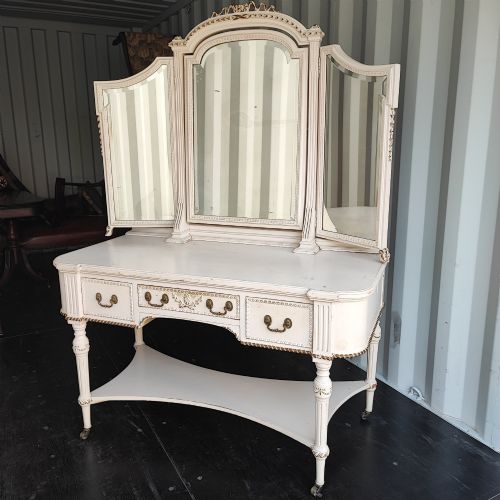
A french carved dressing table brings elaborate woodwork and classical continental styling directly into a bedroom.
French Carved Dressing Table
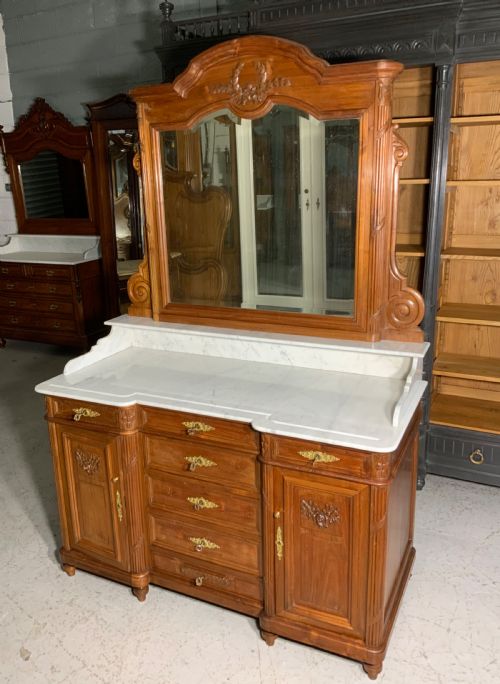
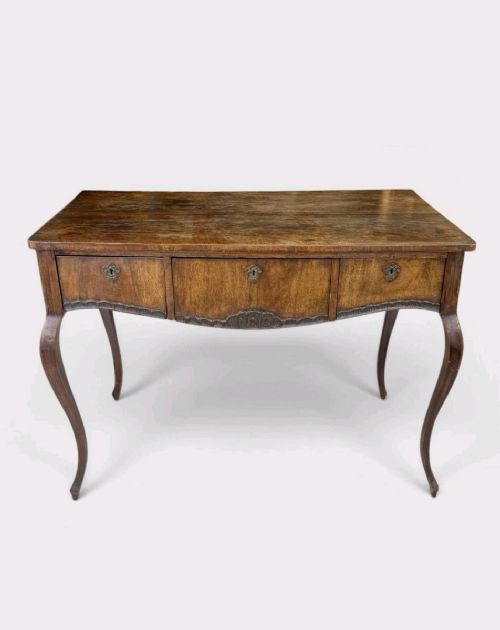
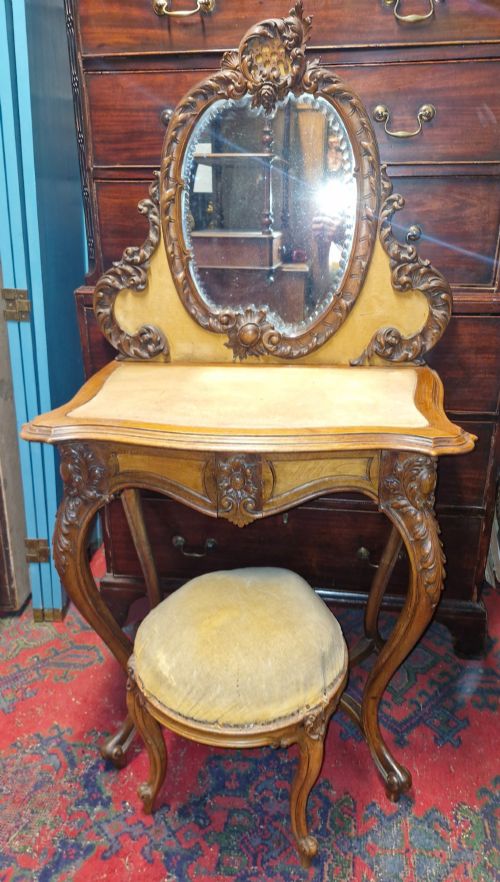
When searching for a french carved dressing table, buyers encounter heavily ornamented vanity furniture originating primarily across nineteenth and early twentieth century periods. Walnut and oak form the structural core of these pieces, frequently paired with matching stools or triple mirrors.
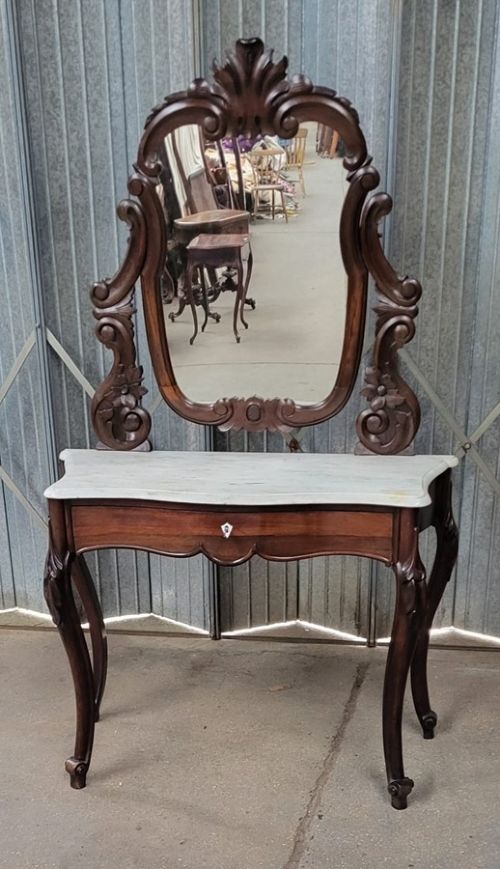
The aesthetic draws heavily from provincial workshops and revival movements, displaying intricate motifs derived from Louis styles. Many examples incorporate polished marble tops and glass components to complete the vanity function.
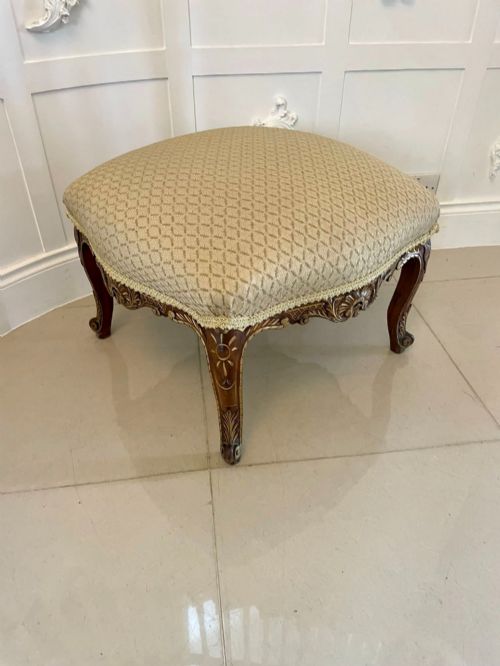
Alongside dedicated dressing tables, related seating and auxiliary washstands often appear within the same stylistic category. These items share the signature carved ornamentation and curvilinear forms expected from continental cabinetwork.
Materials and construction methods
Cabinetmakers utilised solid timbers including walnut, oak, mahogany, and beech, shaping them into cabriole legs and serpentine frames. Giltwood and gesso finishes were applied to highlight intricate relief work, while painted surfaces offered alternative decorative textures.
Marble slabs served as durable, polished tops for heavy-use surfaces, while bevelled glass was set into swivelling table mirrors and folding triple frames. Joinery relied on traditional peg and dowel methods to support substantial wood and stone weights.
A tiny carved bone miniature boudoir set offers all the vanity luxury in miniature scale.
Judging the standard of execution
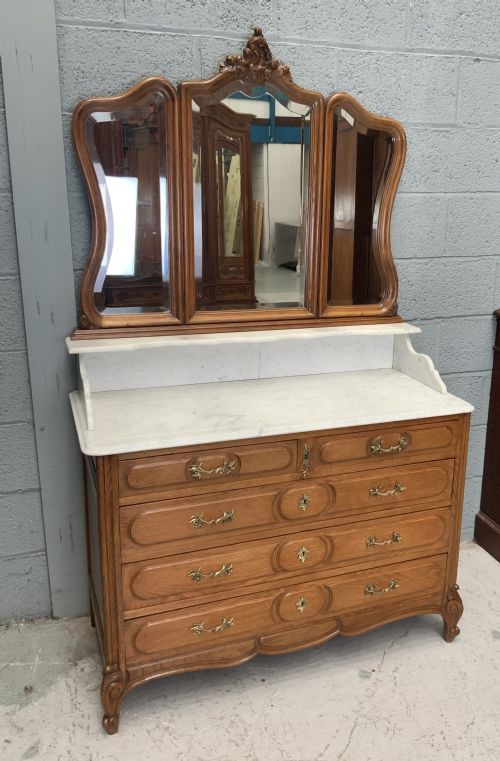
Quality rests upon the depth and precision of the hand-carved woodwork, distinguishing fluid, deeply undercut motifs from shallow, mechanical impressions. The integration of heavy materials, such as thick marble tops fitted flush to wooden frames, marks superior construction.
The preservation of original surface finishes, whether polished walnut, giltwood, or early paint layers, determines the visual integrity of the piece. Superior examples maintain balanced proportions across both the dressing table and its accompanying stool or mirror.
Cesar Bagard·Maples of London and Paris
The French Carved Dressing Table Glossary
- Cabriole leg
- A furniture leg that curves outward and then tapers inward, mimicking an animal's limb. This form appears frequently on chairs and tables from various revival periods.
- Marble topped
- Fitted with a polished stone surface providing a durable workspace. This feature is common on heavy vanity furniture and washstands.
- Giltwood
- Timber coated with gold leaf or gold paint to create a rich decorative finish. It is often seen on ornate mirrors and decorative seating.
- Triple mirror
- A three-panel glass assembly with adjustable side sections. These fixtures allowed users to view reflections from multiple angles.
- Rococo Revival
- A nineteenth-century design style characterised by asymmetrical ornamentation, C-scrolls, and naturalistic plant motifs. It heavily influenced continental dressing table design.
French Carved Dressing Table: Frequently Asked Questions
What woods were used for these tables?
Makers relied on solid hardwoods such as walnut, oak, and mahogany for the primary frames and structural supports. Beech was also utilised for carved seating elements.
Surface finishes frequently incorporated painted treatments, giltwood applications, or polished marble slabs to complete the piece.
Do these tables come with mirrors?
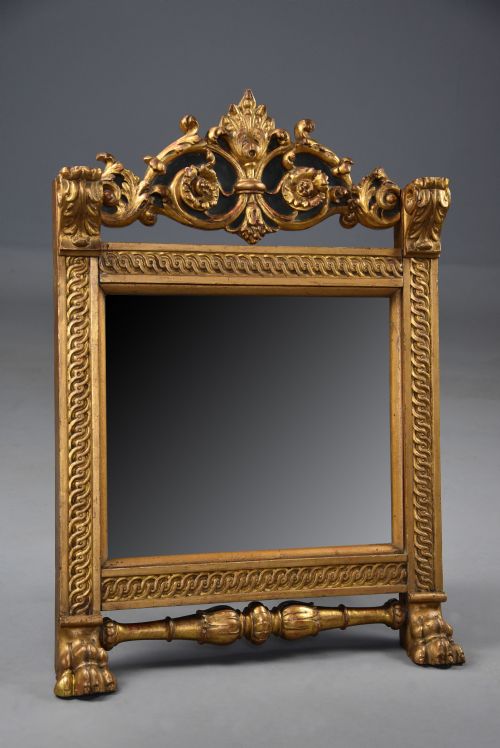
Many examples include integrated glass components, ranging from single swivelling table mirrors to folding triple mirror frames. These units were often constructed to match the woodwork of the main table.
Separate table mirrors also appear as distinct items designed to sit atop a matching surface.
How do I identify the period?
Dating relies on stylistic revival cues, such as Louis XV or Rococo details, alongside timber choices and construction hardware. Nineteenth and early twentieth-century pieces dominate the recorded selections.
Archival records extend back further into earlier centuries, though distinct joinery methods help separate older walnut and oak examples from later revival work.
What seating matches these dressing tables?
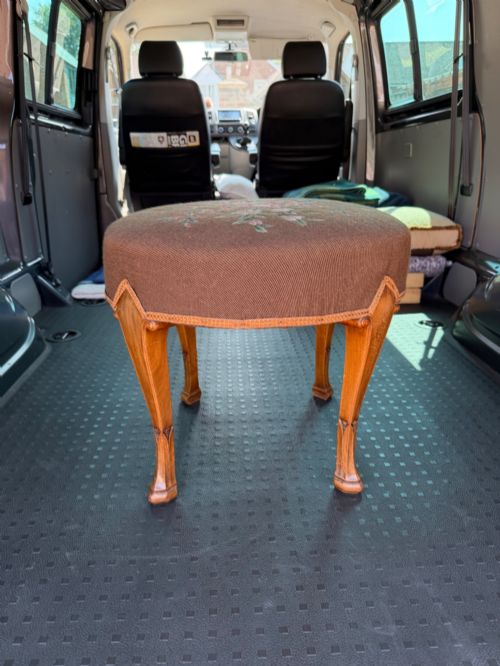
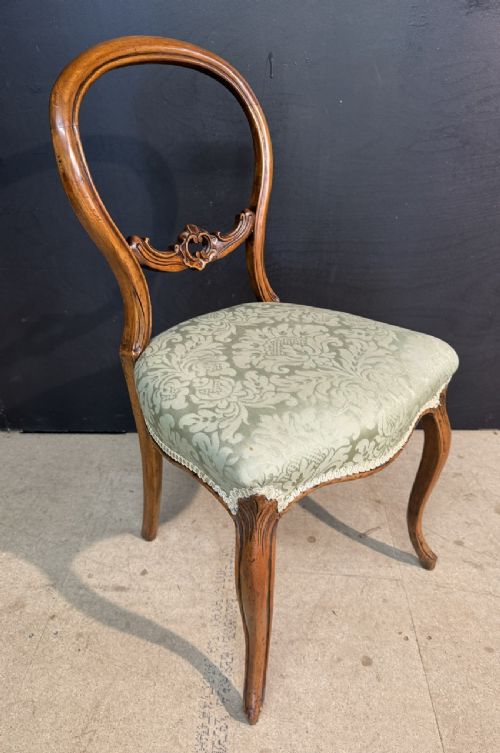
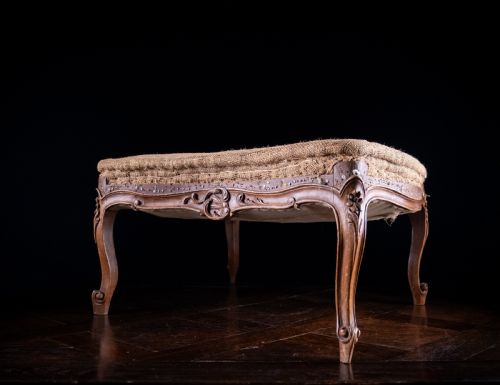
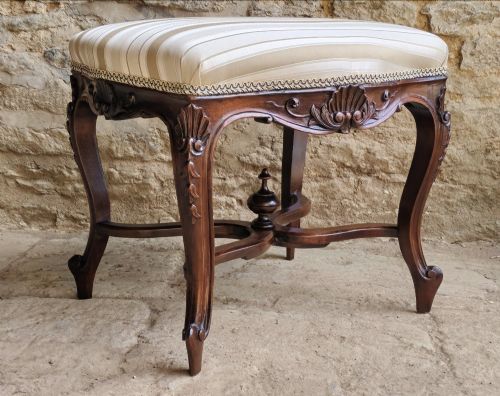
Period listings frequently pair dressing tables with low stools, footstools, or small vanity chairs featuring matching carved frames. These seats often utilise cabriole legs and upholstered fabric tops.
Options range from simple wooden stools to painted window seats and boudoir chairs designed to fit beneath the table.