




French Carved Clock
A french carved clock brings architectural presence and intricate timber or gilt detail to a room.
French Carved Clock
When you search for a french carved clock, you encounter timepieces housed in heavily detailed timber, giltwood, and stone cases dating largely from the nineteenth century. These objects function as both reliable timekeepers and sculptural centerpieces for mantelpieces, brackets, and walls.
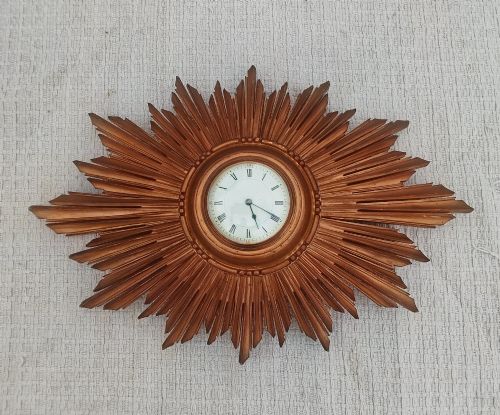
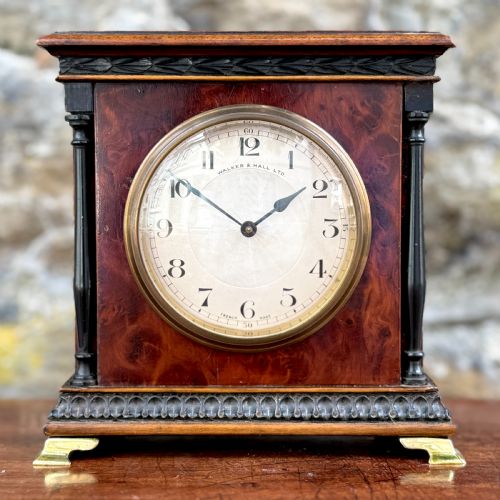
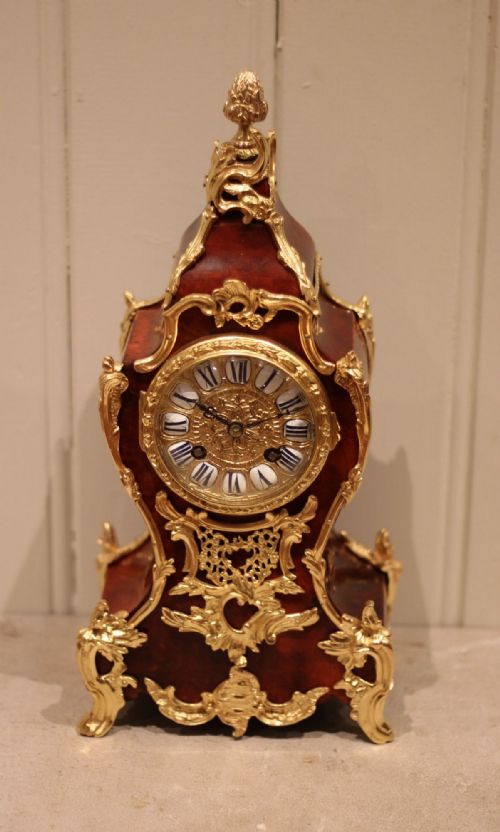
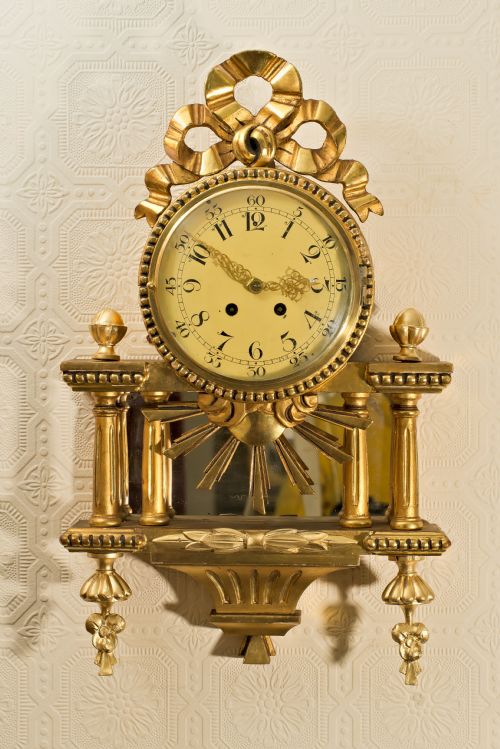
The selection ranges from architectural mahogany and walnut mantel pieces to gilded wall cartels and elaborate clock sets incorporating marble or alabaster. Many examples reflect historical revivals, drawing on Rococo, Neo-Classical, and Art Deco vocabularies.
Makers and workshops across Britain and continental Europe contributed to this tradition, utilising local timbers alongside imported stones and cast metal mounts. The resulting objects span compact desk clocks to large, imposing domestic timepieces.
Materials and construction methods
Cabinetmakers shaped these cases from dense hardwoods such as mahogany, walnut, and oak, often applying deep hand-carving or delicate inlay. Giltwood and gilt bronze elements provided rich ornamentation, complementing surfaces of white marble, slate, and alabaster.
Movements were engineered from brass and steel, frequently paired with enamelled dials and protective glass bezels or domes. Ormolu mounts and cast bronze figures were integrated into the wooden and stone structures to create layered decorative effects.
Some timepieces feature automation elements or carry romantic titles like the clock of the universe.
Assessing craftsmanship and execution
The distinction between ordinary and exceptional pieces lies in the crispness of the hand-carving and the integration of decorative mounts. Superior examples display deeply undercut wood or timber frames where every scroll and leaf retains sharp definition rather than soft moulding.
Material selection and movement provenance further differentiate the range. High-grade specimens combine substantial marble or figured walnut bases with signed movements from recognised clockmakers, ensuring mechanical integrity matches the visual ambition of the case.
Walker and Hall·Samuel Marti·William Webster·Wetterstrands·Perivale of England
The French Carved Clock Glossary
- Cartel clock
- A wall-mounted clock enclosed in an ornamental case, typically made of giltwood or bronze. These forms became popular during the eighteenth and nineteenth centuries for principal rooms.
- Ormolu
- Gilded bronze used extensively for decorative mounts on nineteenth-century clock cases. The technique involves applying a mercury and gold amalgam to cast bronze.
- Drumhead clock
- A timepiece featuring a circular clock head resembling a drum, mounted upon a pedestal or base of marble or slate. This silhouette was common during the Victorian period.
- Clock set
- An ensemble comprising a central mantel clock flanked by matching decorative ornaments, such as urns or candelabra. These sets were designed to create a symmetrical display on a mantelpiece.
- Enamel dial
- A clock face made by fusing powdered glass onto a metal substrate, often featuring painted Roman or Arabic numerals. This finish provided a durable, bright surface for reading the time.
French Carved Clock: Frequently Asked Questions
How do I identify a French movement?
French movements of the nineteenth century are typically stamped with maker marks, serial numbers, or foundry medals on the brass backplate. Many of these mechanisms were produced in volume by specialised factories and exported for domestic casing.
Examining the escapement and pendulum suspension often reveals the specific period of manufacture. Winding holes on the dial face offer another clue to the layout of the striking train inside.
Where should I place a mantel clock?
These clocks were traditionally designed for the principal living room or parlour mantelpiece, where their architectural cases could command attention. Stability and level surfaces are essential for proper pendulum operation.
Avoid positioning heavy marble or wooden clocks near direct heat sources or damp exterior walls. Ensuring adequate clearance allows the striking mechanism to resonate clearly.
What defines the Rococo revival style?
The Rococo revival style draws on asymmetrical scrolls, naturalistic shell motifs, and exuberant foliage popular during the mid-eighteenth century. In nineteenth-century clock cases, this translated into swirling carved timber and undulating gilt bronze mounts.
Pieces in this aesthetic avoid rigid symmetry in favour of dynamic, flowing lines. The overall effect emphasises theatrical movement and rich surface texture.