





French Cane Bed
A French cane bed brings classic continental elegance and woven texture straight into a bedroom.
French Cane Bed
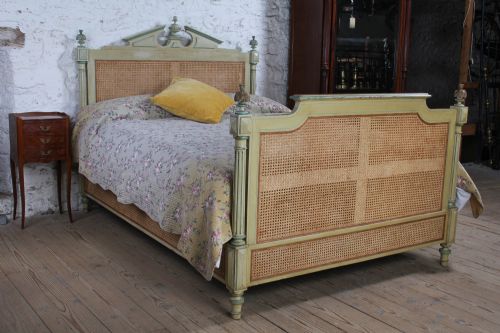
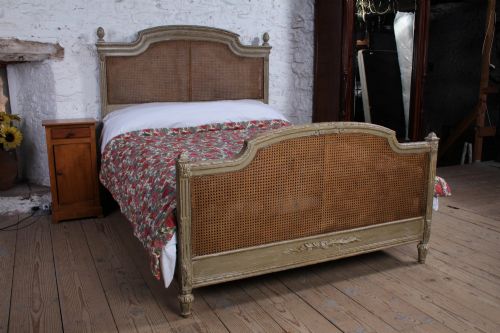
A french cane bed combines traditional woodwork with woven cane panelling, typically seen in styles reminiscent of Louis XVI, the Empire period, and Art Deco. These pieces originate from roughly the late Victorian era up through the nineteen-twenties, incorporating painted timbers, carved beech, and occasionally gold leaf accents. Buyers encounter full size frames, kingsize and super kingsize layouts, alongside matching bedroom suites, daybeds, and benches.
The aesthetic leans heavily on neoclassical proportions and painted finishes, ranging from distressed polychrome panels to gilded highlights. Alongside standard bedframes, the category includes associated seating like window seats, banquettes, and daybeds such as the canapé corbeille. Most examples span the turn of the twentieth century, reflecting a sustained revival of historical French cabinet-making motifs adapted for larger modern mattresses.
Materials and Construction
The structural framework relies predominantly on beech and general painted timber, shaped through manual carving and joinery. Artisans applied various finishes including paint, polychrome detailing, and gold leaf directly to the carved wood substrates. Caning is woven directly into or through apertures in the frame, providing a resilient yet flexible panel for headboards and footboards.
Upholstered elements and linen components occasionally accompany the wood and cane structures, particularly in daybeds and bedroom suites. The integration of painted surfaces with carved wooden mouldings demands precise carpentry to ensure the cane remains taut and properly supported within the structural rails.
French Cane Bed Retail Price Guide 2026
Typical asking prices for french cane bed among the pieces listed under this phrase on Sellingantiques today, from the lower quarter to the upper quarter. They describe what is for sale here now, not the wider market.
Listings feature items dated from eighteen ninety through the nineteen-twenties, encompassing Victorian, Art Deco, and Louis XVI revival styles.
Judging Quality
The distinction between standard examples and superior pieces rests in the depth and precision of the carved wood details. Hand painted portrait panels and original polychrome surfaces elevate the visual complexity of a bed far beyond simple flat paint. Furthermore, the tightness and uniformity of the cane weave indicate the standard of craftsmanship invested in the original piece.
Cohesion within a complete suite, including matching bedsides, drawers, or chairs, demonstrates higher manufacturing ambition than an isolated frame. The application of gold leaf and the subtlety of neoclassical proportions also divide basic production from more accomplished workshop output.
The French Cane Bed Glossary
- Caning
- A weaving technique utilising thin strips of material to create a patterned, breathable panel within wooden bed frames and seating.
- Louis XVI Style
- A neoclassical design vocabulary characterised by straight lines, symmetry, classical motifs, and restrained ornamentation. This aesthetic dominates much of the French furniture from the late nineteenth and early twentieth centuries.
- Polychrome
- The practice of decorating architectural elements or furniture in a variety of colours. It appears on select painted panels associated with turn-of-the-century bedroom suites.
- Banquette
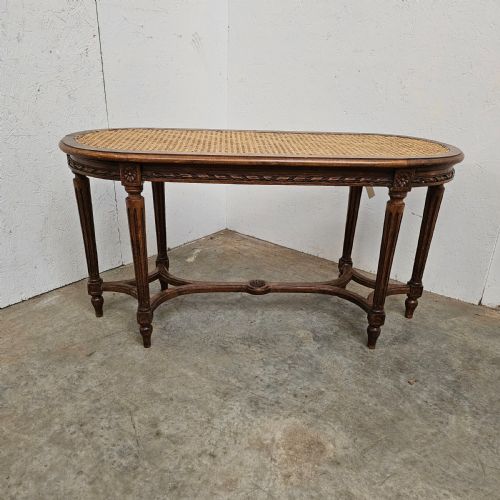
- A long upholstered or caned bench without a back or with low arms. These pieces frequently match the design style of contemporary bedframes.
- Gilded
- Covered thinly with gold leaf or gold paint to give a lustrous metallic finish. This treatment highlights specific carved details on select opulent frames.
French Cane Bed: Frequently Asked Questions
How do I fit a modern mattress?
Many vintage French frames are slightly shorter or narrower than standard modern mattress dimensions. Buyers often utilise custom mattress makers or modify the internal slats to ensure a secure fit within the antique rails.
Checking the internal dimensions before purchase avoids sizing discrepancies. Platform bases or modern bed bases are sometimes integrated to support contemporary mattresses safely.
How should I clean the cane panels?
Dust the woven cane regularly using a soft brush attachment on a vacuum cleaner. Avoid soaking the material, as excess moisture can weaken the natural fibres over time.
Conditioning the wood and cane lightly with appropriate oils helps prevent brittleness. Keeping the furniture out of direct sunlight preserves both the paintwork and the woven panels.
What defines the Louis XVI look?
The Louis XVI style emphasises straight geometric lines, fluted columns, and classical restraint, moving away from the curved excess of earlier rococo designs. This aesthetic forms the basis for many turned and carved bedframes produced around nineteen hundred.
Look for symmetrical ornamentation and crisp architectural carving on the headboards and footboards. These proportions lend a formal yet light appearance to bedroom interiors.
Are these beds structurally sturdy?
Solid beech frames and traditional joinery provide reliable everyday support when properly assembled and maintained. The structural integrity depends on the condition of the side rails and corner brackets rather than the decorative cane inserts.
Professional assembly ensures that the heavy headboards and footboards remain stable. Regular checks of the hardware keep the bed frame secure during daily use.