

French Candle Style Sconces
French candle style sconces bring the warm, layered illumination of classical interiors directly to a modern wall.
French Candle Style Sconces
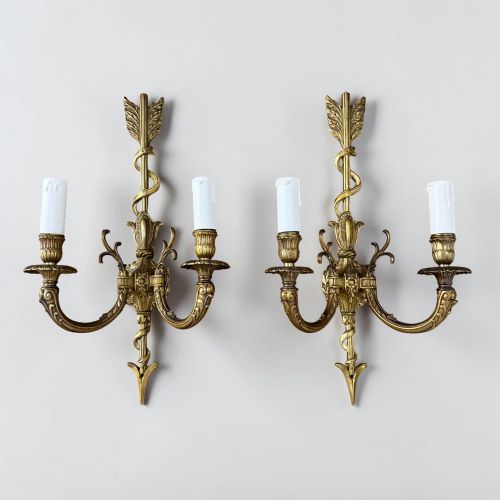
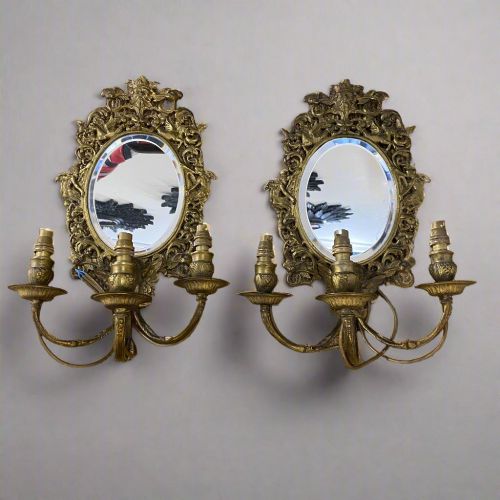
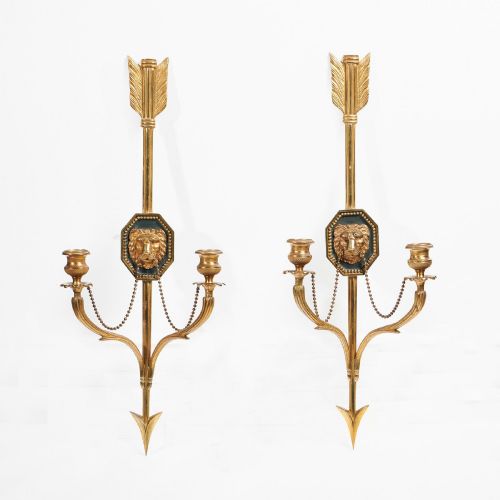
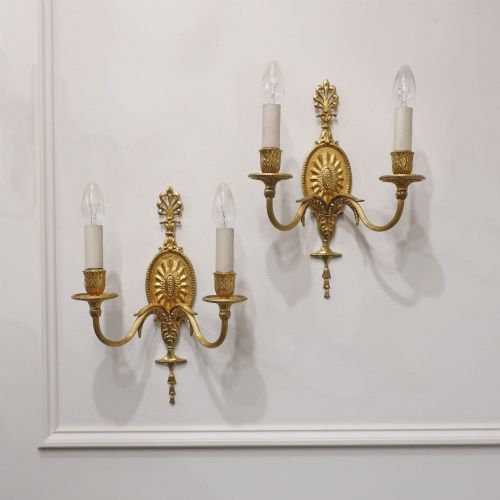
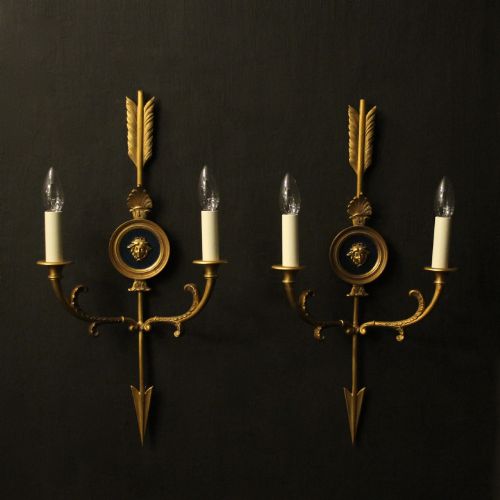
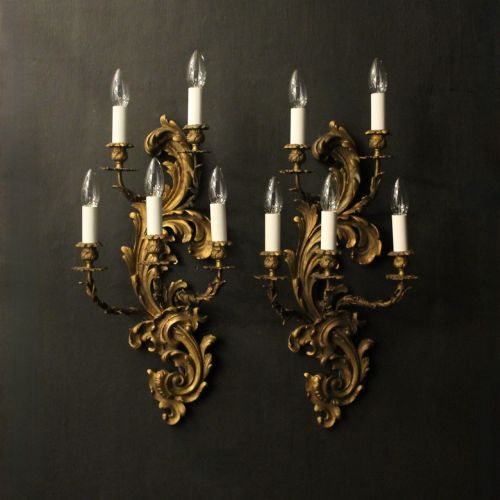
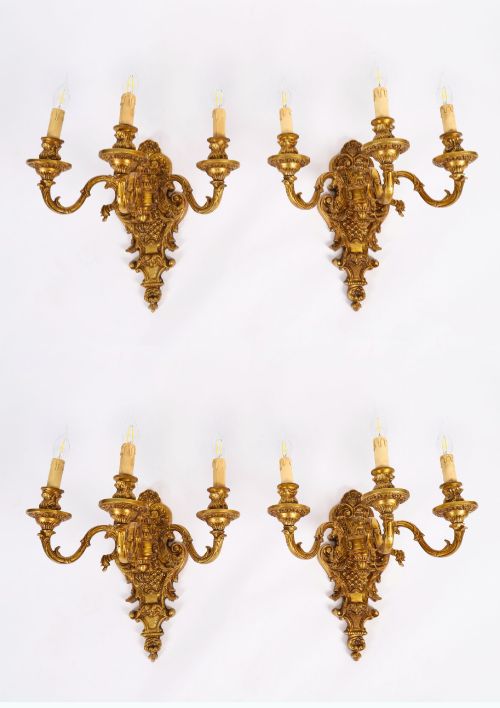
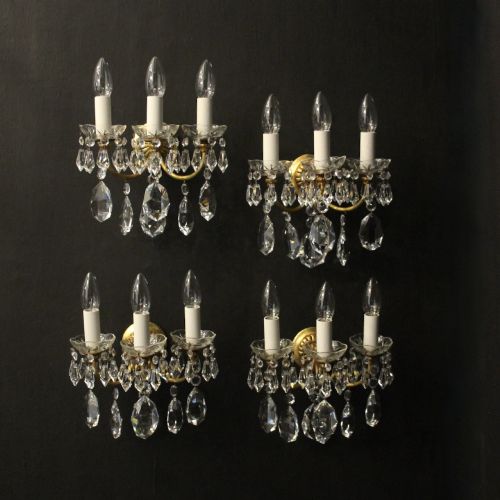
French candle style sconces are wall-mounted lighting fixtures designed to mimic the appearance of traditional taper candles, usually configured with multiple branching arms. When you search for French candle style sconces, you encounter pieces that range from twin-arm variants to substantial sets of four or six lights. The selections span across the nineteenth and early twentieth centuries, drawing heavily on classical design vocabularies.
Originating largely from continental workshops and subsequent revival periods, these wall lights reflect a sustained European fascination with opulent metalwork. Pairs and larger sets predominate, offering symmetry that suits placement flanking a fireplace, mirror, or doorway. Their structural formats remain tied to the practical requirement of supporting candleholders or electrified faux-candle sleeves.
Materials and construction methods
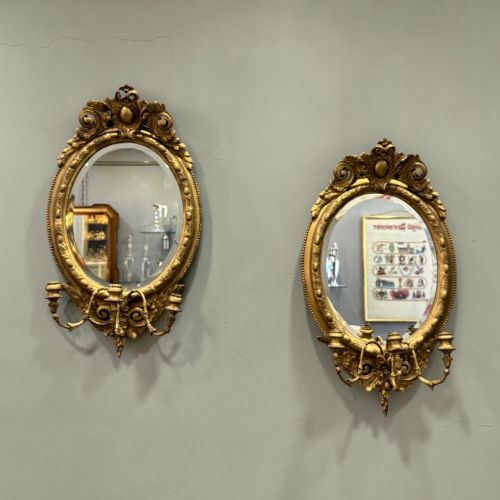
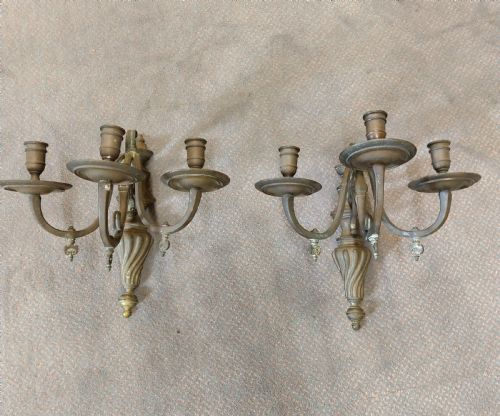
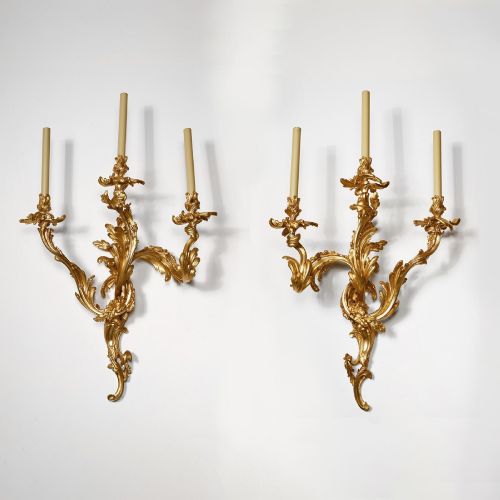
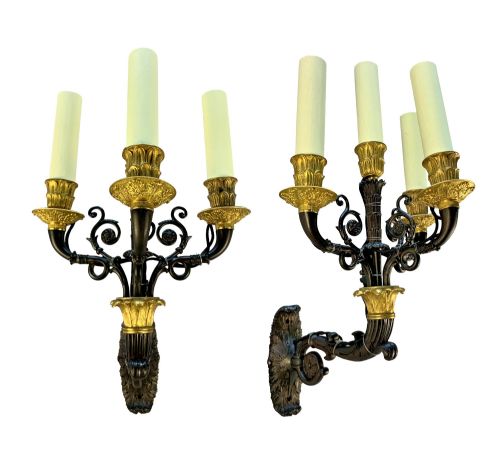
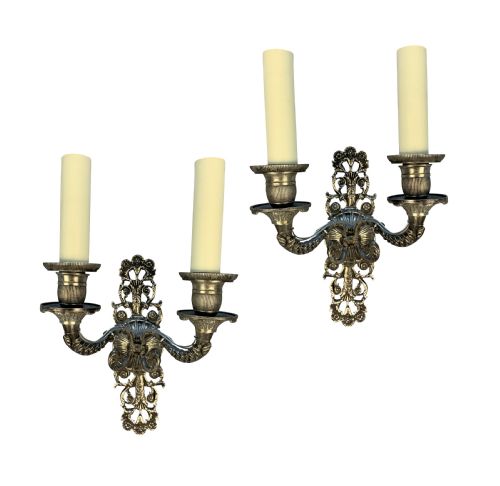
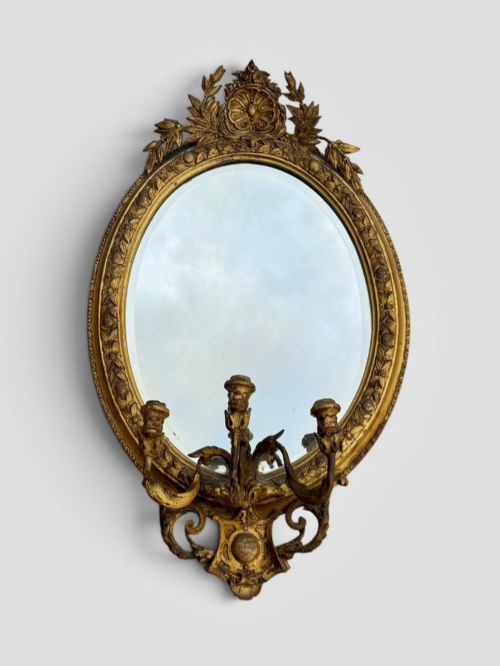
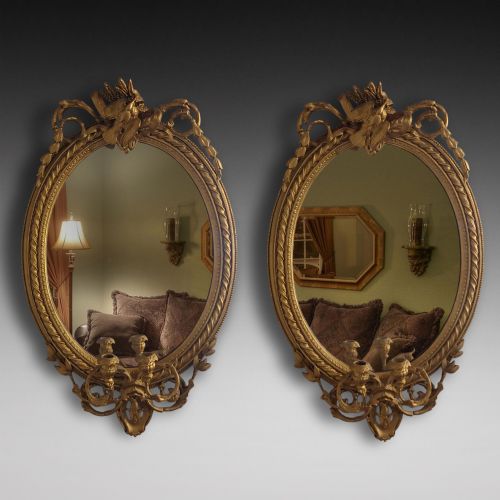
Makers relied extensively on cast bronze, ormolu, and brass to form the structural bodies and branching arms of these sconces. Gilt bronze and ormolu finishes provided a rich, reflective golden surface that enhanced the visual warmth of the light. Secondary metals like spelter and silver plating also appear, alongside giltwood and gesso in mirror frames designed to hold candle branches.
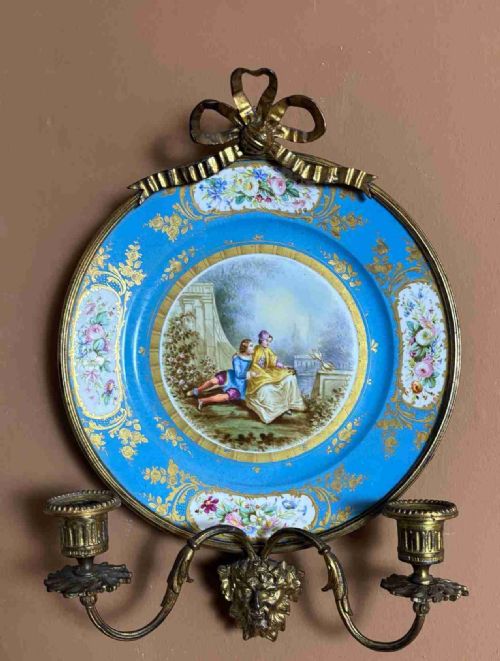
Surface ornamentation often involved intricate chasing, parcel-gilding, and the integration of contrasting elements such as white marble bases or porcelain portrait plaques. Crystal drops and accents were frequently added to refract light from the multi-armed configurations. The assembly typically involved mechanical fastening of individual cast branches to a central backplate designed for wall attachment.
French Candle Style Sconces Retail Price Guide 2026
Typical asking prices for french candle style sconces among the pieces listed under this phrase on Sellingantiques today, from the lower quarter to the upper quarter. They describe what is for sale here now, not the wider market.
Listings feature periods spanning from the early nineteenth century through the Art Deco era of the 1930s.
Assessing quality and execution
Structural integrity of the branching arms and the precise alignment of the drip pans indicate the original maker's skill. Finer sconces utilise heavier gauge metals that prevent the arms from sagging under the weight of multiple candle branches or crystal drops. The integration of decorative details, such as hand-painted porcelain or matched marble inserts, points directly to higher workshop standards.
The French Candle Style Sconces Glossary
- Ormolu
- Gilded bronze produced by applying a mercury and gold amalgam to a bronze object and heating it until the mercury vaporised. This historic technique produced a durable, deep golden lustre unique to antique metalwork.
- Girandole
- An ornamental bracket or wall mirror equipped with candle branches. The reflective glass surface served to multiply the ambient light cast by the candles.
- Appliqué
- A term frequently used interchangeably with wall sconce in continental terminology. It describes a decorative light fixture affixed directly to a wall surface.
- Caryatid
- A sculpted female figure serving as an architectural support. In lighting design, these figures often form the main vertical shaft of a candlestick or the central mount of a sconce.
- Rococo Revival
- A nineteenth-century design movement that revived the asymmetrical scrolls, shell motifs, and exuberant curves of the eighteenth-century French Rococo style.
French Candle Style Sconces: Frequently Asked Questions
How do I wire antique wall sconces?
Many vintage and antique wall lights have been adapted for modern electricity over the years, often utilising internal wiring channels through the backplate. Professional electricians can safely convert older fixtures using heat-resistant wiring that complies with current safety standards.
When working with fragile metals like ormolu or gilt bronze, professional installation prevents damage to delicate surface patinas and ensures the heavy fixtures are securely anchored to wall studs.
Where should I place wall sconces?
Sconces are traditionally positioned to flank architectural focal points such as mantelpieces, large mirrors, or doorways. Placing them at roughly eye level ensures balanced ambient illumination without creating harsh direct glares.
Matching pairs work exceptionally well to establish visual symmetry in dining rooms, hallways, or living spaces, while larger sets of four provide cohesive lighting across an entire wall expanse.
How do I clean gilt bronze and ormolu?
Maintenance requires minimal intervention to protect the original gilding from wear. Gentle dusting with a soft, dry microfibre cloth removes surface particles without abrasive friction.
Harsh chemical polishes, abrasive pads, or liquid cleaners must be avoided entirely, as they strip away the delicate gold layer and permanently damage the antique finish.
What is the difference between an applique and a sconce?
The terms are largely interchangeable in the antiques trade, with 'applique' deriving from the French terminology for a wall-mounted fixture. Both describe light fittings designed to attach directly to a vertical surface rather than standing on a table or floor.
French pieces frequently retain the applique designation in period descriptions, while English and American markets more commonly refer to them as sconces or wall lights.