



French Candelabra Sconces
French candelabra sconces bring warm, layered illumination and classical ornament to a room through their elaborate metalwork and branching arms.
French Candelabra Sconces
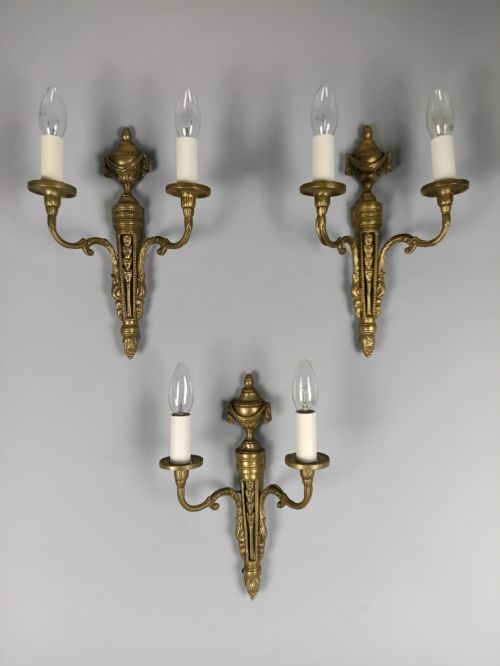
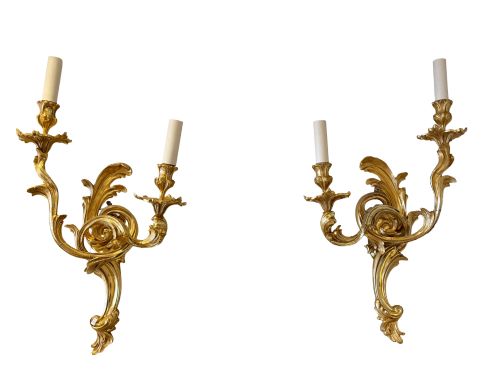
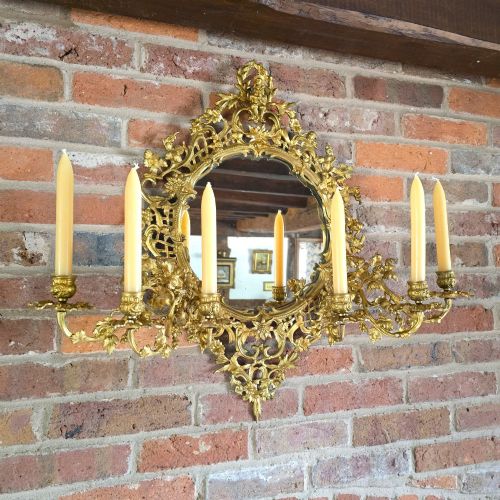
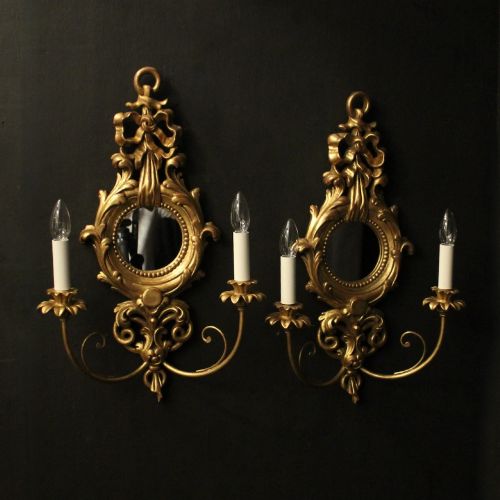
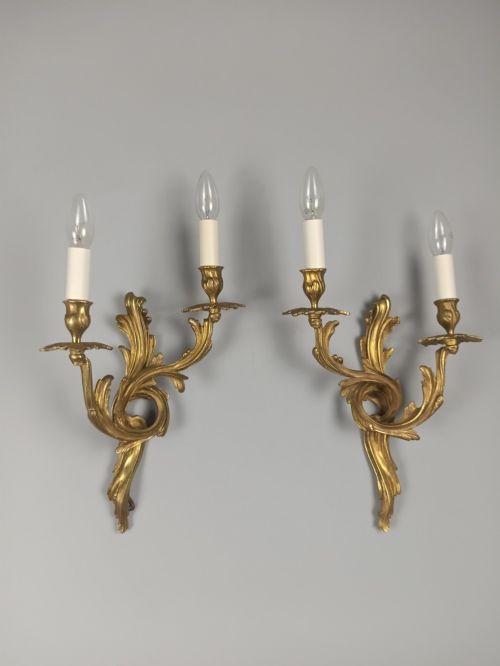
When searching for french candelabra sconces, a buyer looks at decorative wall lighting designed to hold multiple candles, originating from various periods including the eighteenth and nineteenth centuries. These pieces typically take the form of wall lights, girandoles, and multi-branched sconces that project outward from timber or masonry walls. The version most frequently met on this page is the paired gilt bronze or ormolu wall sconce from the nineteenth century, often reflecting Louis styles or Rococo revival aesthetics.
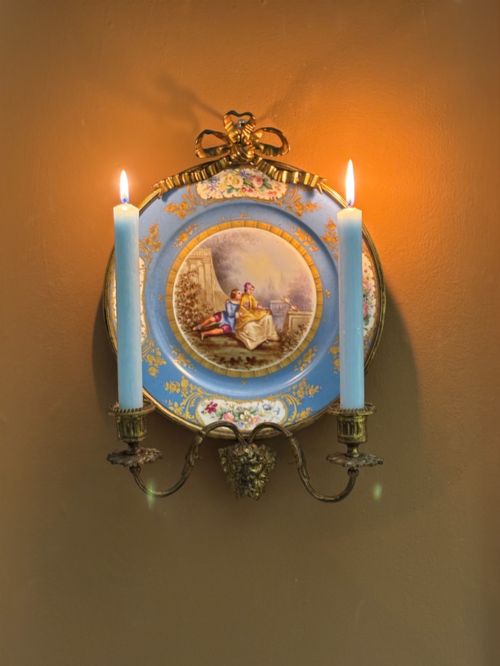
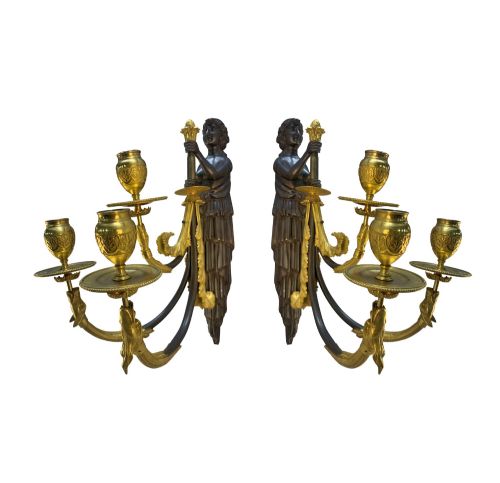
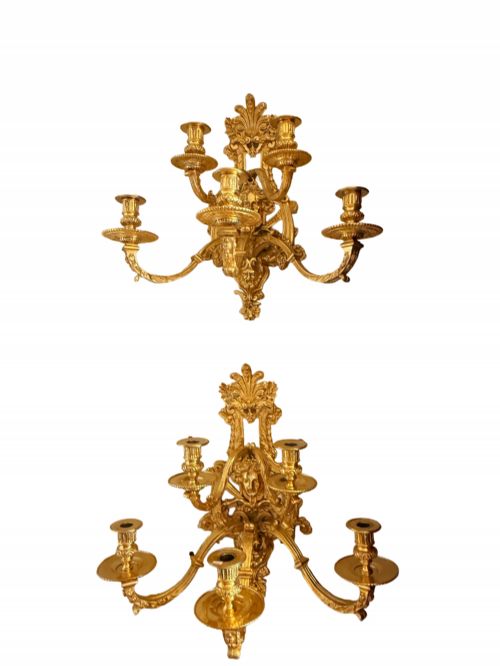
The assortment includes configurations ranging from simple twin arm arrangements to large scale triple arm fixtures mounted with porcelain, crystal, and marble. Makers and workshops utilised traditional forms such as putti figures, classical urn motifs, and elaborate foliate scrolls across brass, bronze, and giltwood. Such wall lighting served both a practical function and a display of domestic splendour in grand interiors.
How they were made
The construction of these pieces relies heavily on cast bronze, brass, and gilt bronze, often enhanced through mercury gilding known as ormolu. Artisans chased and chiselled the metal components by hand after casting to achieve crisp detail in the acanthus leaves and figurative elements. Secondary materials such as carved giltwood, porcelain plaques from factories like Sevres, and cut glass crystals were integrated to catch and refract the candlelight.
Structural elements like backplates and branching arms were joined using threaded screws or pins, allowing complex multi-arm candelabras to be securely fixed to walls. Silvered bronze, silver plating, and natural onyx or marble bases appear in specific pieces, showing diverse finishing techniques applied across different decades and workshops.
French Candelabra Sconces Retail Price Guide 2026
Typical asking prices for french candelabra sconces among the pieces listed under this phrase on Sellingantiques today, from the lower quarter to the upper quarter. They describe what is for sale here now, not the wider market.
Common configurations range from single wall mirrors with integrated candelabra branches to large triple and six-branch wall lights.
What varies in quality
Quality in these wall lights is determined by the crispness of the metal chasing and the depth of the original gilding. Finer examples display sharp, hand-finished detailing in the cast foliage and figures, whereas lesser pieces show softer contours and a more uniform, flat surface treatment. The integration of high-grade components, such as genuine porcelain inserts or heavy rock crystal drops, distinguishes exceptional production from standard commercial work.
The structural integrity of the branching arms and the weight of the backplate also indicate the standard of manufacture. Heavier, more substantial metal castings ensure the arms support the weight of candles securely without sagging, reflecting superior foundry work from the period.
Sevres·Samson
The French Candelabra Sconces Glossary
- Ormolu
- Gilt bronze produced by applying a mercury and gold amalgam to a bronze object and heating it until the mercury vaporised. This technique leaves a durable, rich golden surface typical of fine nineteenth-century French metalwork.
- Girandole
- A branched wall light or candelabra, often incorporating a wall mirror to multiply the reflected candlelight in a room. These fixtures combine decorative backplates with multiple candle arms.
- Rococo
- An ornate design style characterised by asymmetrical scrolls, shell motifs, and naturalistic plant forms. French lighting from the eighteenth century and later revivals frequently employs these flowing, organic contours.
- Sconce
- A wall-mounted lighting fixture designed to hold candles or electric bulbs and project illumination into a space. They serve as permanent wall ornaments as well as practical light sources.
French Candelabra Sconces: Frequently Asked Questions
How do I hang heavy wall sconces safely?
Heavy bronze and giltwood fixtures require direct anchoring into wall studs or the use of heavy-duty masonry fixings to support their substantial weight. The mounting bracket must take the outward pull of the branching arms.
Ensuring the backplate sits flush against the wall prevents any strain on the connecting screws when candles are placed in the nozzles.
Were these fixtures made for candles?
Most of these pieces were originally manufactured to hold wax or tallow candles before the general adoption of domestic electric lighting. The drip pans and candle nozzles are scaled for traditional taper dimensions.
Many examples have subsequently been adapted for electrical wiring while retaining their outward appearance as candle sconces.
How do I clean gilt bronze safely?
Dusting gently with a soft, dry brush removes surface particles without disturbing the delicate metallic finish or ormolu surface. Avoid using chemical polishes or abrasive cloths that strip away thin layers of gold gilding.
Professional conservation is recommended for fixtures with heavy tarnishing or accumulated grime to preserve the original patina.
How do I tell nineteenth century styles apart?
Nineteenth-century pieces often revive earlier aesthetics, such as Louis XIV symmetry or Louis XV asymmetrical curves, but employ industrial-era casting methods. Looking at the backplate construction and fastening methods helps distinguish original period work from later revival pieces.
Heavier bronze casting and distinct surface chasing usually indicate nineteenth-century production compared to lighter twentieth-century manufacturing.