





French Cabriole Stool
A french cabriole stool brings curved elegance and low seating to a room, rooted in historic revival designs.
French Cabriole Stool
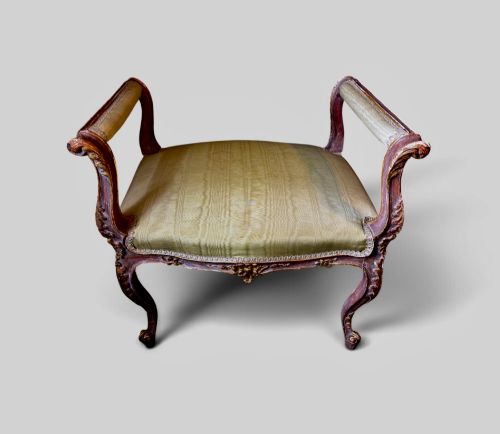
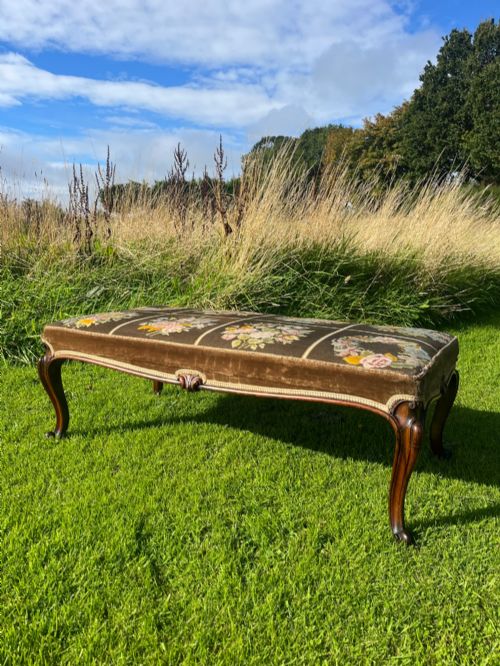
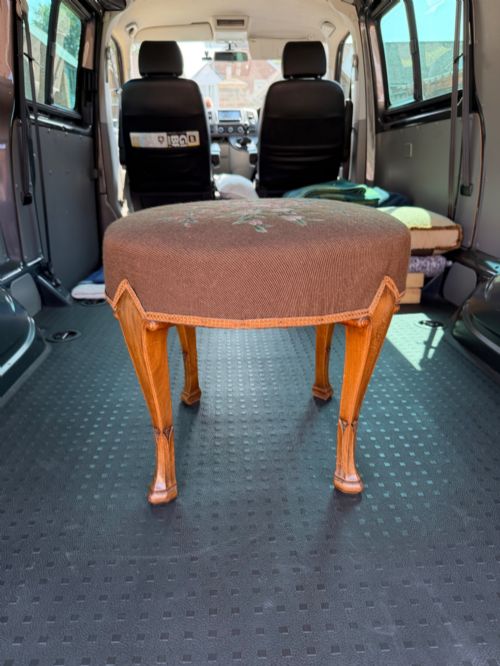
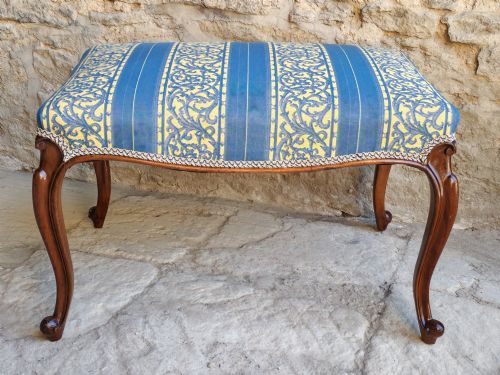
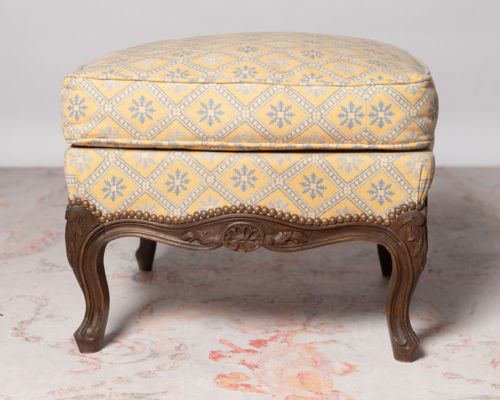
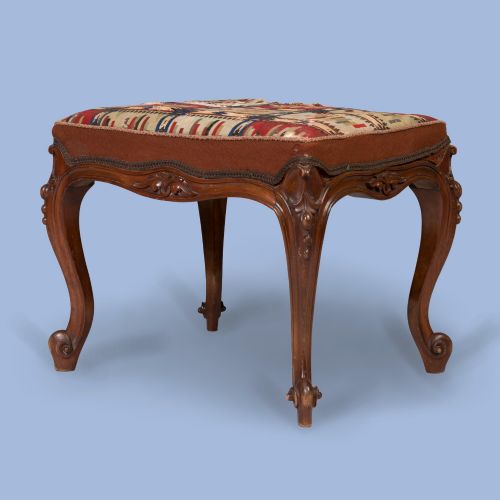
When searching for a french cabriole stool, buyers encounter low seating designed with distinctive curving legs that sweep outward and inward. These pieces appear across various periods, including the nineteenth century and the Victorian era, alongside later twentieth century examples.
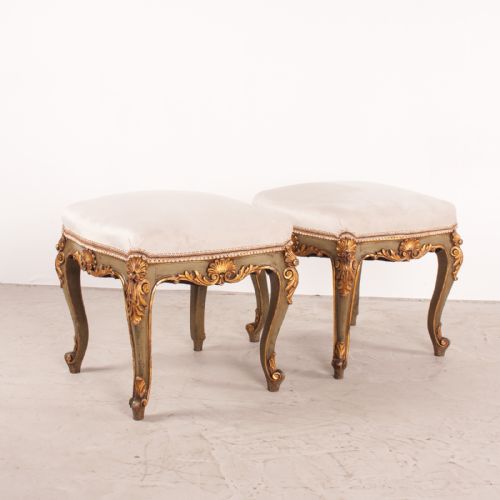
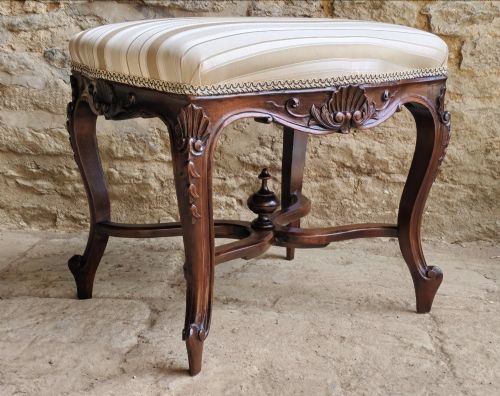
The forms span simple footstools, large fireside seats, window seats, and salon stools. Many examples follow Louis styles or Rococo revival aesthetics, featuring carved wooden frames paired with upholstered tops.
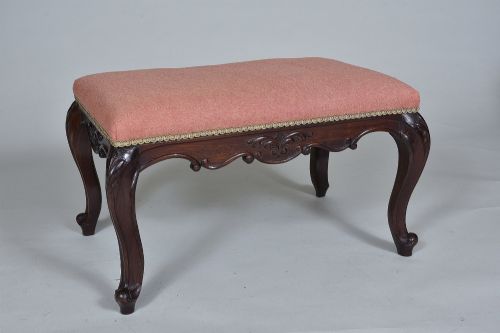
On this page, walnut and mahogany timber frames dominate, often accompanied by painted and gilded finishes. Buyers frequently meet rectangular or circular formats upholstered in fabric, velvet, tapestry, or needlework.
Materials and Construction
Cabinetmakers shaped the foundational frames from hardwoods such as walnut, mahogany, beech, and rosewood, employing carved detailing to mimic continental stylistic influences. Giltwood, brass elements, and painted wood finishes provide surface decoration on specific period pieces.
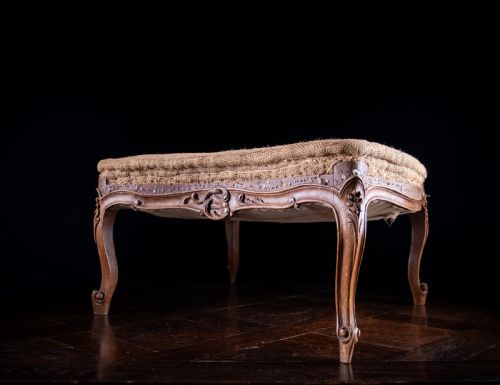
Upholstery techniques utilise textiles like velvet, tapestry, needlework, and standard fabrics stretched over padding, occasionally retaining original textile coverings. Some pieces arrive ready for new upholstery to suit modern interiors.
French Cabriole Stool Retail Price Guide 2026
Typical asking prices for french cabriole stool among the pieces listed under this phrase on Sellingantiques today, from the lower quarter to the upper quarter. They describe what is for sale here now, not the wider market.
Several stools preserve needlework tops stitched by hands long forgotten, quietly enduring beneath centuries of changing fashions.
Distinctions in Quality
Quality rests upon the crispness of the wood carving along the cabriole legs and frame rails, where hand-chiseled depth outperforms shallow machine shaping. Heavier timbers like walnut and mahogany provide superior structural integrity compared to lighter secondary woods.
The integrity of the joinery and the survival of original decorative surfaces, such as gilding or paint, separate standard examples from finer works. Upholstery condition varies from tired original fabric to fresh coverings on stable frames.
The French Cabriole Stool Glossary
- Cabriole leg
- A furniture leg featuring a double curve, bulging outward at the knee and tapering inward toward the foot, inspired by animal limbs.
- Giltwood
- Timber coated with a thin layer of gold leaf or gold paint to create a lustrous decorative surface.
- Rococo Revival
- A nineteenth-century design movement characterised by asymmetrical scrollwork, naturalistic plant motifs, and curved outlines.
- Window seat
- A long, narrow form of stool or bench traditionally placed beneath a window for seating.
- Needlework
- Stitched textile embellishment utilising yarn or thread on canvas, frequently found on nineteenth-century stool tops.
French Cabriole Stool: Frequently Asked Questions
What is a cabriole leg?
A cabriole leg is a curved furniture support that swells outward near the top and curves inward toward the foot. This shape derives from classical furniture traditions and defines many antique seats.
Cabinetmakers shaped these contours from solid hardwoods to provide both structural strength and visual grace. The profile mimics animal limbs, adding movement to the silhouette of a stool.
How were these stools used?
These pieces served multiple domestic functions, operating as footstools before firesides, window seats in grand rooms, and moveable salon seating. Their low height made them practical companions to armchairs and sofas.
Larger versions accommodated multiple sitters or functioned as makeshift coffee tables in contemporary settings. Smaller footstools provided comfort by elevating the feet off cold floors.
How do I date a French style stool?
Dating relies on examining the timber species, joinery methods, tool marks, and the style of the carving. Nineteenth-century interpretations often revive earlier Louis XV or Rococo aesthetics rather than originating from the period itself.
Secondary woods inside the frame and the wear patterns on the finish offer further clues to age. Stylistic markers such as Victorian revival traits help narrow down the decade of production.
Can I reupholster an antique stool?
Many antique stools accept new upholstery easily, and some listings explicitly offer frames ready for covering. Reupholstery allows buyers to match existing room decor while preserving the historic wooden frame.
Traditional stuffing materials and webbing can be replaced or repaired by a professional upholsterer. This process revitalises worn seating surfaces without altering the integrity of the antique base.