

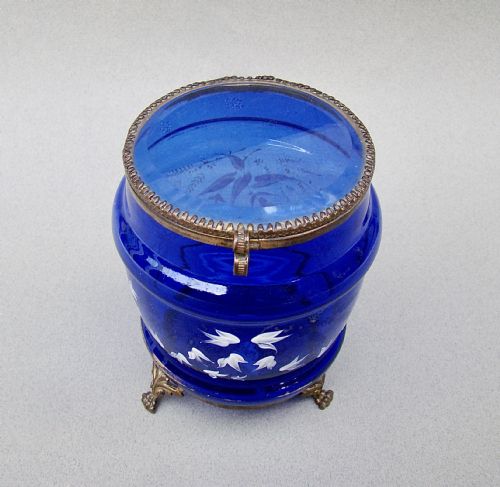



French Bronze Jewellery Casket
These french bronze jewellery casket pieces are robust repositories for keepsakes, combining cast metalwork with glass, porcelain, and enamel.
French Bronze Jewellery Casket
A french bronze jewellery casket is a heavy, lidded box designed to hold small valuables, featuring heavy metal framing mounted with porcelain panels, glass panes, or stone slabs. These containers date primarily through the nineteenth century, spanning periods from the early eighteen hundreds to the turn of the twentieth century.
The objects appear in various forms on this page, including trinket boxes, display boxes, and larger table caskets. The stylistic vocabulary draws heavily from French Second Empire, Napoleon III, Art Nouveau, and revival movements like Rococo and Renaissance.
Judging quality in metalwork and inserts
Quality rests upon the crispness of the bronze casting and the weight of the metal frame. Finer examples display deeply chased ornamentation and tight joints where the glass, porcelain, or stone panels meet the bronze mounts.
The integration of specialised materials, such as hand-painted porcelain plaques or heavy cut crystal, separates standard trinket boxes from exceptional display pieces. Original hinges, working clasps, and well-fitted interior linings also indicate superior production standards.
French Bronze Jewellery Casket Retail Price Guide 2026
Typical asking prices for french bronze jewellery casket among the pieces listed under this phrase on Sellingantiques today, from the lower quarter to the upper quarter. They describe what is for sale here now, not the wider market.
Listings feature nineteenth-century materials including ormolu, Sevres porcelain, Baccarat glass, onyx, marble, and champleve enamel.
The French Bronze Jewellery Casket Glossary
- Ormolu
- Gilded bronze produced by applying a mercury-gilding technique to cast bronze objects. The process creates a rich, durable golden surface typical of nineteenth-century decorative items.
- Champleve enamel
- A technique where troughs or cells are sunk into the surface of the bronze and filled with vitreous enamel powder before firing. The metal partitions remain visible between the coloured enamel areas.
- Sevres porcelain
- Soft-paste or hard-paste porcelain produced by the French royal manufactory, often used for decorative plaques inset into casket lids and sides. These panels typically feature hand-painted scenes or floral motifs.
- Bevelled glass
- Glass panes with edges ground and polished at an angle to create a decorative framing effect. This material allows light into the interior of glass and bronze caskets.
- Napoleon III style
- A nineteenth-century French design movement reviving eclectic historical aesthetics, particularly Second Empire luxury. Caskets from this period often combine heavy ormolu mounts with porcelain or coloured glass.
French Bronze Jewellery Casket: Frequently Asked Questions
What is a french bronze jewellery casket?
A french bronze jewellery casket is a nineteenth-century container made from cast bronze or ormolu, combined with glass, porcelain, or enamel. These boxes were designed for dressing tables to hold trinkets, rings, and other small valuables.
They reflect historical French decorative styles, utilising heavy metal mounts to secure fragile panels of glass, stone, or ceramic.
How were these caskets used?
Wealthy households placed these caskets on dressing tables, mantelpieces, or salon desks as decorative containers for personal jewellery and keepsakes. They served both a functional storage role and a display purpose.
The transparent glass or panelled sides allowed owners to view the contents or admire the internal silk linings while keeping valuables enclosed.
How do I date a nineteenth-century casket?
Dating relies on stylistic clues, manufacturing materials, and any incorporated factory marks. Pieces displaying fluid, asymmetrical floral motifs often align with the Art Nouveau period near nineteen hundred.
Items featuring heavy ormolu mounts combined with Sevres-style porcelain or Bristol blue glass typically point to the mid-nineteenth century under Napoleon III rule.
How do I care for antique bronze and glass?
Maintenance involves dusting the metal mounts gently with a soft dry cloth and avoiding harsh chemical metal cleaners that can strip gilding. Glass and porcelain panels require careful cleaning with mild, non-abrasive solutions.
Protecting the original silk or velvet interiors from moisture helps preserve the structural integrity of these nineteenth-century boxes.