



French Bronze Figural Candlesticks
These French bronze figural candlesticks bring sculptural presence to a room, combining cast metal figures with practical illumination.
French Bronze Figural Candlesticks
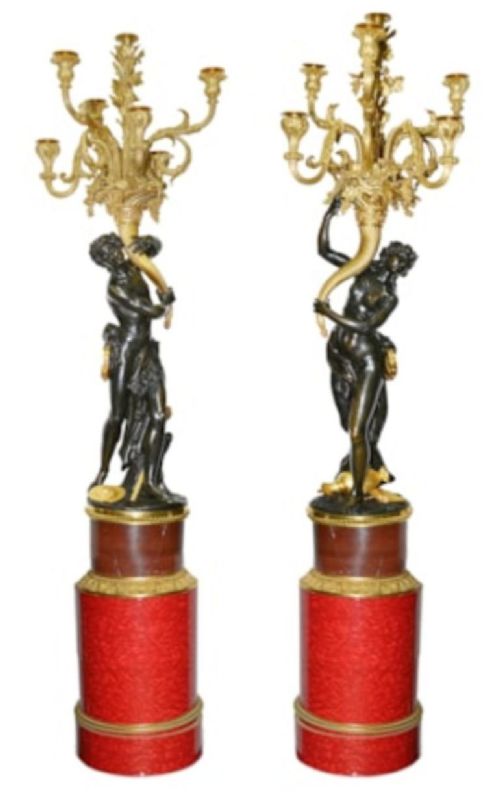
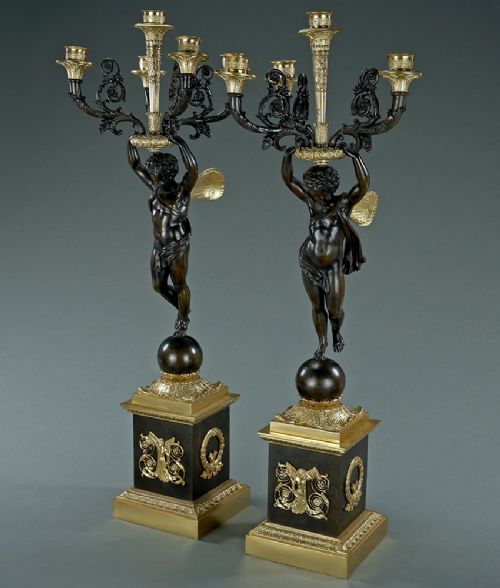
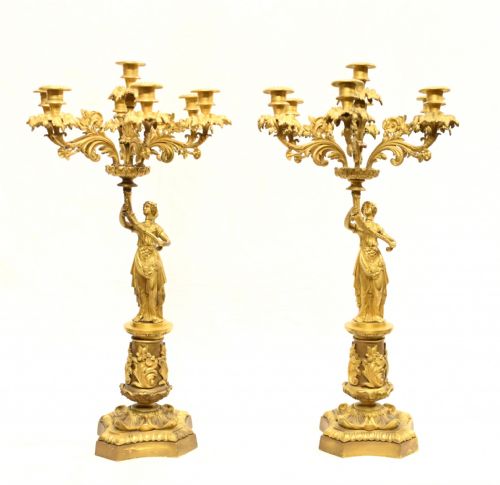
When you search for French bronze figural candlesticks, you encounter sculptural candleholders shaped as human figures, cherubs, animals, and mythological subjects. The selection spans the nineteenth century, including Regency, Empire, and Louis XVI styles, alongside revival movements like the Renaissance Revival and French Rococo.
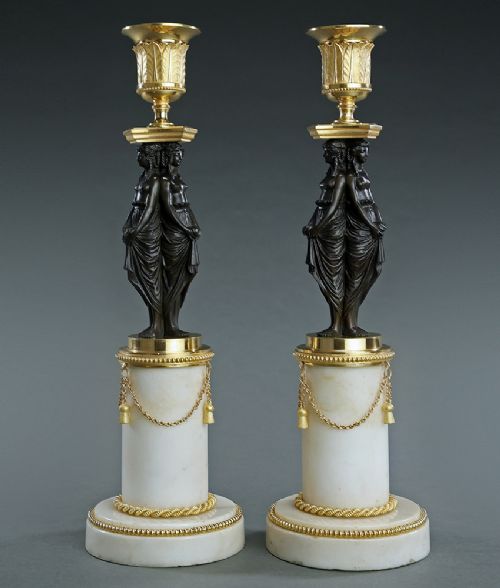
Most examples appear as matched pairs designed for mantelpieces or side tables. You will frequently find pieces combining cast bronze with ormolu highlights, mounted upon marble or onyx bases to elevate the figural composition.
Materials and construction
Foundry work relied on the lost-wax casting method or sand casting to achieve intricate detail in the figures and foliage. Artisans combined patinated bronze with gilt bronze and ormolu to create tonal contrast across the sculpture.
Stonework bases utilised marble and onyx, while alternative pieces incorporated brass, metal, or spelter. Glass eyes and parcel-gilt finishes occasionally added further ornamentation to animal and human subjects.
French Bronze Figural Candlesticks Retail Price Guide 2026
Typical asking prices for french bronze figural candlesticks among the pieces listed under this phrase on Sellingantiques today, from the lower quarter to the upper quarter. They describe what is for sale here now, not the wider market.
Listings feature nineteenth-century materials including bronze, ormolu, marble, onyx, brass, and spelter across various revival styles.
Assessing quality and execution
Weight and stability matter significantly in figural work. Heavier castings paired with solid marble or onyx plinths demonstrate better substance than lighter alloys and hollow bases.
The French Bronze Figural Candlesticks Glossary
- Ormolu
- Gilt bronze produced by applying a mercury-gilding mixture to cast bronze. This technique creates a rich golden finish that resists tarnishing.
- Patinated bronze
- Metal treated chemically or thermally to produce a darkened surface colour. This finish accentuates the sculptural contours of the figures.
- Caryatid
- A sculpted female figure serving as an architectural support or pillar. In candlesticks, these figures often form the main stem holding the candle sockets.
- Grand Tour
- Nineteenth-century travel across continental Europe by the wealthy to collect cultural artefacts. Pieces from this context often incorporate classical or Egyptian revival motifs.
French Bronze Figural Candlesticks: Frequently Asked Questions
How do I clean bronze candlesticks?
Dust gently with a soft dry cloth to protect the original patination and gilt surfaces.
Avoid abrasive metal polishes which strip away the historic finish.
Are these candlesticks safe for daily use?
Most antique pairs function well for holding taper candles during dinner or evening gatherings.
Exercise care with older wax drips and ensure the base sits firmly on a level surface.
What is the difference between bronze and spelter?
Bronze is a durable alloy of copper and tin that takes fine detail and holds a deep patina.
Spelter is a softer, zinc-based metal used in more affordable nineteenth-century decorative items.
How do I identify a Regency pair?
Regency pieces often display classical restraint influenced by ancient Greek and Roman design.
Look for crisp patinated bronze contrasting with gilt or ormolu mounts.