



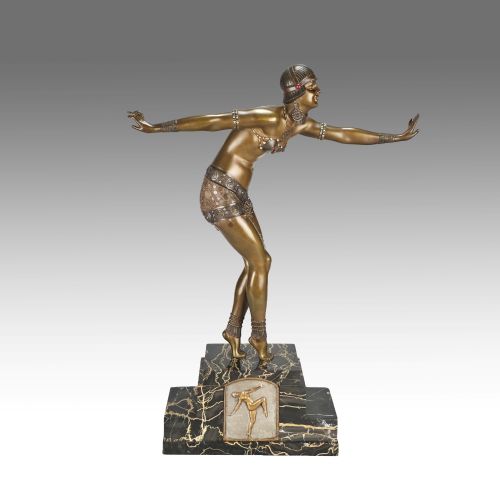


French Bronze Dancer Sculpture
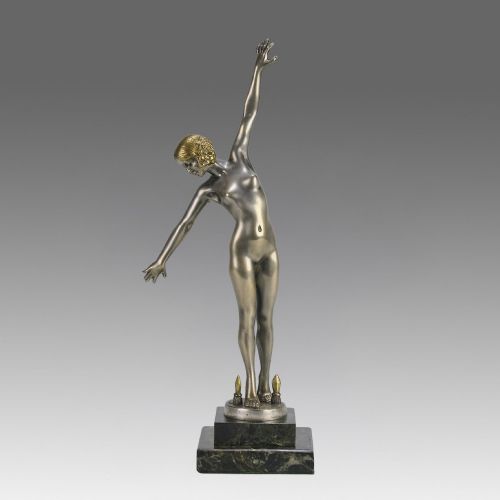
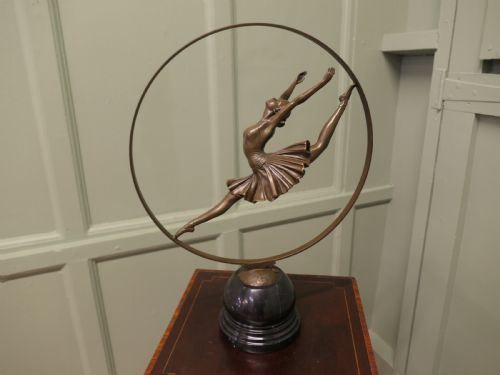
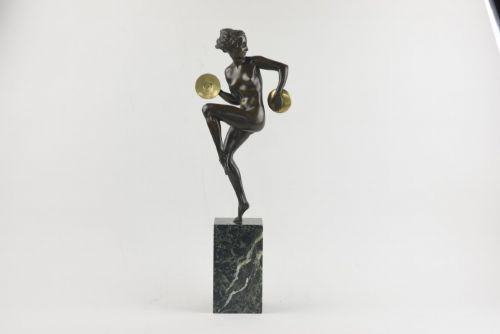
A french bronze dancer sculpture brings movement and theatre into a room, capturing the kinetic energy of the early twentieth century.
French Bronze Dancer Sculpture
A french bronze dancer sculpture embodies the dynamism of twentieth-century performance, spanning the early decades through to the Art Deco era.
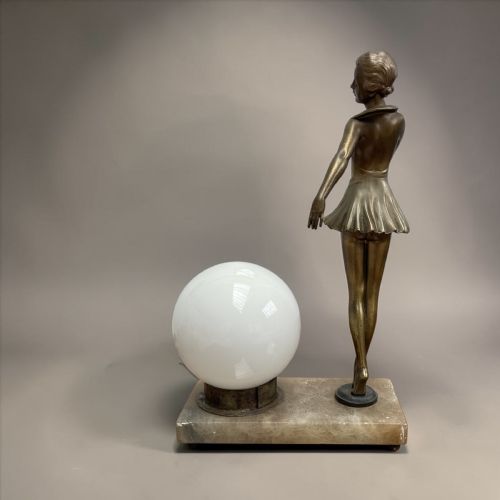
The objects take the form of freestanding sculptures, statuettes, figural lamps, and wall plaques, frequently mounted on heavy stone bases.
Nineteenth-century examples also appear alongside the dominant 1920 and 1930 modernist pieces, offering neoclassical or romantic interpretations of movement.
Materials and Technique
Foundry work relies on traditional casting methods to capture fine drapery, posture, and facial expression in metal.
Makers combine patinated, silvered, or gilt bronze with contrasting elements of marble, onyx, glass, and occasional carved details.
Spelter appears as an alternative metal medium in period figures, while chryselephantine pieces integrate metalwork with carved ivory.
French Bronze Dancer Sculpture Retail Price Guide 2026
Typical asking prices for french bronze dancer sculpture among the pieces listed under this phrase on Sellingantiques today, from the lower quarter to the upper quarter. They describe what is for sale here now, not the wider market.
Several dancers balance precariously on dice or balance points, proving that gravity was merely a suggestion in the nineteen-twenties.
Craft and Definition
The success of a piece lies in the crispness of the casting and the sensitivity with which human anatomy and fabric are rendered.
Base selection matters profoundly, as high-grade marbles and onyx stones provide necessary visual weight and structural balance to cantilevered figures.
Surface finishes, whether rich patination, silvering, or gilding, determine how light interacts with the dynamic contours of the dancer.
Pierre le Faguays·Demetre Chiparus·Aurore Onu·Claire Jeanne Roberte Colinet·Maurice Guiraud Riviere·Paul Philippe·Pierre Laurel·Rene Andre Varnier·Paul de Boulogne·Jean Jacques Pradier·Charlotte Monginot·Albert Ernest Carrier Belleuse·Francisque Joseph Duret
The French Bronze Dancer Sculpture Glossary
- Bronze
- A copper alloy traditionally used in sculpture for its tensile strength and ability to hold fine detail. It takes patination exceptionally well.
- Spelter
- A zinc alloy commonly utilised as a cost-effective alternative to bronze in twentieth-century decorative figures. It is softer and lighter than bronze.
- Chryselephantine
- A term describing statues made from a combination of bronze and ivory. This technique was particularly popular during the Art Deco period.
- Patina
- The chemical or natural surface coloration developed on bronze over time or applied by the artist. It enhances depth and accentuates modelled details.
- Base
- The plinth, usually formed from marble or onyx, that supports the sculpture and provides stability. Many figures are permanently secured to these mounts.
French Bronze Dancer Sculpture: Frequently Asked Questions
What is chryselephantine?
Chryselephantine refers to sculptures that combine metal casting with carved ivory elements. This method highlights the contrast between the garments and the exposed skin of the dancer.
Artists utilised this technique extensively during the 1920s to create luxurious cabinet figures.
How do I clean bronze figures?
Dust bronze sculptures gently with a soft, dry microfibre brush to prevent the accumulation of grit in the crevices. Avoid using commercial metal polishes, as they strip the original patina.
Wax can be applied very sparingly by experienced collectors to protect the surface from atmospheric moisture.
Are these figures signed?
Many sculptures feature the cast signature or monogram of the sculptor directly on the bronze surface or along the edge of the base. Signature placement varies according to the composition and the foundry.
Foundry marks and stamps may also appear alongside the artist's name to indicate the place of manufacture.
Why are marble bases used?
Marble and onyx bases provide the substantial weight required to counterbalance figures captured in precarious or leaping poses. They also serve an aesthetic function by framing the metalwork.
Stones were selected to complement the colour of the patinated or silvered bronze above.