



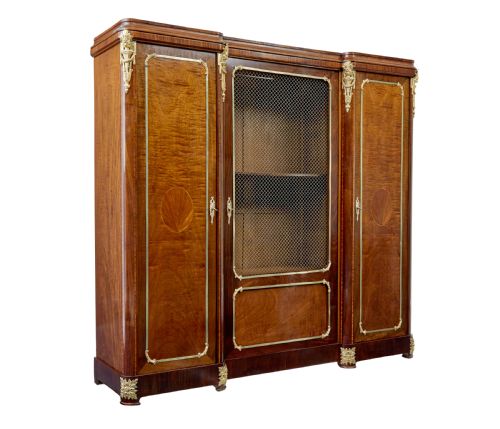
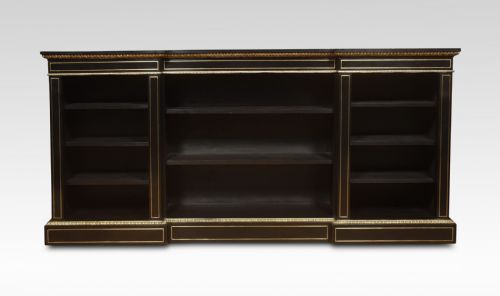

French Breakfront Bookcase
A french breakfront bookcase projects authority in any room, combining architectural presence with generous display space for a serious library.
French Breakfront Bookcase
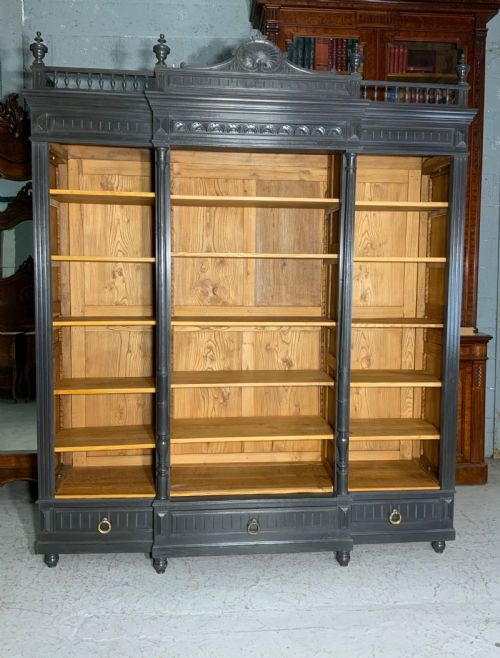
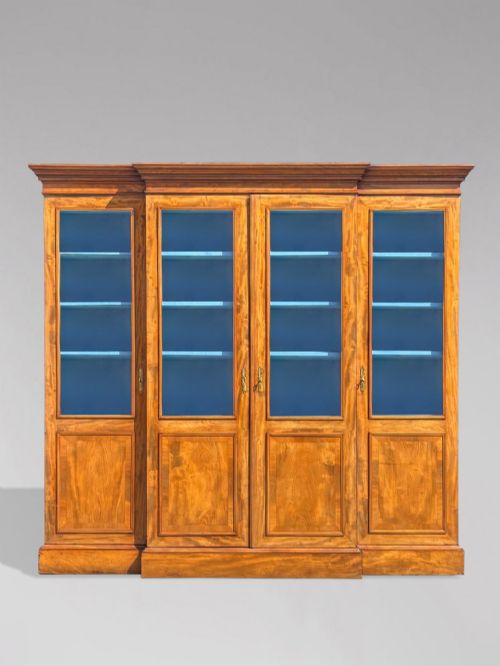
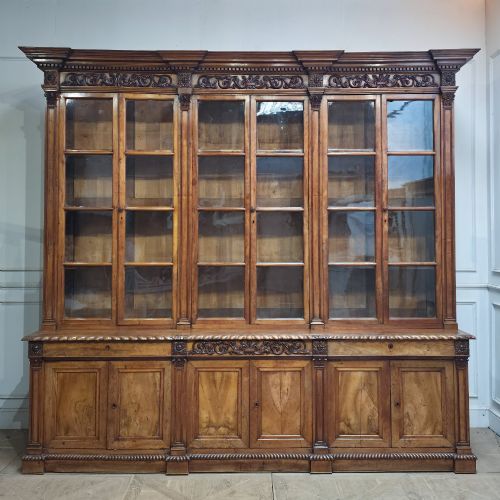
A french breakfront bookcase organises a room through its distinctive projecting central section, which breaks the linear sweep of the facade and creates depth. You will encounter these grand pieces executed in substantial walnut, mahogany, and oak across periods ranging from the mid nineteenth century through to the Edwardian era.
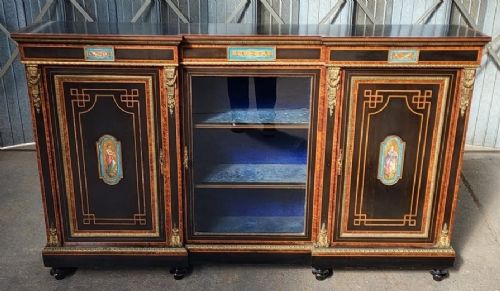
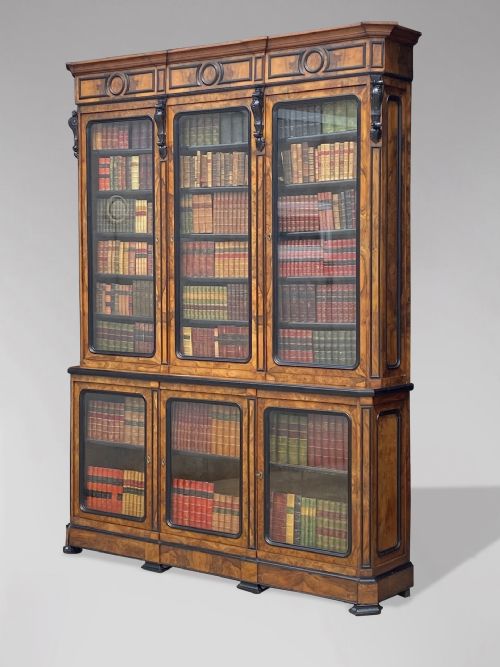
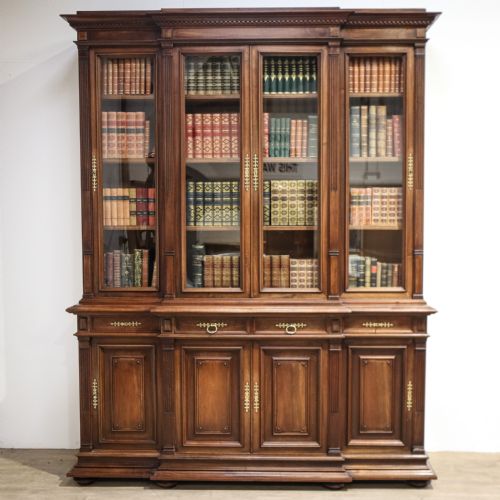
The architectural hierarchy of these cabinets often incorporates glazed doors, brass mounts, and detailed inlay, designed to showcase extensive collections while anchoring the walls of a study or drawing room. Stylistic influences span from Louis Philippe simplicity to the elaborate decorative programmes of the Napoleon III and Second Empire periods.
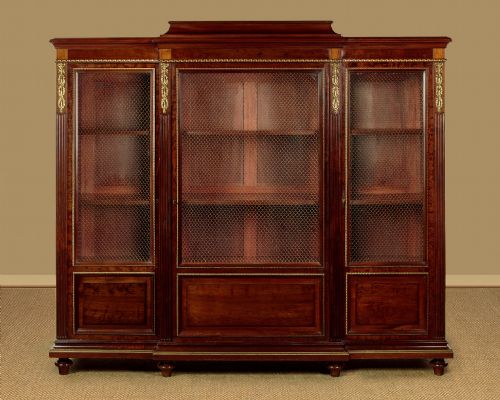
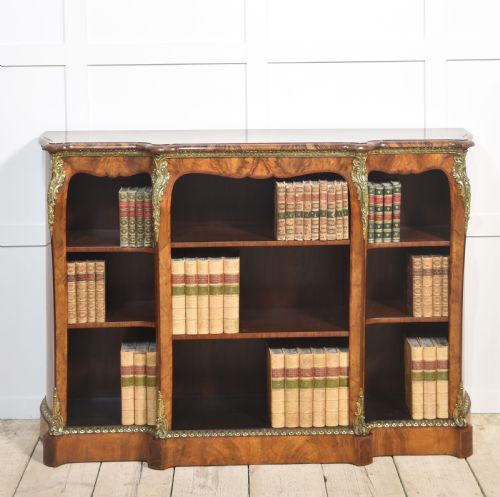
Makers utilised various formats, including open shelving configurations, brass wire mesh panels, and three or four door layouts that provide ample storage for folios and decorative objects alike. These large pieces command floor space and demand high ceilings to properly balance their considerable vertical and horizontal proportions.
Materials and construction
Cabinet makers built the primary carcass of a french breakfront bookcase using sturdy timbers such as mahogany, walnut, and oak, often applying fine veneers like burr walnut, kingwood, and flame mahogany to the primary visible surfaces. Cross-banding and marquetry details add linear definition and visual richness to the panels and friezes.
Decorative hardware plays a defining role in the construction, featuring cast or gilt ormolu mounts, brass framing around glass doors, and fitted brass gallery rails. Glazing takes the form of individual glass panes secured with wooden glazing bars or protective wire mesh inserts.
Cabinets appear in configurations ranging from open library shelving to multi-door glazed breakfront sideboards and dedicated display vitrines.
Determining quality
Quality rests upon the selection and matching of timber veneers, where superior examples exhibit continuous grain across the breakfront projection and symmetrical burr patterns. The crispness of the cast ormolu mounts and the weight of the brass hardware signal the level of craftsmanship invested in the piece.
Structural integrity reveals itself in the precision of the door alignment, the smoothness of the drawers, and the depth of the carving or inlay work. Finer cabinets integrate secondary timbers thoughtfully and maintain original glass panes within robust framing bars.
The French Breakfront Bookcase Glossary
- Breakfront
- An architectural cabinet design where the central section projects forward from the flanking wings. This configuration creates dynamic shadow lines and emphasises the focal point of the furniture.
- Ormolu
- Gilt bronze mounts applied to furniture for decorative enrichment. The technique involves treating brass or bronze with an amalgam of gold to produce a rich metallic lustre.
- Marquetry
- The art of applying decorative pieces of veneer to a structure to form intricate patterns and pictures. Craftsmen select contrasting woods to achieve tonal depth.
- Vitrine
- A glass-fronted display cabinet designed for the presentation of precious objects and porcelain. These pieces rely on clear visibility from multiple angles.
- Vitrine
- A glass-fronted display cabinet designed for the presentation of precious objects and porcelain. These pieces rely on clear visibility from multiple angles.
- Ebonised
- Timber treated with a dark finish to imitate expensive ebony wood. This treatment gained popularity during the Victorian era for dramatic contrast.
French Breakfront Bookcase: Frequently Asked Questions
Where should I place a large breakfront bookcase?
These imposing cabinets require a principal wall with adequate width and height to accommodate their projecting central sections without dominating the floor plan entirely. Ensure the room has sufficient natural or artificial light to highlight the wood grain and any ormolu mounts.
Keep them away from direct heat sources and strong sunlight to protect sensitive timber veneers and historical finishes from drying out or fading over time.
How do I care for walnut and mahogany finishes?
Maintain the timber surfaces by dusting regularly with a soft, dry cloth and applying appropriate beeswax sparingly to nourish the wood without building up a sticky residue. Avoid modern silicone sprays, which can penetrate the finish and damage the underlying grain.
Check the humidity levels in the room to prevent the solid timbers and veneers from warping or cracking across the large expanses of the doors and panels.
Can adjustable shelves hold heavy books?
Many nineteenth century bookcases feature wooden or pegged support systems designed for substantial libraries, though the weight capacity depends on the thickness of the individual shelves. Distribute heavy folios evenly across the sections to prevent sagging.
Inspect the shelf supports periodically to ensure they sit securely within their housings before loading dense collections of volumes onto upper tiers.
How do I distinguish a Victorian piece from a Napoleon III piece?
Victorian examples often favour rich walnut with subtle cross-banding and restrained brass or inlay details, reflecting traditional domestic comfort. Napoleon III pieces frequently incorporate bolder ormolu mounts, ebonised elements, and elaborate decorative schemes inspired by earlier French royal styles.
Examine the secondary woods used on the interior carcass and drawer linings, as these construction details help pinpoint the regional workshop traditions of the maker.