


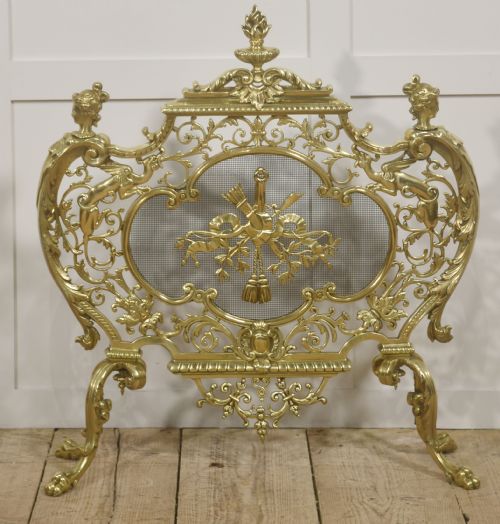

French Brass Spark Guard
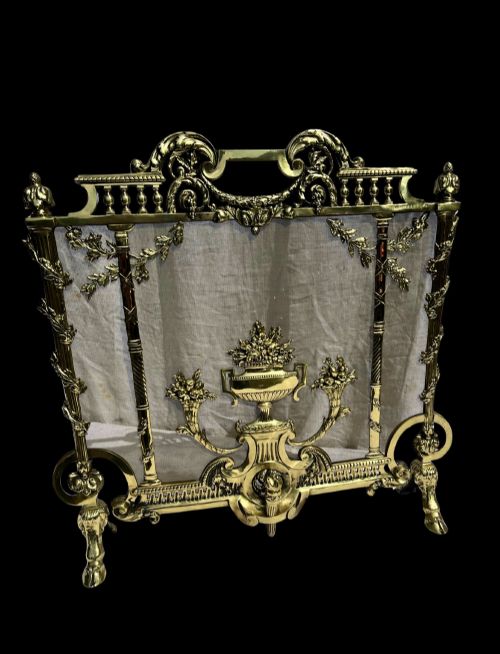
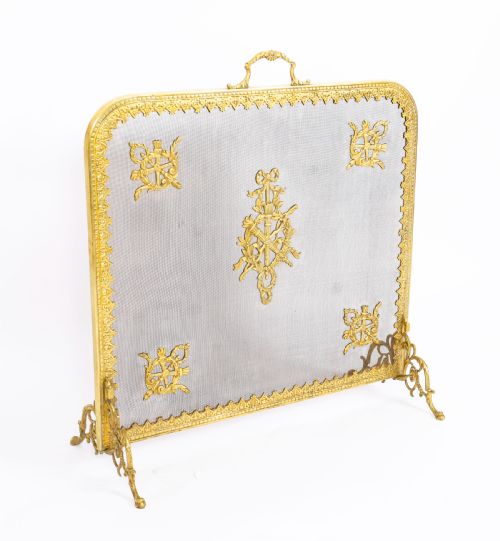
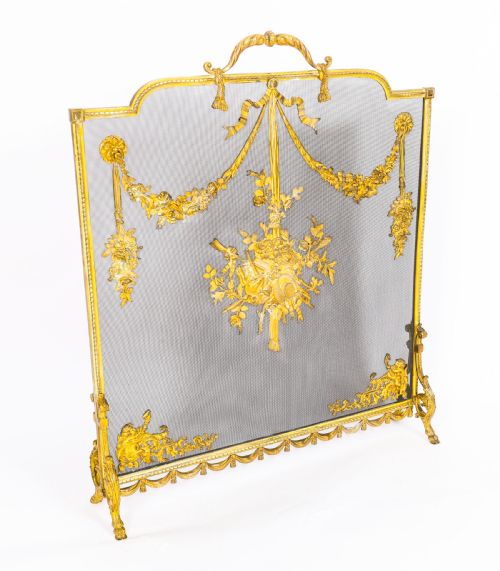
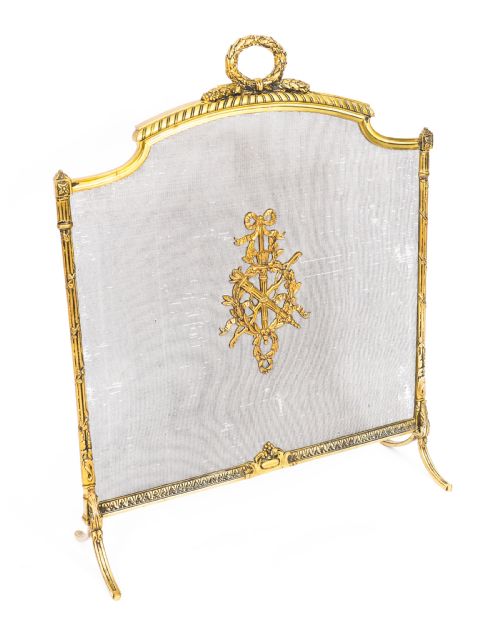
These french brass spark guard pieces protect the room from stray embers while bringing ornamental warmth to the fireplace.
French Brass Spark Guard
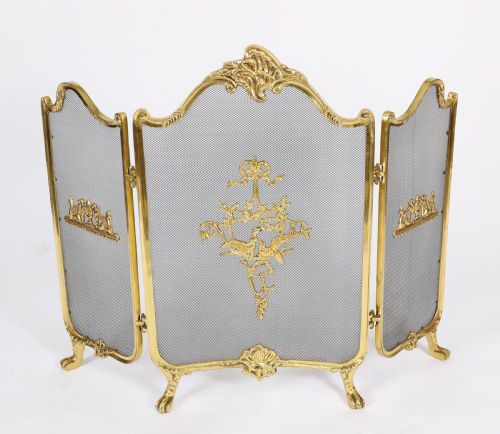
A french brass spark guard stands before an open hearth to catch flying cinders and protect the room. These functional pieces double as decorative screens during the warmer months when the fireplace is unlit.
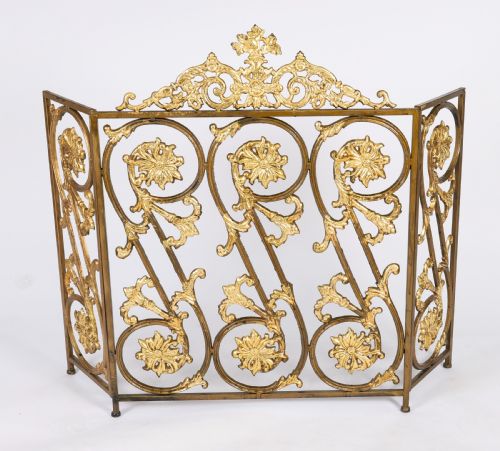
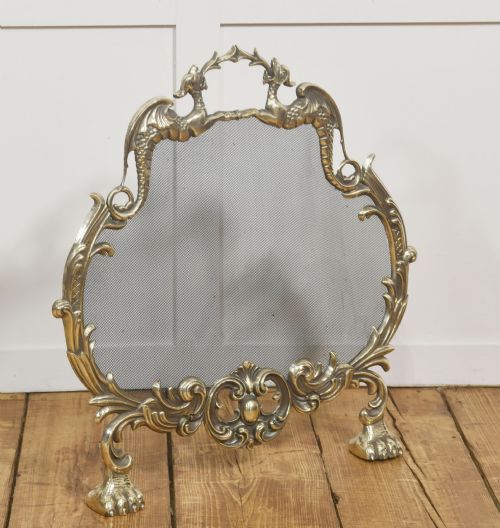
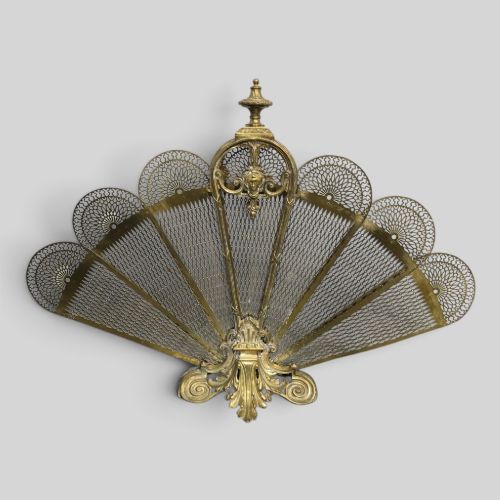
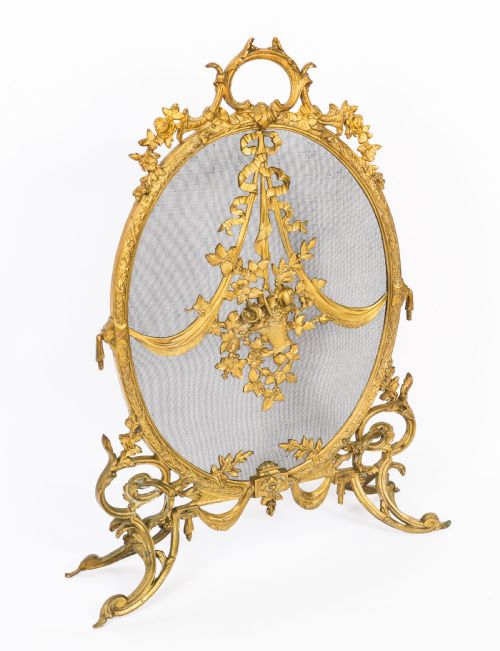
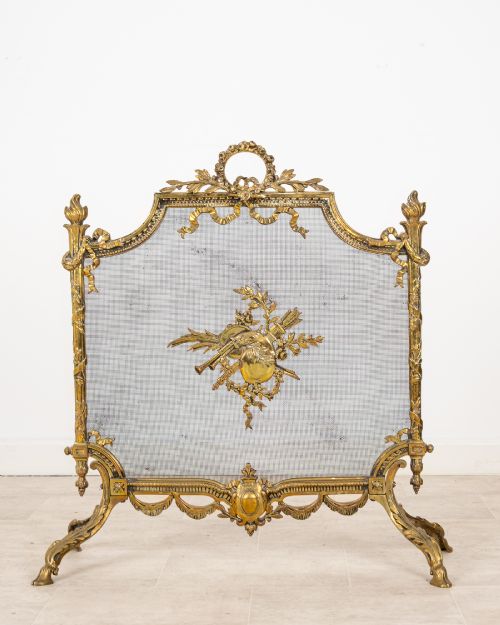
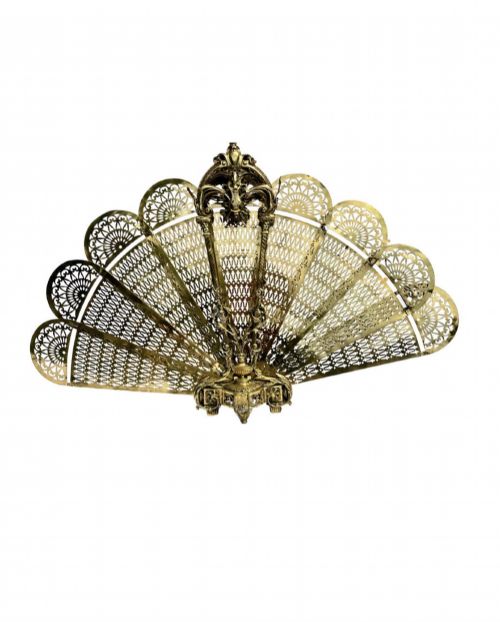
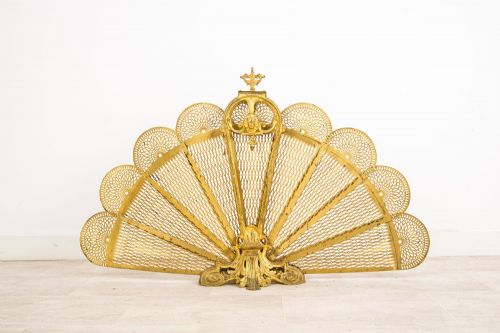
The selections here span the nineteenth century and draw heavily on French Rococo Revival, Louis XVI, and Empire Revival styles. Fire screens, fire guards, and fan screens form the main variations you will encounter.
Many examples incorporate pierced brass, wire mesh, or steel mesh within ornate metal frames. Certain designs adopt a folding format or a peacock fan configuration to adjust across the hearth opening.
Materials and construction methods
Makers shaped the frames from brass, cast brass, gilt brass, and gilt bronze, often combining solid cast elements with fine wire mesh or steel mesh panels. These metallic components were joined to create sturdy, free-standing structures capable of enduring hearth heat.
Surface ornamentation relied on elaborate casting, chasing, and gilding techniques to achieve floral, musical trophy, and classical trophy motifs. The resulting metalwork displays both structural rigidity and delicate openwork pierced detailing.
Materials recorded across the inventory include brass, wire mesh, gilt bronze, gilt brass, steel mesh, bronze, and cast brass.
Factors that separate the range
Quality rests in the crispness of the cast decoration and the weight of the metal used in the frame. Finer examples display deeply chased details on gilt bronze or heavy cast brass rather than thin, pressed sheet metal.
The integrity of the mesh panel and the smoothness of any folding joints or pivoting mechanisms also set pieces apart. Superior items maintain rigid frames where the wire or steel mesh remains taut and securely fixed.
The French Brass Spark Guard Glossary
- Spark guard
- A protective barrier placed in front of an open fire to catch flying embers. They keep the room safe while adding a decorative focal point to the hearth.
- Gilt bronze
- Bronze metal treated with a gold application or mercury gilding to impart a rich metallic sheen. This material appears frequently on elaborate revival pieces.
- Wire mesh
- Woven metal wire stretched across the frame to contain sparks while allowing heat to radiate into the room. It forms the central protective barrier of many screens.
- Rococo Revival
- A nineteenth-century design movement favouring asymmetrical scrollwork, C-scrolls, and naturalistic plant motifs. It dominates the decorative style of these fire screens.
- Trophy
- An ornamental grouping of symbolic objects, such as musical instruments or classical weapons, cast in relief onto the metal frame. These decorative elements reflect period tastes.
French Brass Spark Guard: Frequently Asked Questions
How do I choose the right size?
Measure the width and height of your fireplace opening before selecting a guard. Ensure the piece is wide enough to cover the hearth span and tall enough to contain escaping embers.
Consider whether you need a single flat screen or a multi-fold version that wraps around the fire opening.
Are these guards safe to use with open fires?
These pieces were built to function as hearth accessories and block sparks during use. Check that the mesh panel is secure and the frame stands firmly on the floor.
Keep in mind that antique mesh may be delicate, so handle the screen with care when the fire is burning.
How do I clean brass and gilt bronze?
Dust the metal gently with a soft dry cloth to remove surface soot and debris. Avoid harsh chemical polishes that can strip thin gilding or damage the original patina.
Test any cleaning method on a small, hidden area first to ensure the metal finish remains undisturbed.
What is the difference between a fire screen and a fire guard?
A fire screen often emphasises decorative appearance and ornamental framing, sometimes doubling as a summer screen when the hearth is empty. A fire guard focuses primarily on safety and containment.
Many nineteenth-century examples combine both purposes through ornate brass frames fitted with protective wire mesh.