

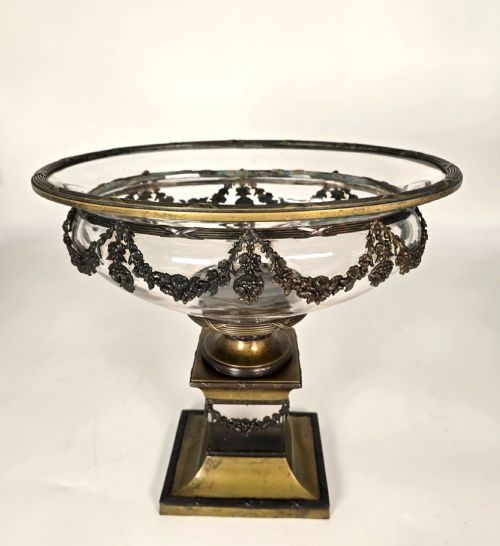
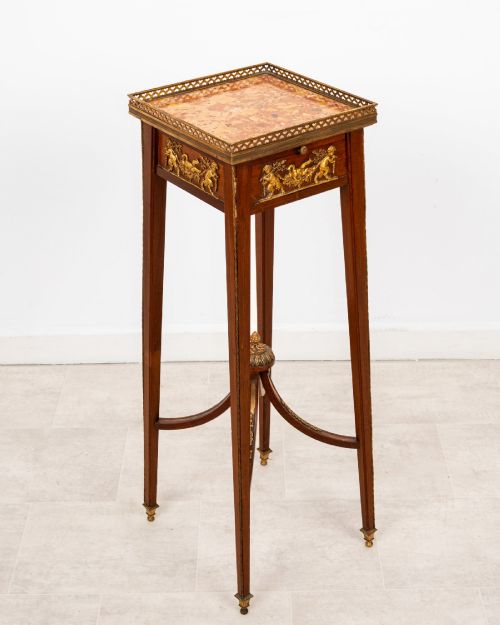


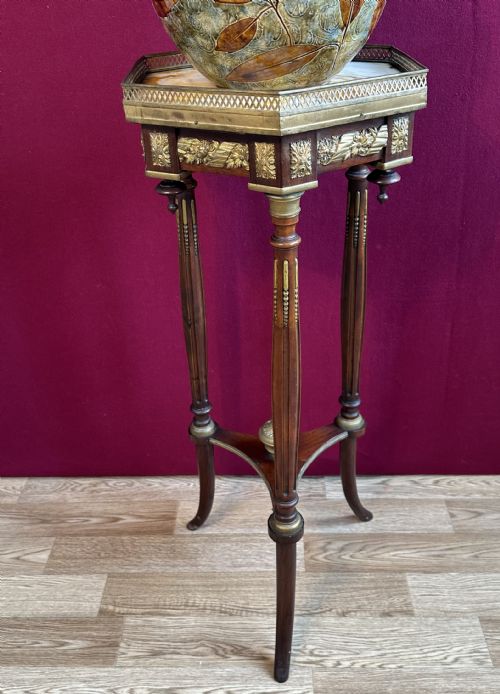


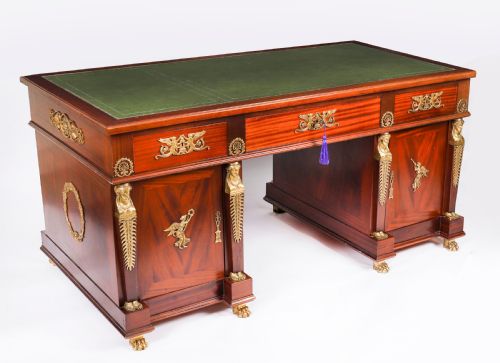

French Brass Pedestal
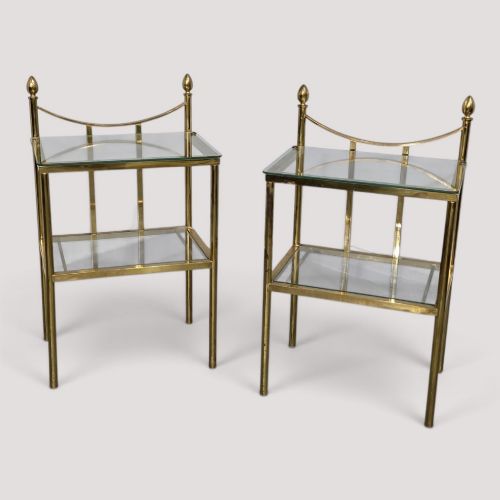
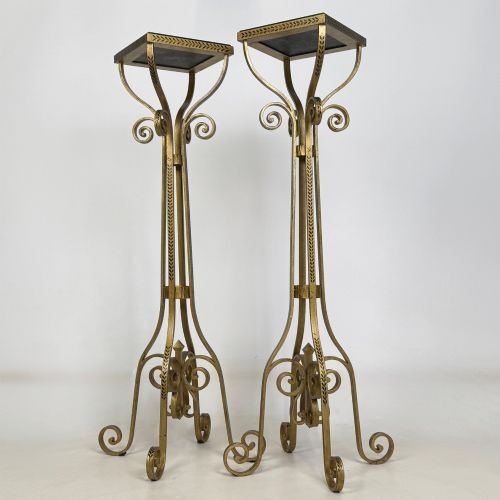
A french brass pedestal brings architectural presence and metallic warmth to a room, functioning as a stand, column or small table.
French Brass Pedestal
A french brass pedestal encompasses support pieces and smaller tables, frequently appearing alongside plant stands, occasional tables and plant holders.
Examples span the nineteenth century and the early twentieth century, drawing on French Empire, Louis XVI and Rococo Revival design vocabularies.
Buyers encounter variations incorporating circular tops, multi-tiered formats and galleried edges designed to display decorative objects or support lamps.
Materials and construction methods
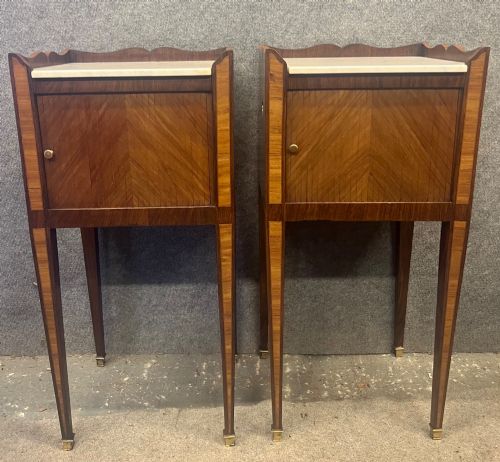
Construction relies heavily on brass, gilt bronze and ormolu mounts paired with timbers such as mahogany, walnut and kingwood.
Sustained stability is achieved through heavy metal frames combined with inset stone surfaces including marble and onyx.
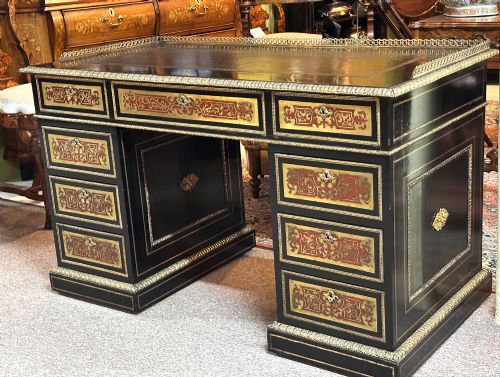
Surface detailing involves intricate marquetry, boulle work inlay and chiseled metal ornamentation applied to structural legs and bases.
Listings feature items spanning the 1800s through the 1930s, incorporating brass, marble, mahogany and ormolu.
Assessing material and structural execution
Quality reveals itself in the crispness of chased ormolu mounts and the weight of the cast brass elements supporting the structure.
Superior pieces demonstrate precision in wood veneers, tight joints and carefully fitted stone tops without excessive adhesive or movement.
A Hugnet Paris·François Linke
The French Brass Pedestal Glossary
- Ormolu
- Gilded bronze mounted decoratively onto furniture and stands. The technique involves applying a mercury and gold amalgam to bronze before firing.
- Gueridon
- A small circular table on a single central pillar or tripod base. Originating in seventeenth-century France, these stands often feature marble or inlaid wooden tops.
- Torchere
- A tall ornamental stand intended to hold a light source or decorative vase. They frequently employ classical proportions and slender columns.
- Boulle work
- Marquetry technique utilising tortoiseshell and brass inlaid in ornate arabesque patterns. Named after the royal cabinetmaker André-Charles Boulle.
- Jardinere
- A decorative stand or container designed to hold plants. These vessels often integrate brass galleries and liners to manage moisture.
French Brass Pedestal: Frequently Asked Questions
What is a French brass pedestal used for?
These stands serve primarily to elevate lamps, clocks, urns and potted plants within a room. Their vertical profile draws the eye upward and adds decorative focal points to corners or seating areas.
Historically, they also functioned as small occasional tables for holding books or serving tea in formal drawing rooms.
How do I date a French brass pedestal?
Dating relies on examining the construction timber, the style of the metal mounts and the fastening methods used underneath the top. Empire and Neoclassical pieces typically display heavy cast ormolu and mahogany.
Later twentieth-century versions often introduce lighter brass tubing, onyx inserts and simpler turned columns consistent with Edwardian production.
Are marble tops original to these stands?
Many nineteenth-century plant stands and gueridons were manufactured specifically with fitted marble or onyx tops to provide a stable, water-resistant surface. Vein patterns and edge profiles usually match the period of the base frame.
Replacement stone is sometimes found on older pieces where the original surface suffered breakage over decades of use.
How do I care for brass and mahogany?
Maintain brass and ormolu mounts by dusting gently with a dry microfiber cloth without applying harsh chemical polishes that strip original gilding. Wood surfaces benefit from occasional waxing to preserve the grain and moisture content.
Keep these stands away from direct heat sources and strong sunlight to prevent timber splitting and veneer lifting.