
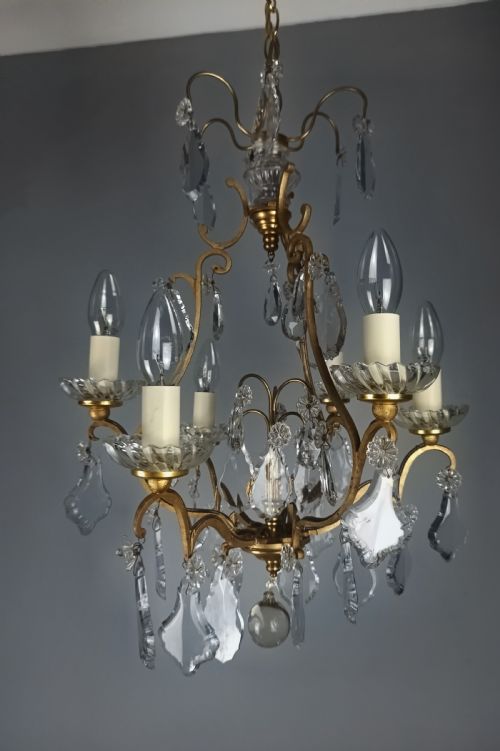
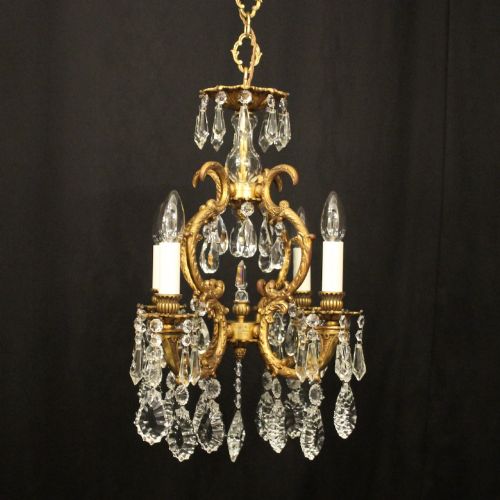
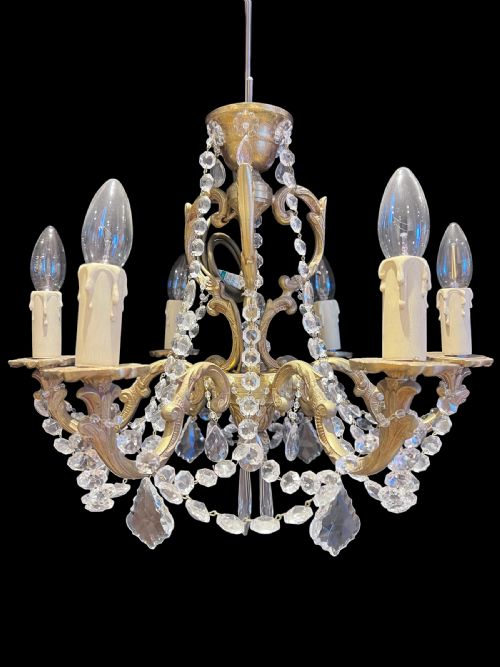
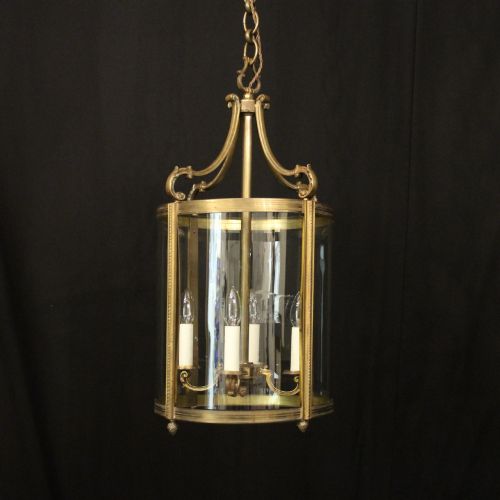

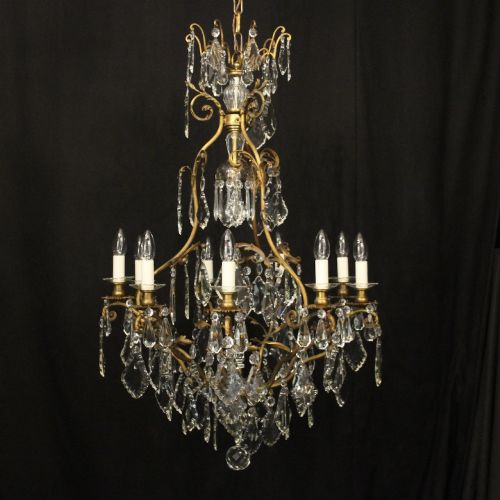
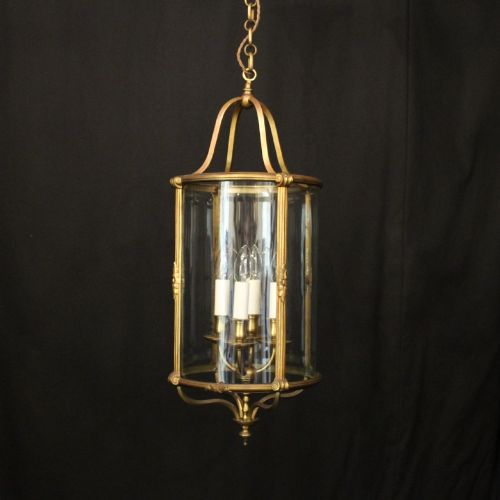
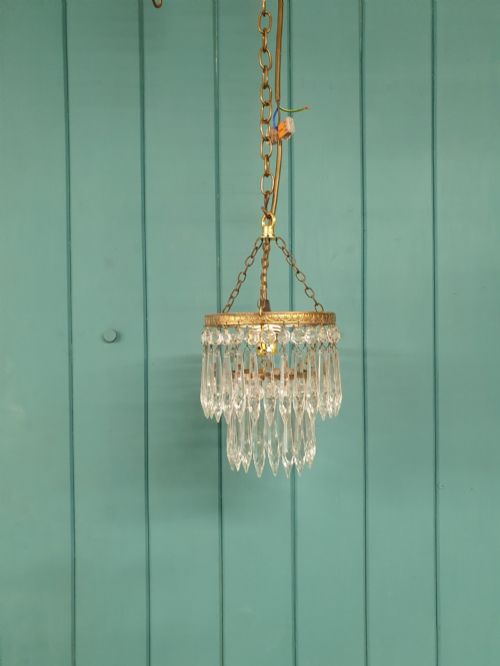
French Brass Glass Chandelier
A french brass glass chandelier brings a distinct, reflective warmth to high ceilings, casting bright patterns across period rooms.
French Brass Glass Chandelier
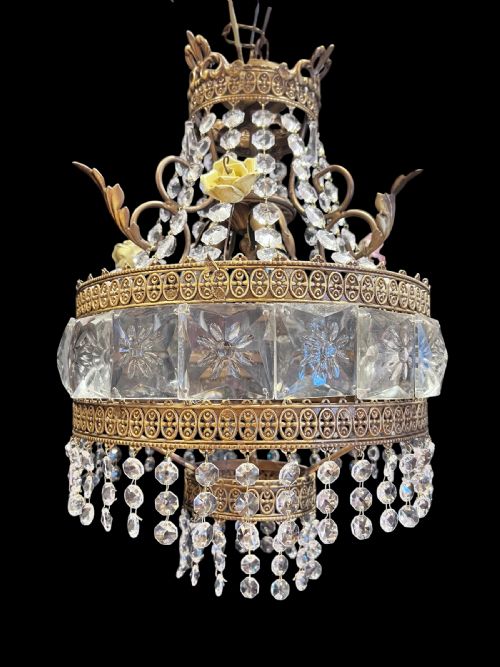
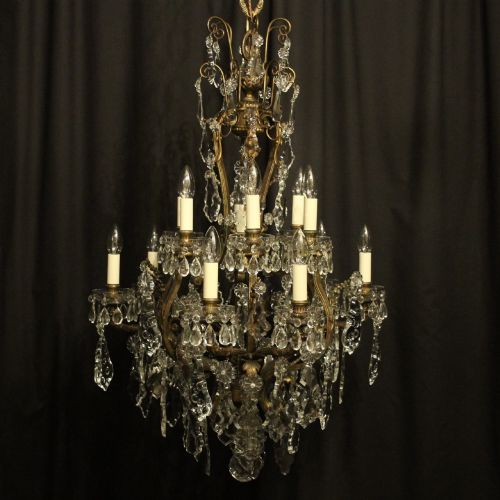
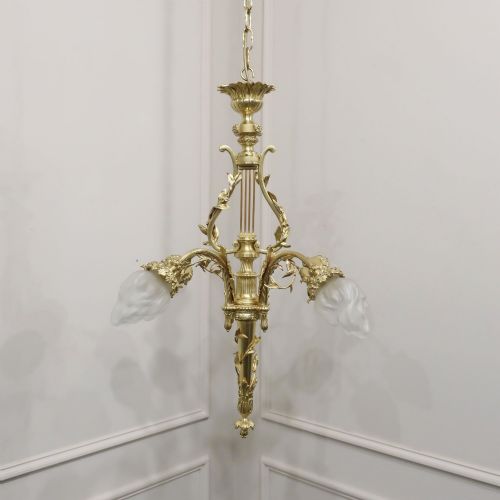
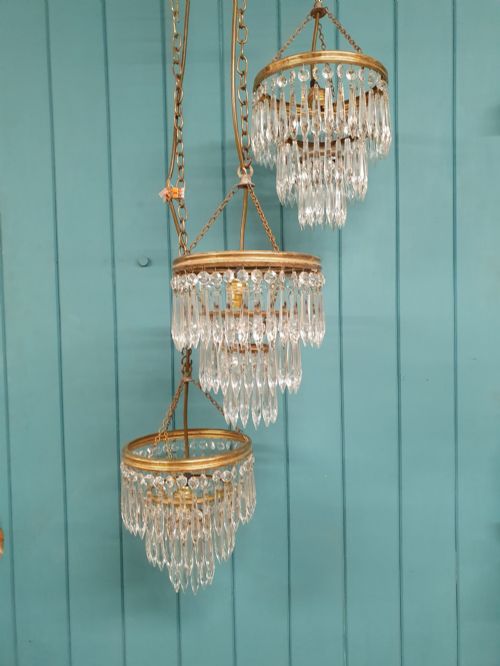
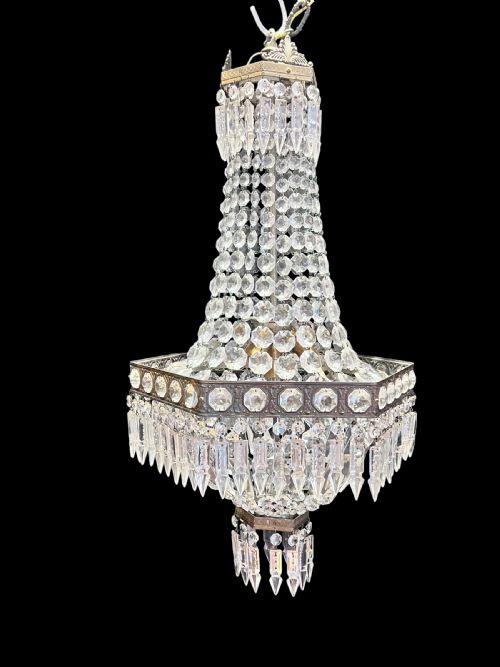
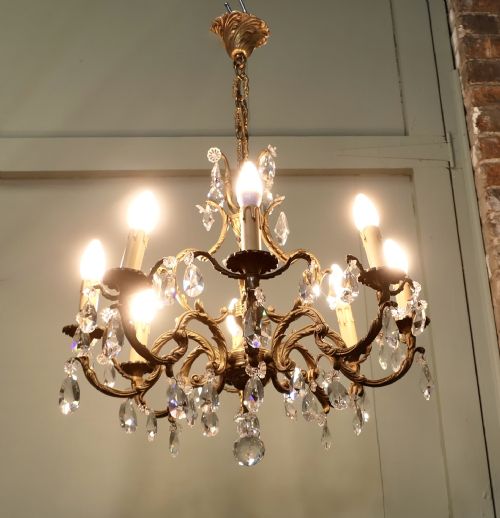
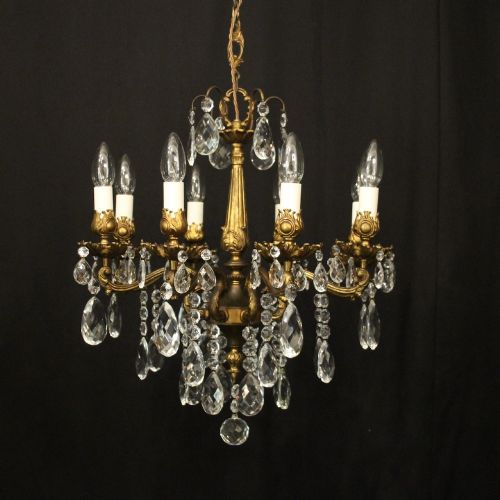
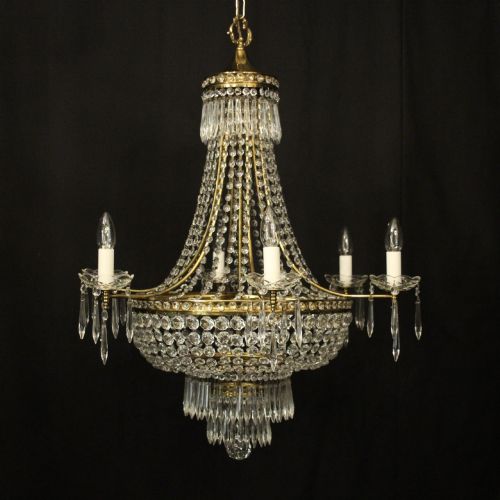
A french brass glass chandelier combines metal frameworks with transparent hanging elements, spanning forms from simple basket frames to grand multi-tiered fixtures. Buyers encounter various scales, from intimate hall lanterns with three lights to expansive twenty-five light fixtures designed for large salons.
The selection ranges across several periods, including Edwardian examples, 19th-century works, and mid-century modern pieces. Styles trace through French Rococo, Empire, Neoclassical, and Louis XVI designs, alongside simpler basket and spike configurations.
Most examples rely on structural frames cast in brass or gilded bronze, dressed with cut glass, crystal lustres, or glass icicles. These pieces function primarily as statement ceiling lighting, suspending from chains or mounted close to the ceiling as plafonieres.
Indicators of quality
Quality separates in the precision of the metal casting and the depth of the gilding on the bronze or brass frame. Superior pieces display crisp leaf decoration, sharp chasing, and heavy gauge metal that holds its rigidity across multiple light branches.
The clarity and cut of the crystal or glass dressings determine the visual brilliance of the fixture. Dense, hand-cut crystal drops with sharp facets refract light cleanly, whereas lower-grade examples utilise simple pressed glass with softer edges.
Object forms vary widely, encompassing multi-arm chandeliers, flush plafonieres, and enclosed glass hall lanterns.
Maison Jansen·Andre Arbus
The French Brass Glass Chandelier Glossary
- Gilt bronze
- Bronze that has been treated with a thin layer of gold or gold-coloured alloy to give a rich, metallic surface. This technique was widely utilised in French decorative metalwork.
- Lustre
- A small cut glass or crystal pendant suspended from a chandelier to catch and reflect light. Lustres are typically wired in rows or clusters along the frame.
- Tent and waterfall
- A chandelier configuration where strings of glass beads form a tent shape over the upper section, cascading down into a wider waterfall drop below. This arrangement creates a dense, layered profile.
- Plafoniere
- A ceiling light fixture mounted flush or very close to the ceiling surface rather than suspended on a long chain. These often feature glass bowls held within brass frames.
- Hall lantern
- An enclosed ceiling fixture designed for entryways, featuring glass panels set within a brass or bronze framework. They are produced in convex and multi-light formats.
French Brass Glass Chandelier: Frequently Asked Questions
How do I hang a heavy chandelier?
Heavy fixtures require secure anchoring directly into ceiling joists or structural concrete using rated steel hooks and appropriate fixings. The weight of the metal frame and glass components demands professional weight-load verification before suspension.
Electrical wiring must be inspected and adapted to support the total wattage of multiple lamp holders. Professional installation ensures both structural safety and correct hanging height above floor level.
What rooms suit a brass chandelier?
These chandeliers suit dining rooms, high-ceilinged drawing rooms, and grand entrance halls where the scale of the fixture commands the space. Smaller iterations and lanterns fit narrower corridors or intimate bedrooms.
Consider the drop height in relation to traffic paths beneath the fixture. Taller rooms allow for tent and waterfall designs, while lower ceilings benefit from flush-mounted plafonieres.
How do I clean crystal drops?
Cleaning involves applying a specialised glass cleaning solution to the crystal elements while they remain attached to the frame. A soft cloth absorbs residue without stressing the delicate wire fixings.
For thorough restoration, individual drops are gently unhooked and washed in lukewarm soapy water. Metal frames require dry dusting to protect gilt surfaces from moisture damage.
How do I date an antique chandelier?
Dating relies on examining the casting techniques, screw threads, and wiring channels integrated into the brass or bronze frame. Hand-cut crystal facets and specific decorative motifs, such as Neoclassical lyres or Art Deco geometry, point to distinct periods of production.
Stylistic cues like Louis XVI swags or Edwardian spike configurations help narrow the era. Comparing the construction methods against documented workshop practices confirms the period of manufacture.