

French Brass Furniture
French brass furniture brings warmth and architectural detail to a room, uniting rich woods with gleaming metal mounts.
French Brass Furniture
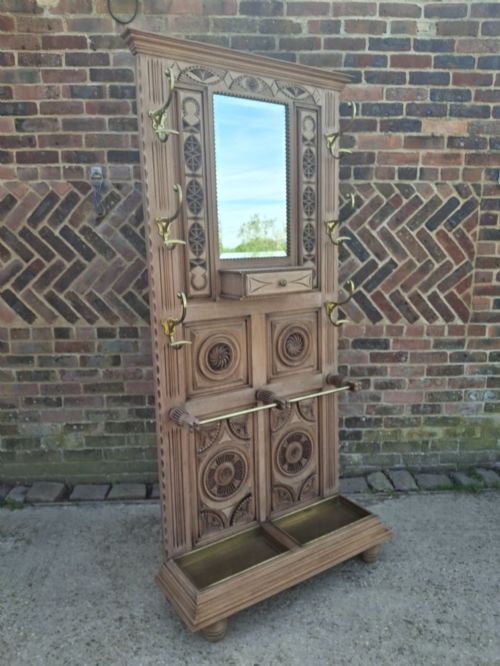
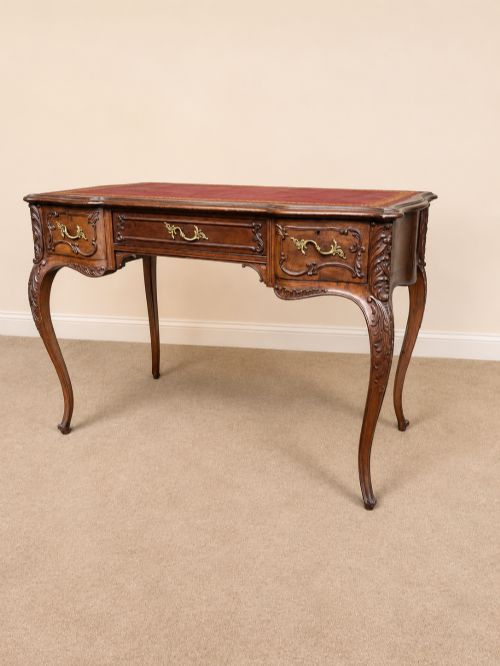
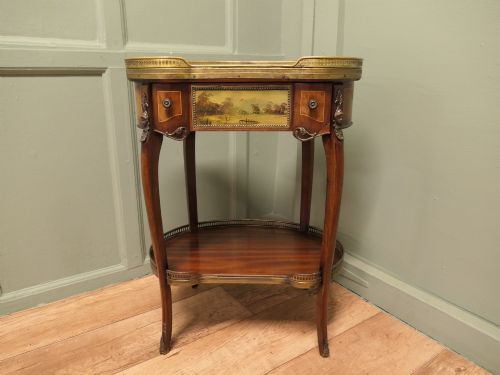
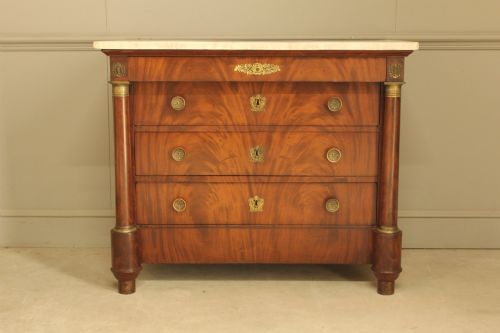
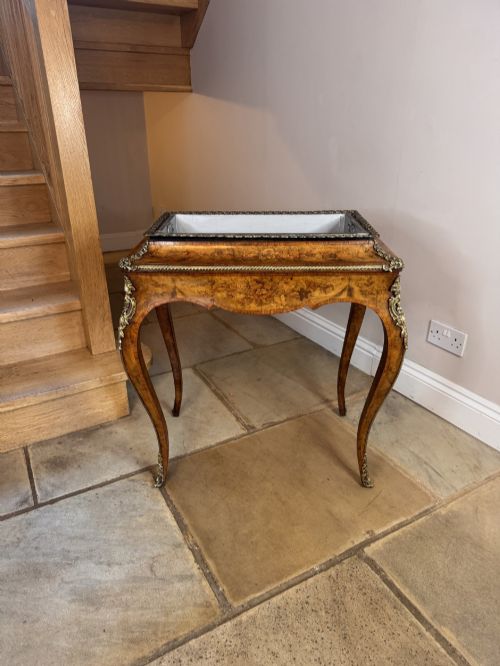
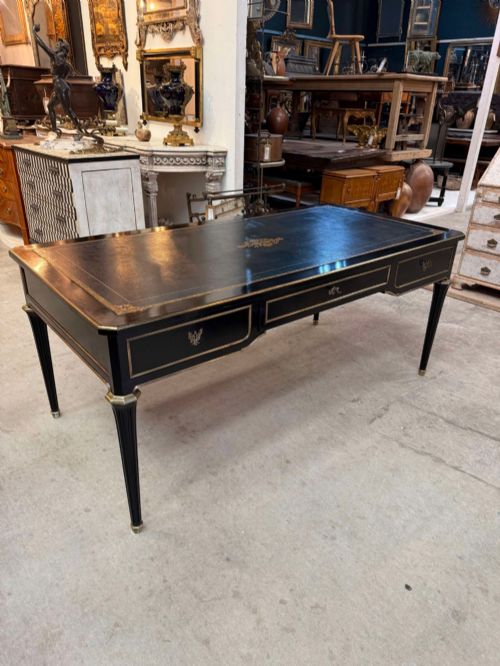
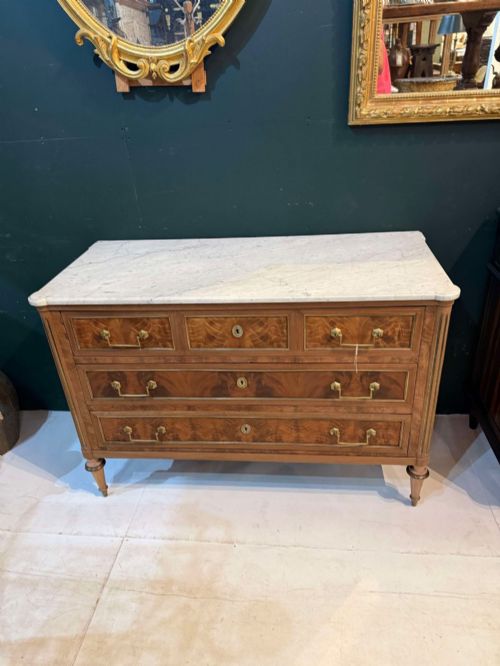
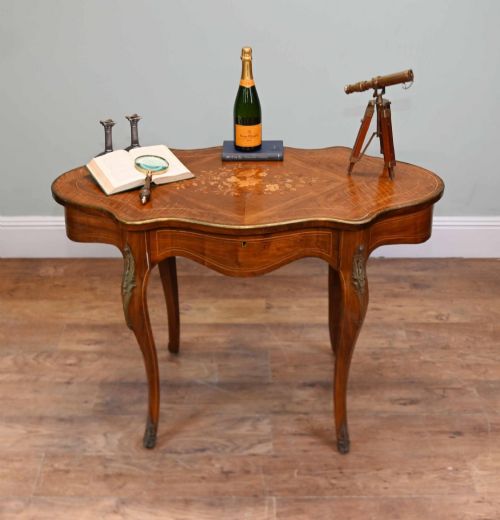
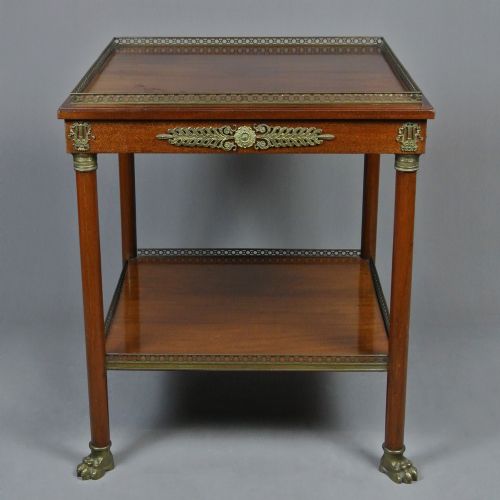
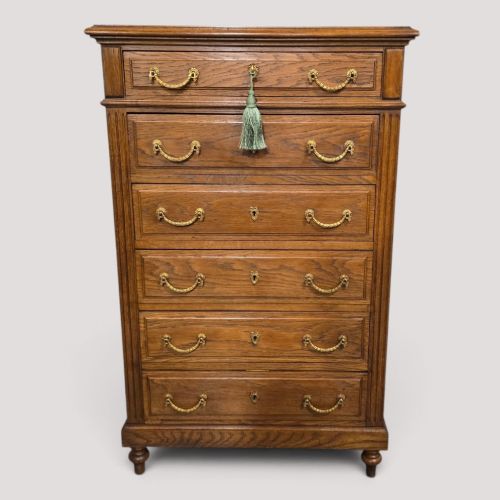
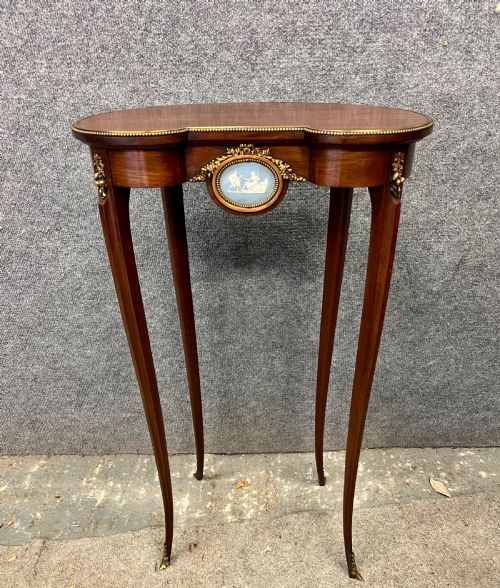
French brass furniture encompasses decorative side tables, chests of drawers, desks, and cabinets that utilise metal mounts, inlays, and galleries. When exploring french brass furniture, buyers encounter pieces spanning the eighteenth, nineteenth, and early twentieth centuries, reflecting enduring design traditions.
The selections on this page lean heavily towards nineteenth-century craftsmanship, including Napoleon III, Louis XV, Louis XVI, and Empire styles. These items range from intimate occasional tables and étagères to substantial commodes and bookcases.
Originating predominantly from French workshops and Parisian makers, these items combine functional utility with elaborate decorative programmes. They suit both traditional interiors and modern spaces seeking a focal point of historical character.
How they were made
Craftsmen built carcasses from solid timbers like mahogany, walnut, rosewood, kingwood, and cherrywood, frequently applying detailed marquetry or tortoiseshell and brass boulle work to the surfaces. Marble tops in white, rouge, and other varieties provide heavy, durable counterpoints to the timber frames.
Ormolu and gilt bronze mounts, handles, and galleries are cast and chased, then secured to the furniture to accentuate structural lines and corners. Wrought iron and brass structural elements appear on utilitarian forms such as baker's racks and jardinière stands.
French Brass Furniture Retail Price Guide 2026
Typical asking prices for french brass furniture among the pieces listed under this phrase on Sellingantiques today, from the lower quarter to the upper quarter. They describe what is for sale here now, not the wider market.
The listings span the eighteenth century, the Victorian era, the nineteenth century, and the early twentieth century up to the nineteen-thirties.
What varies in quality
Quality rests in the crispness of the gilt bronze or ormolu casting and the precision with which mounts fit the surrounding timber contours. Finer examples display meticulous chasing and secure fixing without excessive gap-filling.
The choice and execution of veneers, marquetry patterns, and timber selection dictate the upper tiers of the range. Cabinets featuring complex boulle work, painted porcelain plaques, or signed maker details represent superior workshop output.
Poix Blin·Dubois of Lyon·Maison Millet·Henry Dasson·Antoine Lampre·François Linke
The French Brass Furniture Glossary
- Ormolu
- Gilt bronze applied as mounts and decorative hardware on furniture. It provides a bright golden finish that contrasts against dark hardwoods.
- Boulle work
- Marquetry technique utilising tortoiseshell and brass inlaid in contrasting patterns. It is named after the master cabinetmaker André-Charles Boulle.
- Étagere
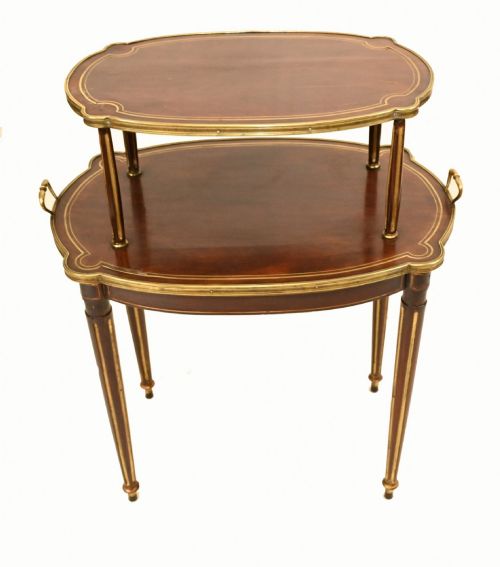
- An open tiered piece of furniture used for displaying small objects or serving tea. These typically feature multiple shelves supported by slender columns.
- Commode
- A low chest of drawers or cabinet dating from the eighteenth century onwards. French commodes frequently incorporate marble tops and elaborate metal mounts.
- Marquetry
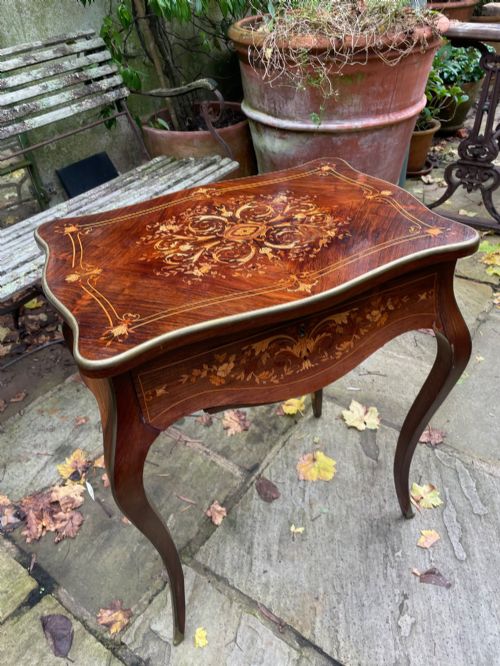
- Decorative veneer work arranged in pictorial or geometric patterns across furniture surfaces. Craftsmen employ various coloured woods to achieve tonal contrast.
French Brass Furniture: Frequently Asked Questions
How do I identify Louis XV style?
Louis XV style pieces are characterised by curving lines, cabriole legs, and asymmetrical rococo mounts. The overall silhouette avoids straight edges in favour of organic, flowing contours.
Craftsmen often embellished these designs with floral marquetry and delicate ormolu sabots, creating a lighter visual presence than earlier heavy classical periods.
What is Napoleon III furniture?
Napoleon III pieces date from the mid to late nineteenth century and draw heavily on historical revivals. This era embraced eclectic design, producing ebonised cabinets, boulle work, and rich gilt highlights.
Items from this period frequently feature applied porcelain plaques, mirrored tiers, and dense surface ornamentation designed to showcase manufacturing prowess.
How do I care for marble tops?
Marble surfaces require regular dusting with a soft cloth and prompt wiping of spills to prevent staining. Avoid acidic cleaners, vinegar, or abrasive pads that can etch or dull the polished stone.
Applying a specialist neutral stone wax periodically helps maintain the sheen and provides a protective barrier against everyday wear.
Where were these pieces used?
These items originally populated the salons, bedrooms, and drawing rooms of grand French residences and Parisian townhouses. Desks served private studies, while commodes and vitrines decorated formal reception spaces.
Today, they transition easily into modern living rooms and hallways as statement side tables, storage cabinets, and display surfaces.