




French Brass Candleholders
French brass candleholders bring warmth and historic metalwork into a room, offering functional illumination through cast and chased forms.
French Brass Candleholders
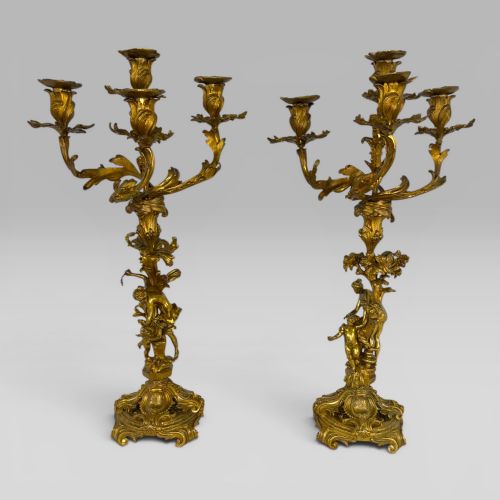
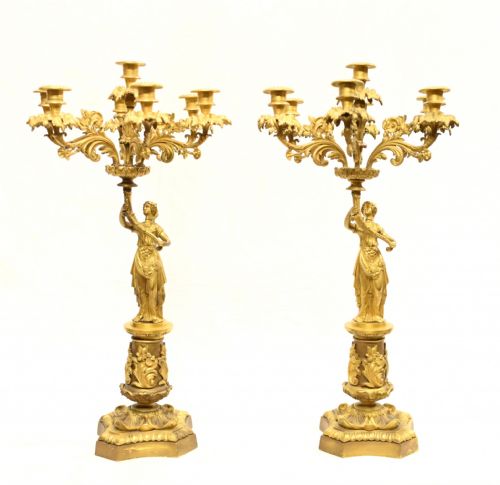
When you search for french brass candleholders, you encounter a range of lighting forms designed for tables, walls, and floors spanning several centuries. The selection on this page centres heavily on nineteenth-century pairs, incorporating styles from Rococo Revival and Louis XVI to Empire and Gothic Revival.
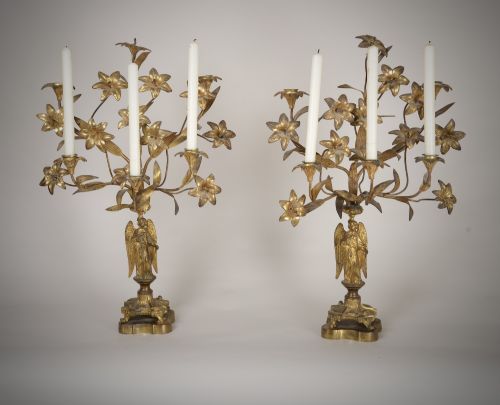
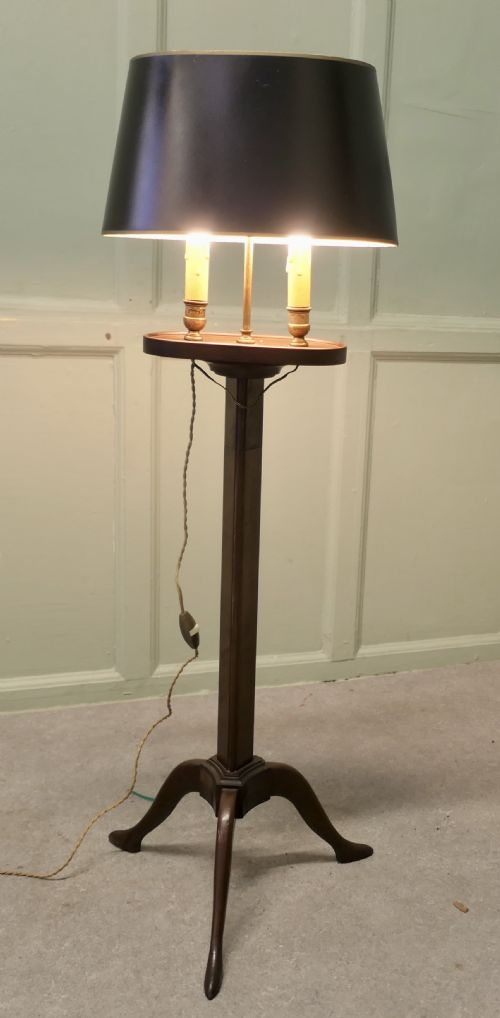
Most examples function as candlesticks or multi-branched candelabra, alongside wall sconces, chambersticks, and occasional floor lamps or bouillotte lamps. Materials extend beyond plain brass to include ormolu, gilt and patinated bronze, often combined with marble, glass, and porcelain.
How they were made
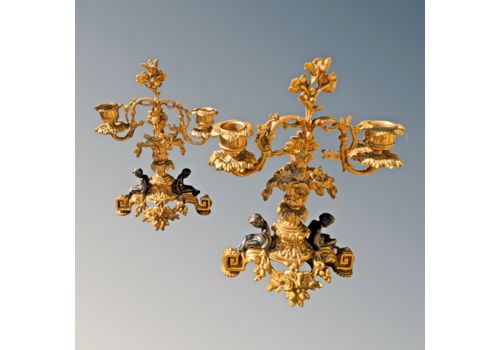
Metalworking techniques relied on casting brass, bronze, and ormolu into intricate decorative components, which were then chased and finished by hand. Many pieces combine gilt surfaces with patinated bronze details to create contrast.
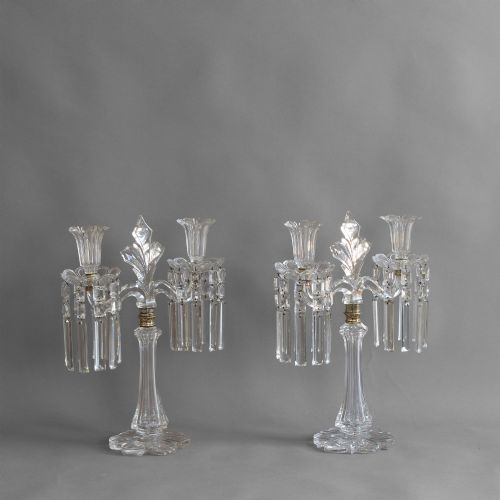
Casting often integrated structural bases of white or coloured marble, and occasionally incorporated glass drops, porcelain figures, or tortoiseshell boulle-work panels to elevate the decorative scheme.
Materials paired with the metal include marble, tortoiseshell boulle-work, glass, and painted porcelain birds.
What varies in quality
The standard of chasing determines how sharply details like acanthus leaves, figures, and architectural motifs are rendered on the metal surface. Crisp definition in the casting separates superior items from softer, more generalized production.
The choice of secondary materials, such as heavy solid marble bases or fire-gilded ormolu rather than simple lacquered brass, distinguishes higher-grade workshop output from standard commercial items.
The French Brass Candleholders Glossary
- Ormolu
- Gilded bronze, produced by applying a mercury-gold amalgam to a bronze base and heating it to leave a rich gold layer. This technique was widely used in eighteenth and nineteenth-century French metalwork.
- Candelabra
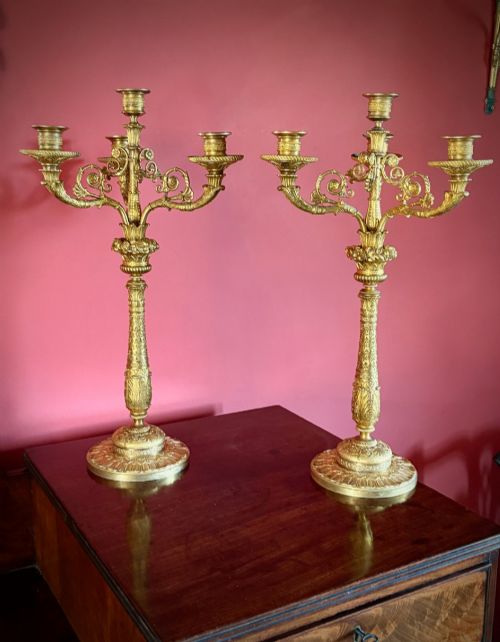
- A branched lighting fixture designed to hold multiple candles simultaneously. These often feature a central stem with symmetrical arms spreading outward.
- Chamberstick
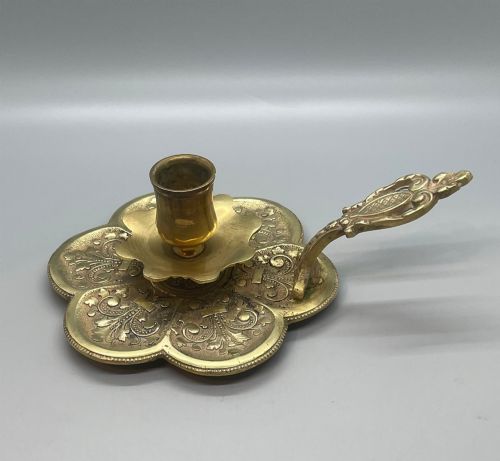
- A low portable candlestick fitted with a shallow pan to catch dripping wax and a vertical loop handle for carrying. They were essential for moving through darkened rooms before electric lighting.
- Bouillotte lamp
- An adjustable table lamp featuring a central shade above twin candle arms, originally used for the card game bouillotte. The height of the metal shade is typically regulated by a central key.
- Girandole
- A branched wall sconce or candlestick featuring reflective elements such as glass drops or mirrored backs to amplify candlelight. These fixtures scatter illumination across a room.
French Brass Candleholders: Frequently Asked Questions
How do I identify French styles?
French styles reveal themselves through distinct decorative motifs carved into the metal. Louis XVI and neoclassical pieces display symmetrical urns, ribbons, and fluted columns.
By contrast, Rococo Revival examples feature asymmetrical scrollwork, flowing curves, and naturalistic plant motifs.
Were these originally for candles?
Most pieces listed here were designed specifically to burn wax or tallow candles in domestic interiors. They provided the primary source of movable light before the widespread adoption of gas and electricity.
Many surviving examples retain their original sconces and drip pans, though some have been adapted for modern wiring over time.
How should I clean them?
Gentle dusting with a soft, dry cloth is usually sufficient to maintain the metal surface. Avoid abrasive polishes, particularly on ormolu and gilt surfaces, as harsh chemicals strip away the historic gilding.
Professional conservation advice should be sought before attempting any deep cleaning on delicate or mixed-material objects.
What is the difference between brass and ormolu?
Brass is an alloy composed primarily of copper and zinc, valued for its bright golden metallic appearance. It forms the solid structural body of many everyday lighting items.
Ormolu specifically refers to cast bronze that has been coated with a layer of gold. It possesses a deeper, richer lustre than plain polished brass.