



French Bowfront Cabinet
These french bowfront cabinet pieces bring curved mahogany, walnut, and kingwood fronts together with glass and marble, offering refined storage.
French Bowfront Cabinet
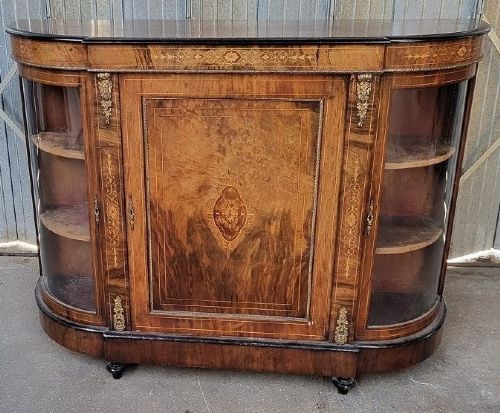
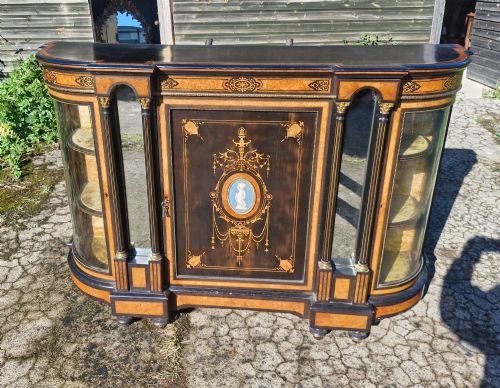
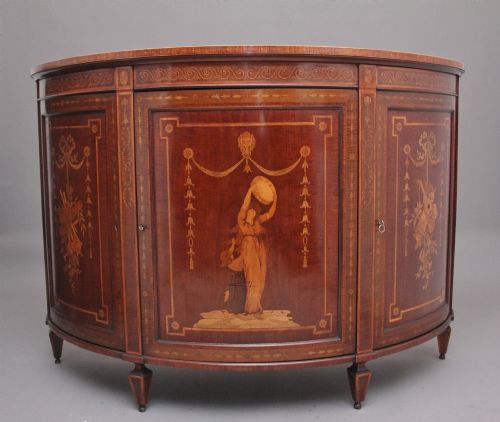
A french bowfront cabinet unites curved timber fronts with periods ranging from the eighteenth century to the twentieth, taking the form of side cabinets, display cabinets, corner cupboards, credenzas, chests of drawers, washstands, and bedside tables. When searching for a french bowfront cabinet, buyers encounter Victorian, Edwardian, and eighteenth-century pieces styled in Louis XV, neo-classical, and French Belle Epoque manners.
The selections span distinct centuries and specific decades such as eighteen-eighty, eighteen-sixty, nineteen-ten, and nineteen-twenty. Side cabinets, vitrines, and commodes dominate the physical forms, often incorporating curved glass or marble tops alongside wooden doors and drawers.
How they were made
Cabinet makers utilised foundational timbers including mahogany, walnut, burr walnut, ebonised wood, and kingwood, applying satinwood inlay and floral marquetry panels across the surfaces. Metal mounts in ormolu and brass accent the construction.
Glazed panels feature in display cabinets and vitrines, while marble tops appear on washstands and commodes to provide durable horizontal surfaces.
French Bowfront Cabinet Retail Price Guide 2026
Typical asking prices for french bowfront cabinet among the pieces listed under this phrase on Sellingantiques today, from the lower quarter to the upper quarter. They describe what is for sale here now, not the wider market.
Listings feature periods from the eighteenth century to nineteen-twenty, utilising mahogany, walnut, ebonised wood, and marble across eight distinct object types.
What varies in quality
The refinement of the floral marquetry and satinwood inlay marks the distinction between standard examples and exhibition pieces. Precision in the joinery of the curved bowfront shape determines the structural integrity.
The choice of primary timbers, from plain mahogany to burr walnut and kingwood, alongside the presence of cast ormolu mounts and genuine marble tops, defines the upper tier of execution.
The French Bowfront Cabinet Glossary
- Bowfront
- A convex curved front projecting outward from the frame. This curvature appears on commodes, corner cupboards, and side cabinets.
- Marquetry
- Decorative patterns formed by the insertion of various woods and other materials into a veneer. Floral motifs frequently decorate the panels of these pieces.
- Ormolu
- Gilt bronze mounts applied to furniture for decorative effect. These metal ornaments highlight corners, mounts, and borders.
- Vitrine
- A glass-fronted cabinet designed for the display of objects. These pieces utilise glass panels on doors and sides.
- Kingwood
- A dense, richly figured timber utilised in eighteenth-century pieces. This wood provides dark, contrasting grain patterns.
French Bowfront Cabinet: Frequently Asked Questions
Where were these cabinets used?
These cabinets served in principal reception rooms, bedrooms, and hallways as display spaces and storage vessels.
Drawing rooms held vitrines and credenzas for precious items, while bedside tables and commodes functioned in private quarters.
How do I identify the period?
Periods reveal themselves through timber choices, decorative motifs, and structural styles spanning the eighteenth to twentieth centuries.
Victorian and Edwardian pieces show specific marquetry techniques, whereas eighteenth-century examples display Louis XV lines and kingwood veneers.
What is a credenza?
A credenza is a low sideboard or cabinet often featuring elaborate marquetry and decorative mounts.
These large formats provide surface area and enclosed storage within formal interiors.
How do I care for marble tops?
Marble tops require gentle cleaning with damp cloths and mild soap to protect the polished stone surface.
Avoiding acidic liquids prevents etching on the stone used for washstands and commodes.