




French Boulle Table
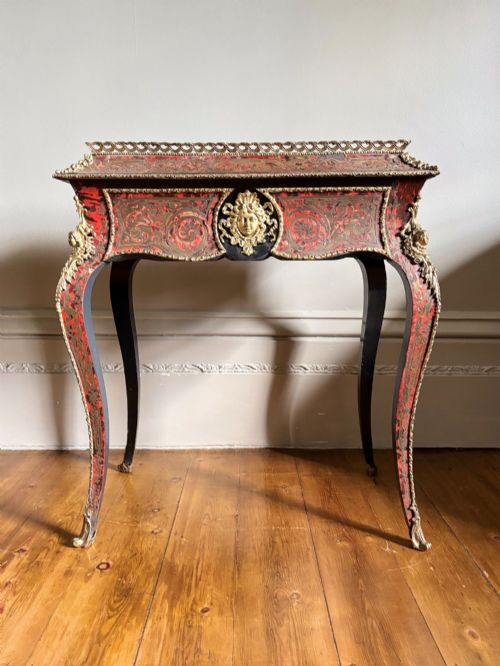
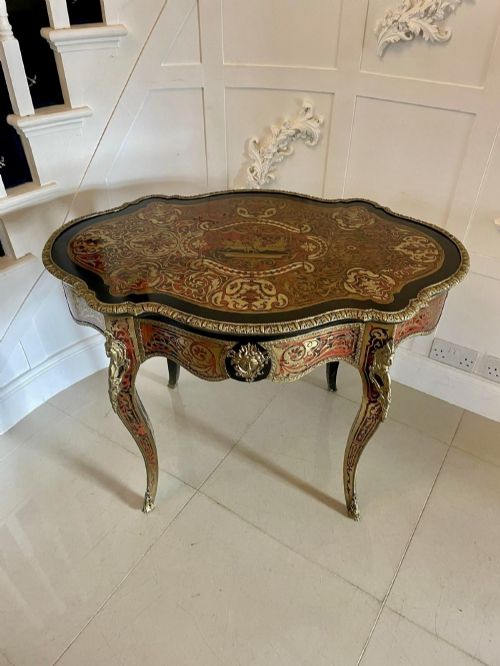
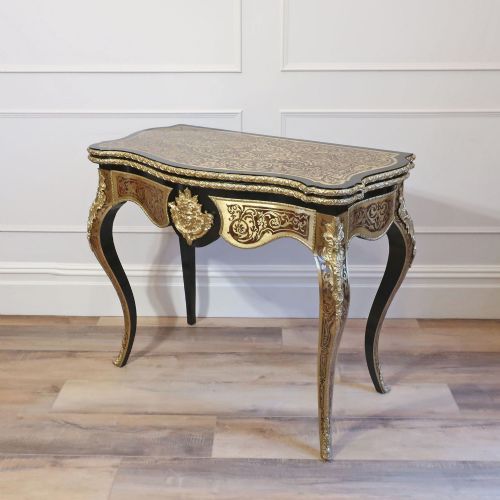
A French boulle table brings nineteenth-century tortoiseshell, brass, and ebonised wood into a room, offering striking marquetry and gilded detail for a formal interior.
French Boulle Table
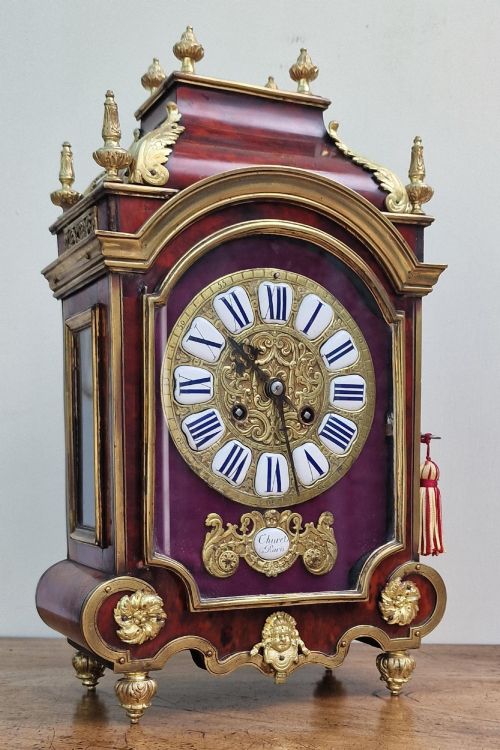
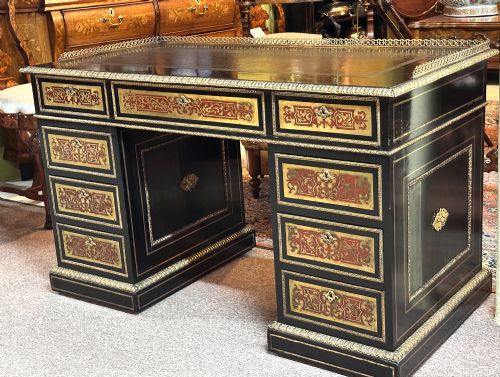
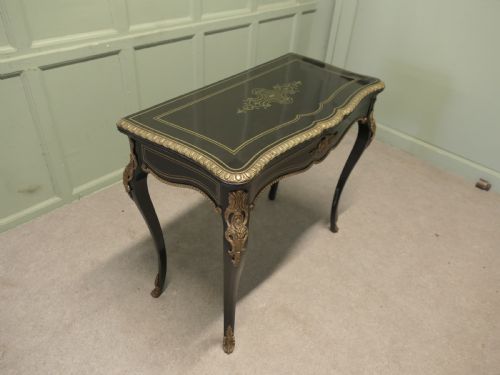
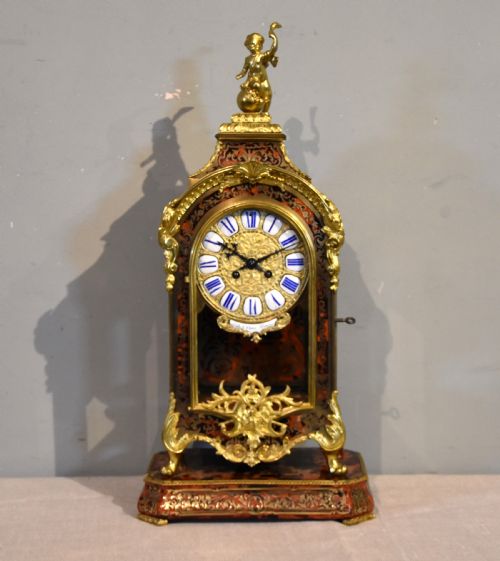
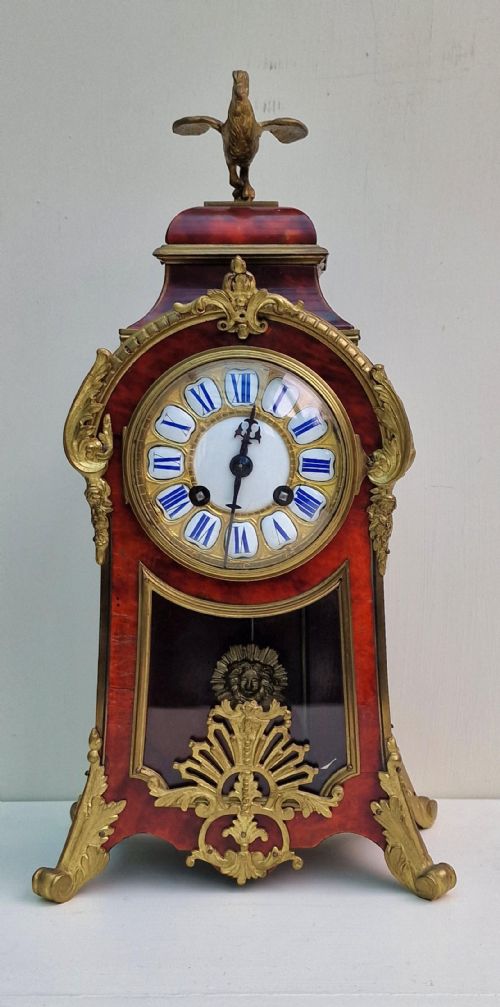
The version most commonly met on this page is the nineteenth-century centre table or card table, often displaying intricate brass inlay across ebonised wood or red tortoiseshell surfaces. Makers such as Edwards & Roberts and Maison Millet appear alongside mantel clocks and jardiniere stands sharing the same decorative vocabulary.
Maison Millet and Edwards & Roberts represent the notable makers recorded in the evidence for these categories, applying sophisticated marquetry techniques to various tables and cabinets. Pieces range from small-scale tables to elaborate writing desks and games furniture.
Craftsmanship and design
The distinction between tiers of execution rests on the crispness of the brass cutting and the depth of the tortoiseshell ground. Finely articulated ormolu mounts with sharp chasing elevate a piece above standard production.
Proportion and the integration of the marquetry across complex curved surfaces dictate the visual success of the furniture. Superior examples display seamless alignment where the brass inlay meets the cast bronze mounts.
French Boulle Table Retail Price Guide 2026
Typical asking prices for french boulle table among the pieces listed under this phrase on Sellingantiques today, from the lower quarter to the upper quarter. They describe what is for sale here now, not the wider market.
Listings feature items dated across the nineteenth century, incorporating Victorian, Regency, and 1960 periods alongside Louis XIV and Louis XV styles.
Thuret Paris·Maison Millet·Edwards & Roberts·Samuel Marti·Payne London
The French Boulle Table Glossary
- Boulle work
- A form of marquetry developed by André-Charles Boulle, utilising contrasting layers of brass and tortoiseshell inlaid into furniture surfaces. This decorative technique defines nineteenth-century French revival pieces.
- Ormolu
- Gilt bronze mounts applied to furniture and clock cases for architectural definition and decorative enrichment. The alloy provides a bright golden surface finish.
- Marquetry
- Decorative patterns formed by the insertion of pieces of wood, brass, or shell into a veneer fitted to a carcase base. It creates pictorial or geometric surface designs.
- Ebonised wood
- Timber treated to resemble ebony through staining or painting. This dark ground enhances the visual impact of brass and tortoiseshell inlay.
- Bureau plat
- A flat-topped freestanding writing desk used in formal French interiors. These tables frequently incorporate extensive surface marquetry and ormolu mounts.
French Boulle Table: Frequently Asked Questions
What is a French boulle table?
A French boulle table is a nineteenth-century piece of furniture decorated with tortoiseshell and brass marquetry in the style of André-Charles Boulle. These tables typically feature ebonised wood frames and ormolu mounts.
They serve as decorative centre tables, card tables, or writing desks within formal rooms. The craftsmanship reflects historic French revival styles popular during the Victorian era.
How do you care for tortoiseshell?
Tortoiseshell requires gentle dusting with a soft dry cloth and protection from direct sunlight and heat sources. Avoiding harsh chemical polishes preserves the natural material.
Stable humidity levels prevent warping of the veneer and lifting of the delicate brass inlay. Careful placement away from windows maintains the colour of the shell.
How do you identify Napoleon III style?
Napoleon III style furniture borrows heavily from Louis XIV, Louis XV, and Louis XVI designs, reinterpreting them with lavish nineteenth-century materials. You will spot abundant use of boulle marquetry, ormolu, and ebonised surfaces.
This aesthetic embraces elaborate ornamentation and historical revivalism. The construction methods and secondary timbers point firmly to the nineteenth century.
Where were these tables used?
These tables were designed for formal reception rooms, salons, and parlours in grand nineteenth-century residences. Centre tables occupied prominent positions in the middle of a room to display decorative objects.
Card and games tables provided functional entertainment for guests during evening gatherings. Their ornate surfaces matched the opulent interior schemes of the period.