


French Boudoir Seating
French boudoir seating offers intimate comfort and ornate charm, drawing collectors who want authentic period character for private rooms.
French Boudoir Seating
French boudoir seating encompasses a variety of intimate furniture forms designed for private chambers, including slipper chairs, settees, love seats, and footstools. These pieces primarily emerge from the nineteenth century, bearing stylistic influences from Napoleon III, Louis XV, and French Chateau designs.
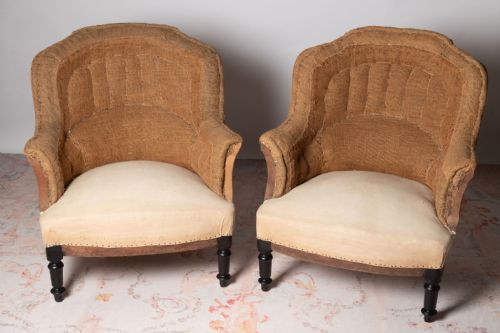
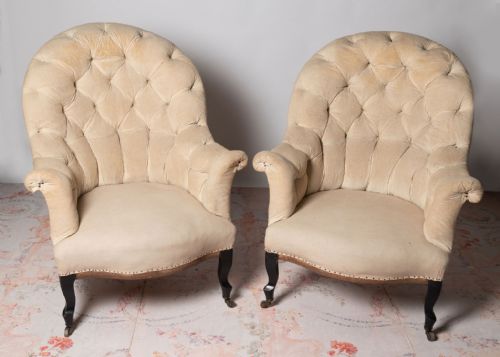
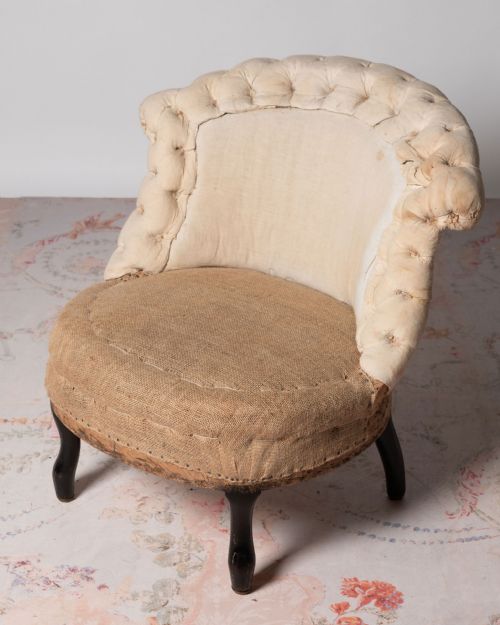
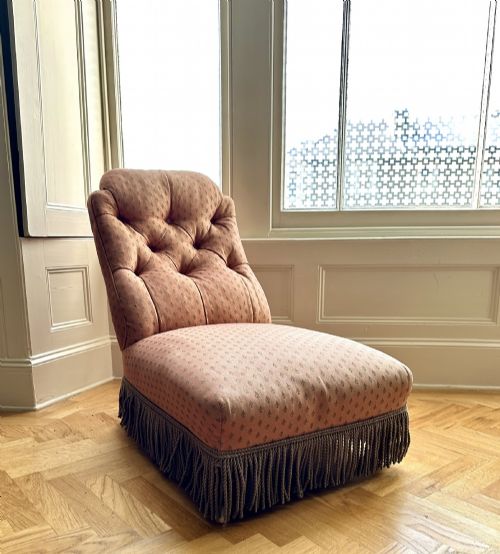
Buyers will most frequently encounter nineteenth-century armchairs and low-slung slipper chairs intended for bedrooms and dressing rooms. Many of these foundational pieces appear ready for fresh upholstery, allowing buyers to finish them in fabrics like velvet, silk, hessian, or calico.
The selection also includes pairs of chairs, circular boudoir stools with painted frames, and gilt-legged bedroom chairs. Each object reflects the compact proportions and decorative focus characteristic of traditional French private seating.
Assessing quality and craftsmanship
Quality in these pieces rests upon the crispness of the wood carving and the structural integrity of the frame. Superior examples display deeply sculpted giltwood or ebonised wood without compromise to the underlying timber joints.
The degree of original finishing and the condition of the exposed frame determine the standing of an individual piece. Items retaining their early gilding or paintwork command greater appreciation than those requiring total surface restoration.
Listings feature items primarily from the nineteenth century, utilising materials such as beech, giltwood, brass, and velvet.
The French Boudoir Seating Glossary
- Slipper chair
- A low-set upholstered chair traditionally used in bedrooms for dressing. These pieces sit closer to the floor than standard armchairs.
- Giltwood
- Wood that has been treated with a thin layer of gold leaf or gold paint. This technique accentuates the decorative carved details of the frame.
- Ebonised wood
- Timber treated to resemble ebony through a staining and finishing process. It provides a dark, sophisticated contrast to ornate room schemes.
- Napoleon III
- A nineteenth-century French design period known for eclectic revivals and lavish ornamentation. Pieces from this era often feature rich gilding and plush upholstery.
- Calico
- A plain-woven unbleached textile frequently used as a base layer for upholstery work. It provides a sturdy foundation before the final decorative fabric is applied.
French Boudoir Seating: Frequently Asked Questions
What rooms suit French boudoir seating?
These compact chairs and small settees fit naturally into bedrooms, dressing rooms, and quiet reading corners. Their modest proportions allow them to sit comfortably in spaces where larger armchairs would overwhelm the room.
They also work well as accent seating in living areas or hallways, adding a touch of period elegance without demanding excessive floor space.
How do I choose upholstery fabric?
Selecting upholstery depends on whether you prefer historical accuracy or a contemporary aesthetic update. Traditional choices include rich silks, velvets, and textured calico or hessian finishes.
Many pieces are offered ready for upholstery, giving you the freedom to match existing interior colour schemes and textures. Consider the intended use of the chair when choosing fabric durability.
How do I date these chairs?
Dating relies on examining the structural timber, carving style, and any remaining hardware or maker markings. Pieces from the nineteenth century often exhibit distinct regional French craftsmanship and period specific silhouettes.
Stylistic cues such as Napoleon III ornamentation or Louis XV proportions help narrow down the decade of production. Materials like ebonised wood and giltwood also point toward specific nineteenth-century aesthetic preferences.
Are these pieces comfortable for daily use?
Most of these historic chairs are built with low seats and supportive backrests designed for relaxation and dressing. Their ergonomic design suits casual sitting rather than prolonged lounging.
Because many nineteenth-century pieces require reupholstering, the comfort level can be adjusted during the restoration process by updating the internal padding and support springs.