
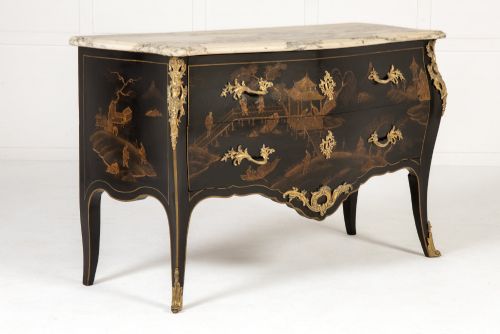


French Black Drawer Chest
These french black drawer chest pieces combine deep finishes with classic Continental forms, offering serious storage and striking presence.
French Black Drawer Chest
A french black drawer chest brings dramatic dark surfaces and substantial storage to an interior, drawing on centuries of Continental cabinet-making. When you search for this phrase, you encounter commodes, filing cabinets, and serpentine chests spanning periods from the eighteenth century through the art deco era.
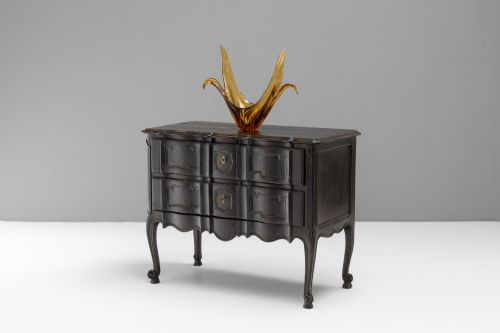
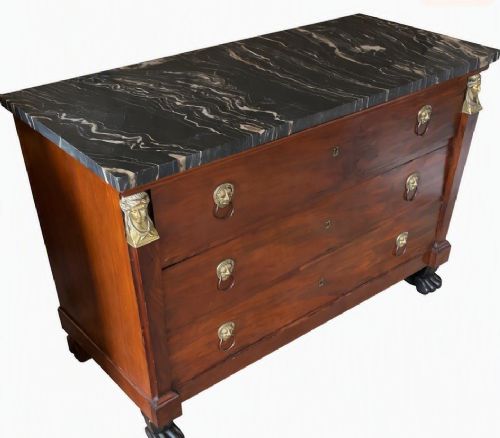
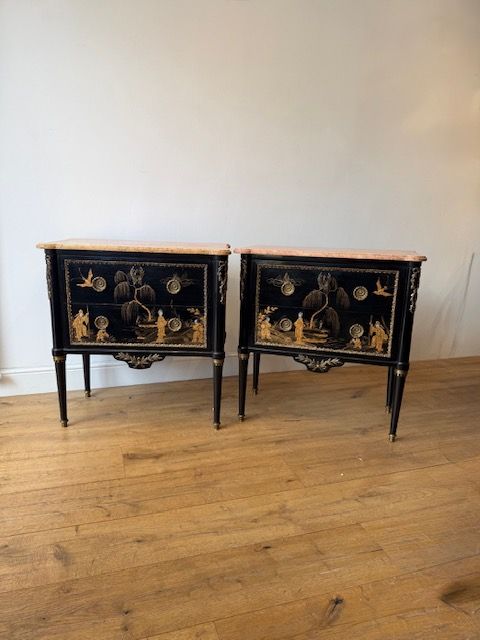
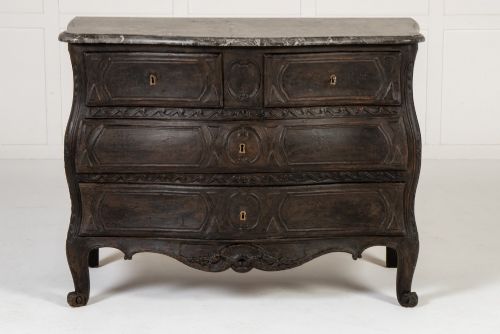
The selection ranges from eighteenth-century ebonised bombe commodes to early nineteenth-century empire models and later lacquered pieces. You also meet nineteenth-century painted versions alongside twentieth-century industrial filing cabinets and chinoiserie designs.
French provincial and Louis XV styles appear frequently alongside empire and rococo revival pieces, showing how makers adapted traditional forms across different decades. These chests serve practical storage needs while functioning as decorative focal points in bedrooms and living spaces.
How they were made
Construction relies upon solid timber carcasses of oak and mahogany, providing the structural stability necessary for large drawers and heavy marble tops. Artisans shaped these foundations into serpentine and bombe contours using traditional joinery techniques.
Surfaces received sophisticated finishes including ebonised wood, black lacquer, japanning, and painted treatments, often accented by contrasting brass or ormolu mounts. Marble tops added a durable and luxurious upper surface to many of these commodes.
Even industrial filing cabinets managed to get the French treatment, proving that paperwork deserves a bit of ebonised flair.
What varies in quality
Quality rests upon the precision of the timber framing, the integrity of the ebonised or lacquered surface, and the fineness of any applied mounts. Superior examples display harmonious proportions and careful execution of complex curves like bombe or serpentine fronts.
The refinement of decorative details such as chinoiserie scenes, hand-painted motifs, and cast ormolu hardware distinguishes exceptional pieces from standard production. Original marble tops and well-preserved historical finishes also elevate the standing of a commode.
The French Black Drawer Chest Glossary
- Commode
- A low chest of drawers, typically decorative and of French origin. These pieces often feature prominent hardware and shaped fronts.
- Bombe
- A swelling, outward-curving contour found on the sides and fronts of case furniture. This profile requires advanced woodworking skill to execute properly.
- Ebonised
- Wood treated with a finish that darkens it to resemble ebony. This process was popular across various nineteenth and twentieth-century periods.
- Japanned
- European imitation of traditional East Asian lacquerwork. It involves layered varnishes and decorative motifs.
- Ormolu
- Gilt bronze mounts applied to furniture for decoration. These metal details highlight the corners and handles of fine commodes.
French Black Drawer Chest: Frequently Asked Questions
Where should I place a french black drawer chest?
These chests work well in bedrooms, hallways, or living rooms where both surface space and drawer storage are required. Their dark finishes allow them to anchor a room visually while contrasting against lighter walls.
Ensure there is sufficient floor clearance for doors or drawers to open fully, particularly with wider serpentine or bombe models.
How do I care for a lacquered or ebonised surface?
Dust surfaces regularly with a soft, dry cloth to prevent particulate buildup. Avoid harsh chemical cleaners or excess moisture, which can damage aged finishes.
Place protective felt under any decorative objects placed on marble or wooden tops to prevent scratching.
What is the difference between an 18th-century and 20th-century commode?
Eighteenth-century examples typically feature hand-carved solid timbers, traditional joinery, and period-specific hardware proportions. Twentieth-century pieces often embrace art deco styling, industrial forms, or revival aesthetics.
Examining the interior construction, drawer linings, and backboards helps reveal the chronological origins of a piece.
Are marble tops original to these chests?
Many commodes from the eighteenth and nineteenth centuries were designed specifically to accommodate fitted marble slabs. These tops provided a durable, cool surface for daily use.
Checking the fit against the wooden frame helps determine whether the marble belongs to the original period of construction.