





French Bedroom Tallboy
A french bedroom tallboy offers vertical storage with continental elegance, bringing seven drawers of timber and marble into sleeping quarters.
French Bedroom Tallboy
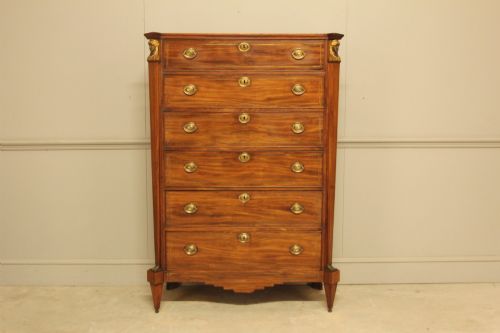
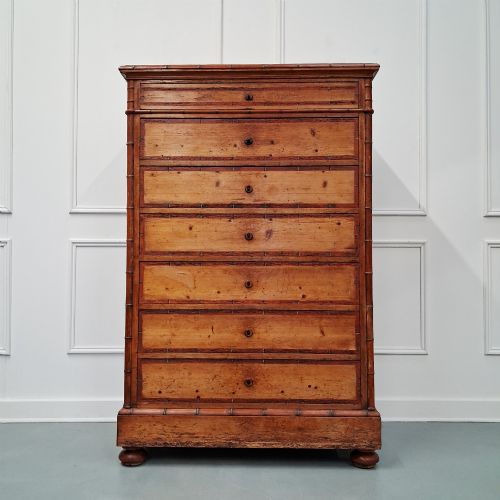
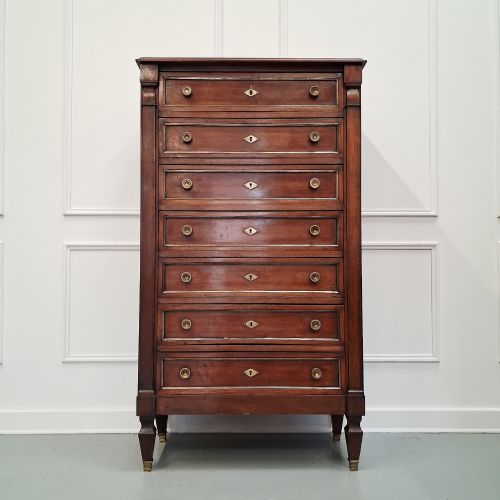
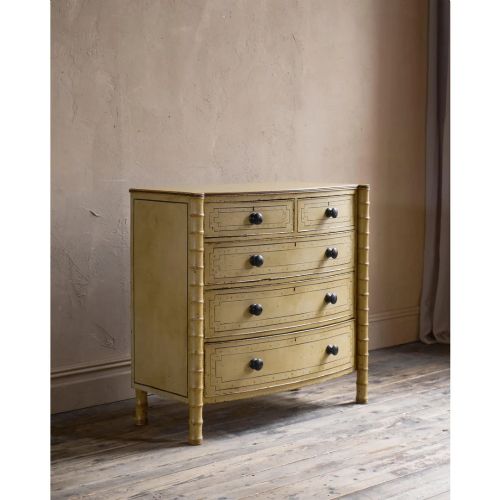
When buyers search for a french bedroom tallboy, they encounter tall chests, semainiers, and multi-drawer commodes originating from the nineteenth century up to the 1930s. These pieces stand higher than standard chests, designed originally to hold a week of linen within narrow floor footprints.
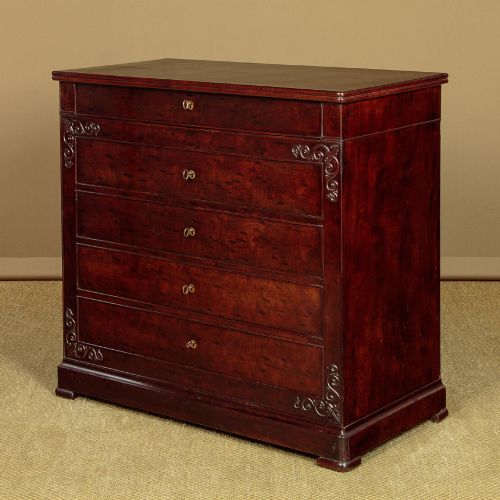
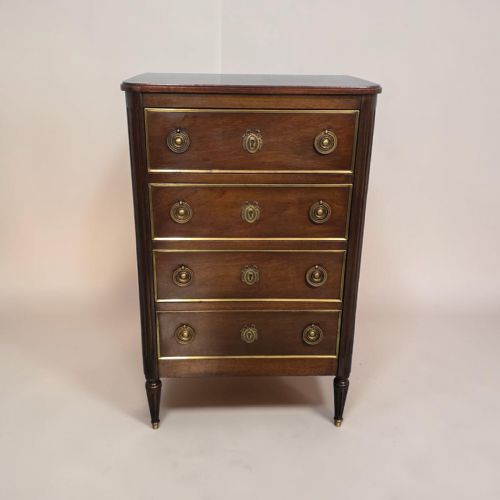
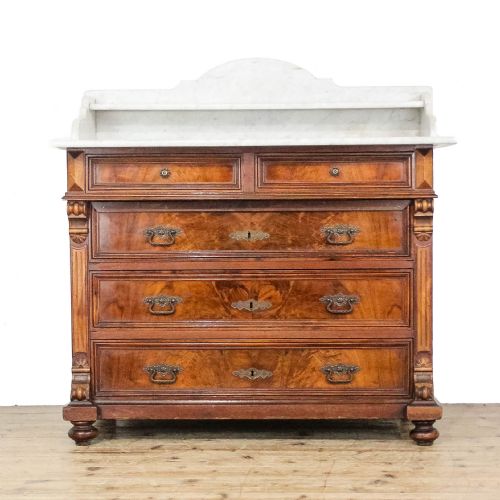
The dominant forms on this page include mahogany and walnut semainiers alongside marble-topped continental cabinets in styles ranging from French Empire to Louis Philippe. Cherrywood and tulipwood variants also appear, reflecting provincial and chateau tastes across the periods.
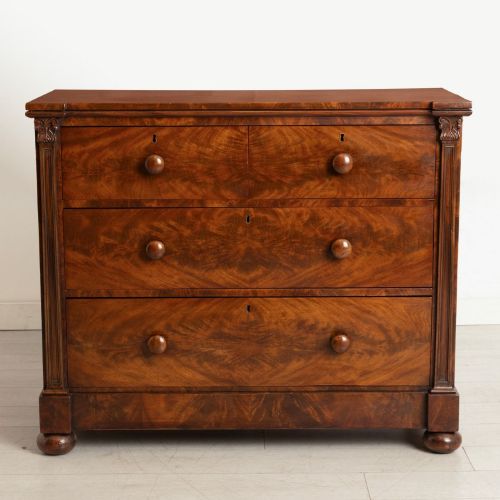
Buyers meet examples featuring parquetry, bookmatched veneers, and brass handles, alongside simpler five and six-drawer configurations. The tall proportions remain consistent across the selection, prioritizing vertical capacity for bedrooms.
What varies in quality
Quality shifts according to the selection of timber veneers and the precision of decorative inlays such as parquetry. Superior examples display carefully matched grain patterns across every drawer front rather than random timber cuts.
The integration of heavy marble tops and cast ormolu or brass mounts separates standard utility chests from finer decorative pieces. Cabinet makers who invested time in secondary wood selection and crisp drawer linings achieved greater longevity.
French Bedroom Tallboy Retail Price Guide 2026
Typical asking prices for french bedroom tallboy among the pieces listed under this phrase on Sellingantiques today, from the lower quarter to the upper quarter. They describe what is for sale here now, not the wider market.
Surface treatments across the page include inset marble slabs, bookmatched veneers, parquetry patterns, and original brass handles.
The French Bedroom Tallboy Glossary
- Semainier
- A tall seven-drawer chest traditionally designed to hold a week of clothing. This form stands particularly high relative to its width.
- Ormolu
- Gilded bronze mounts applied to furniture for decorative effect. These metal ornaments accent corners, escutcheons, and drawer pulls.
- Parquetry
- Geometric wood inlay work forming patterned surfaces on cabinet fronts. Artisans arrange small tiles of contrasting timber.
- Flame mahogany
- Timber veneer showing a distinct torch-like grain pattern. This figure results from cutting through the branch junctions of the tree.
- Louis Philippe
- A mid-nineteenth century style characterised by restrained curves and minimal ornamentation. Pieces from this period emphasise timber grain over heavy carving.
French Bedroom Tallboy: Frequently Asked Questions
What is a semainier?
A semainier is a tall, narrow chest of drawers designed with seven tiers, one for each day of the week. This specific form originated in France for bedroom linen storage.
The vertical format allows substantial storage while occupying minimal floor space in smaller rooms. They frequently feature marble tops and fine timber veneers.
How do I style a tall chest?
Position the tall chest against a primary bedroom wall where its vertical proportions balance the room. Ensure adequate clearance for opening the upper drawers.
Keep the top surface uncluttered, perhaps adding a small tray or lamp. The height allows the piece to function independently without requiring matching bedside furniture.
Are marble tops original?
Many continental tall chests and commodes were constructed specifically to carry heavy marble slabs on their upper surfaces. These stone tops provided durable, washable surfaces for bedroom use.
Matching the marble type and edge profile to the period of the carcass helps confirm originality. Veining and colour vary according to the regional quarry source.
How do I identify French Empire style?
French Empire pieces display architectural symmetry, dark mahogany timbers, and classical cast bronze or ormolu mounts. The lines remain straight and formal.
Details often include pilasters, columns, and heavy brass drawer handles. This aesthetic reflects early nineteenth-century classicism adapted for domestic furniture.