

French Bedroom Commode
A french bedroom commode offers practical storage with continental elegance, bringing period character and substantial presence to a sleeping space.
French Bedroom Commode
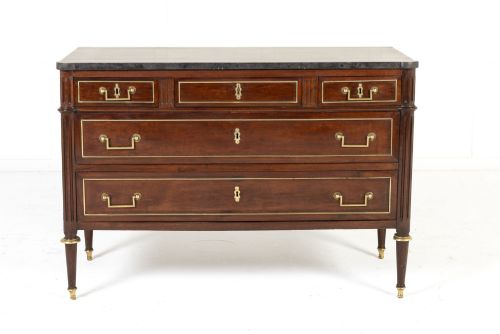
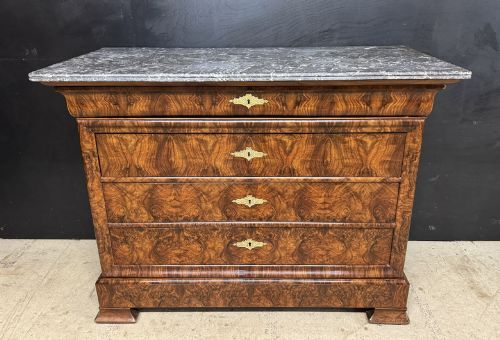
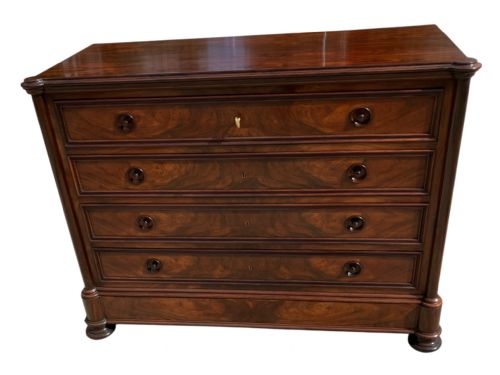
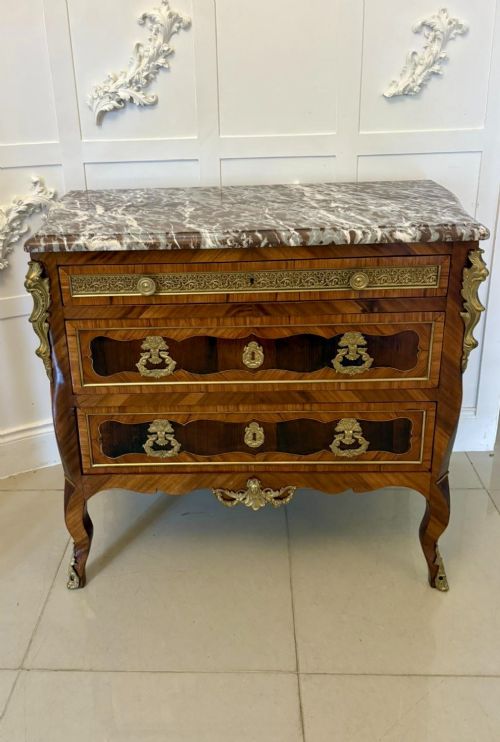
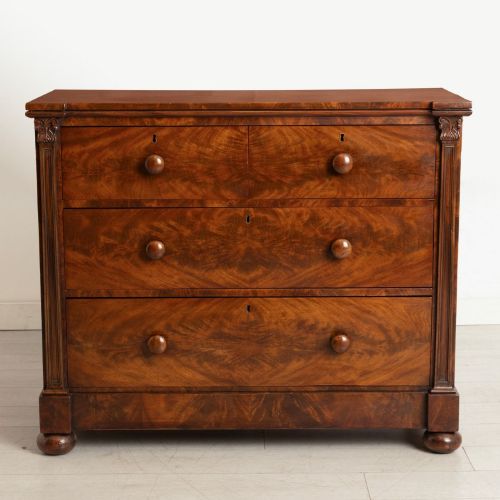
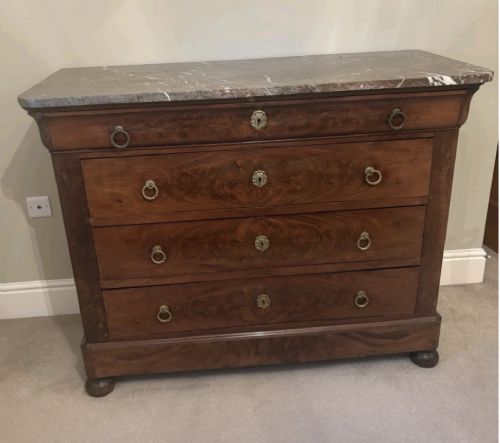
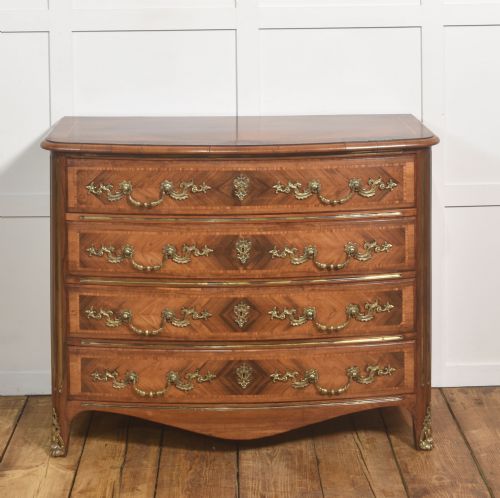
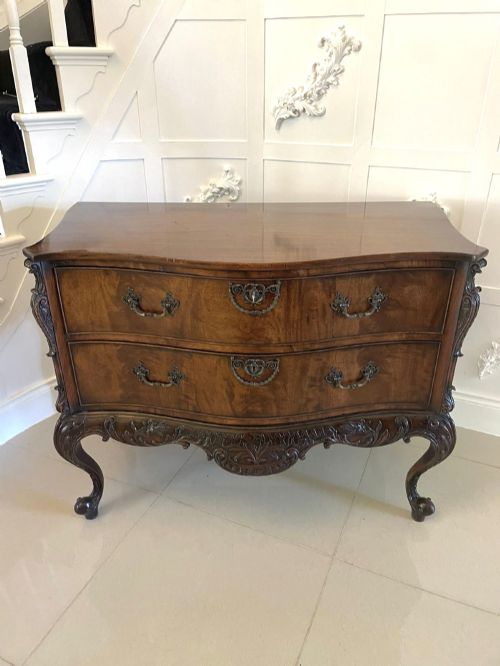
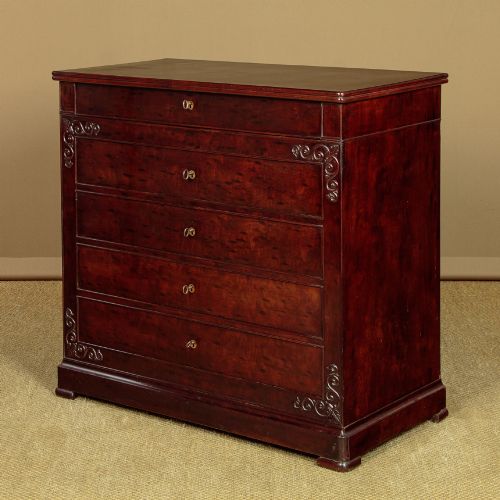
A french bedroom commode functions primarily as a chest of drawers or bedside cabinet designed for domestic chambers. These pieces range from substantial eighteenth-century serpentine forms to nineteenth-century mahogany and marble-topped chests.
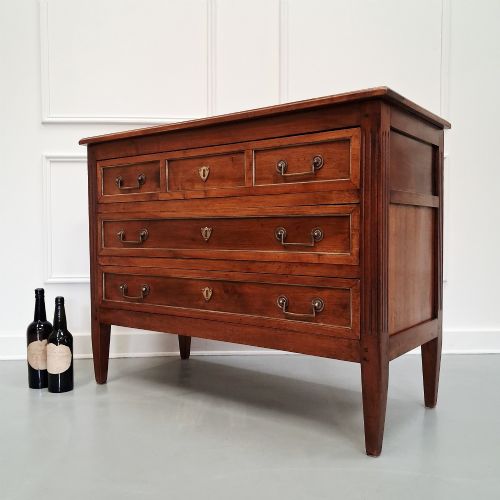
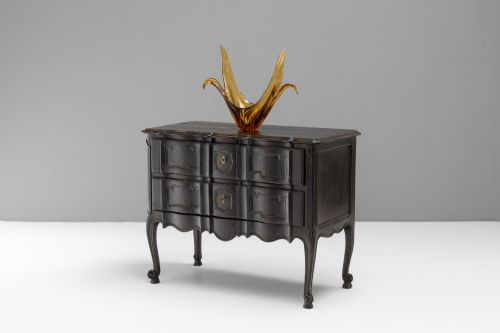
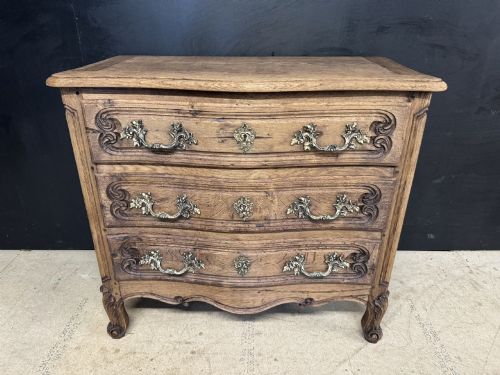
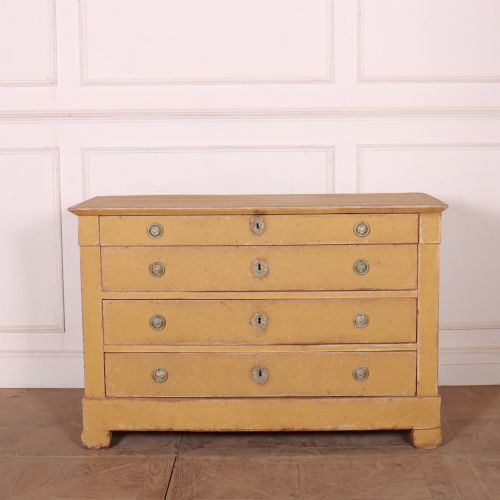
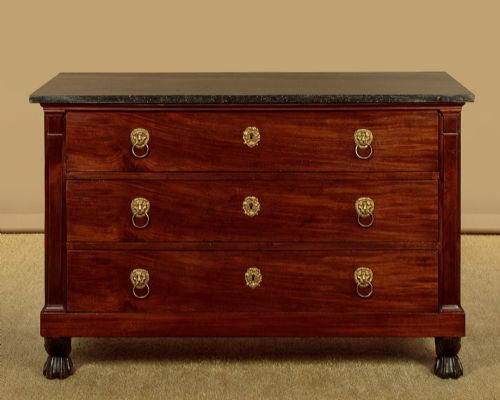
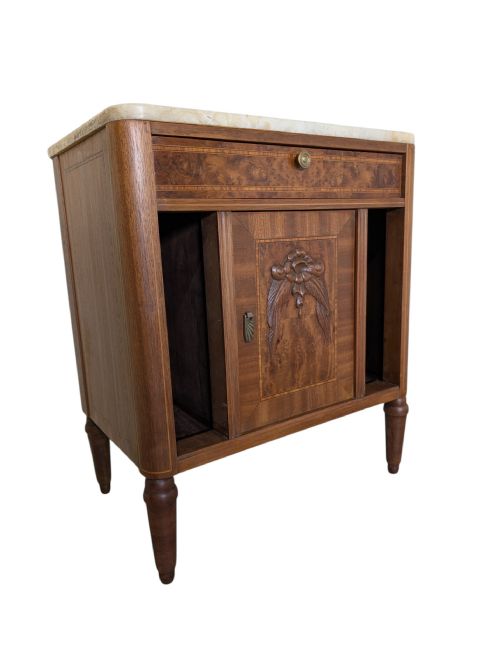
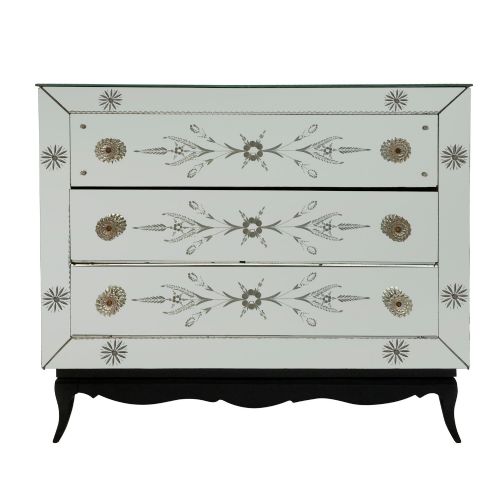
The selection here encompasses various regional and stylistic interpretations, including provincial cherrywood items, painted finishes, and Empire style mahogany designs. Buyers encounter formats spanning from tall chests to lower bedside tables and dressing tables.
Originating largely from continental workshops, these items reflect distinct periods from the eighteenth century through to the Art Deco era. Walnut, oak, and exotic veneers frequently define the structural forms seen across the collection.
Materials and construction methods
Cabinetmakers utilised solid timbers such as walnut, oak, cherrywood, and mahogany for the primary carcases. Finer surfaces often incorporated veneers like kingwood, rosewood, and palisander.
Marble tops, frequently white or grey, appear extensively on nineteenth-century pieces to provide a durable and decorative upper surface. Brass and ormolu mounts add structural accentuation and decorative detail to drawer fronts and corners.
French Bedroom Commode Retail Price Guide 2026
Typical asking prices for french bedroom commode among the pieces listed under this phrase on Sellingantiques today, from the lower quarter to the upper quarter. They describe what is for sale here now, not the wider market.
Faux bamboo makes a cheerful appearance among the nineteenth-century offerings, proving that Victorian cabinetmakers enjoyed a botanical illusion.
Judging quality and craftsmanship
The standard of timber selection and veneer matching dictates the visual harmony of the piece. Superior examples display continuous grain patterns across drawer tiers and precise marquetry work.
Hardware integration and the crispness of brass or ormolu mounts indicate the original workshop tier. Finely cast mounts fit snugly against the wooden contours without excessive gaps.
Edwards and Roberts
The French Bedroom Commode Glossary
- Bombe
- A bulging, outward-curving chest shape characteristic of mid-eighteenth-century commodes. This voluminous contour requires advanced cabinetmaking skill to construct.
- Serpentine
- A front profile shaped with a convex central section flanked by two concave curves. It creates a fluid, undulating movement across the drawer fronts.
- Ormolu
- Gilt-bronze mounts applied to furniture for decorative effect. The technique involves treating bronze with a gold-mercury amalgam.
- Marquetry
- The art of applying pieces of veneer to a structure to form decorative patterns and pictorial designs. Craftsmen use varied coloured woods to achieve contrast.
French Bedroom Commode: Frequently Asked Questions
What is a french bedroom commode?
A french bedroom commode is a decorative chest of drawers or cabinet originating from France, utilised for storage in domestic sleeping quarters.
These pieces typically feature timber construction, occasionally with marble tops and bronze mounts, reflecting specific periods from the eighteenth to the early twentieth century.
How do I identify an 18th-century commode?
Eighteenth-century examples often display regional timbers like cherrywood or walnut, with hand-cut dovetail joints and characteristic serpentine or bombe contours.
Construction methods rely entirely on hand tools, showing subtle irregularities in drawer linings and backboards that distinguish them from later reproductions.
Where should I place a commode in a bedroom?
A commode serves well against a main bedroom wall as a primary storage chest, or positioned beside a bed as an alternative bedside cabinet.
Marble-topped versions offer durable surfaces for lamps and personal items, while timber tops integrate naturally with wooden headboards and wardrobes.
What maintenance do marble tops require?
Marble surfaces benefit from regular wiping with a damp cloth and neutral soap to prevent staining from liquids or cosmetics.
Acidic substances like perfume or citrus should be kept away from polished stone to avoid etching the surface gloss over time.