


French Baroque Table
A french baroque table brings theatrical weight and carved ornament into a room, offering a focal point rooted in grand domestic traditions.
French Baroque Table
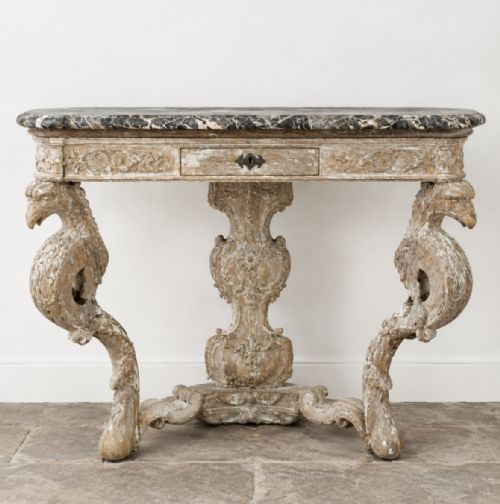
When you search for a french baroque table, you encounter substantial console and centre tables designed to anchor a formal interior. The evidence shows these pieces span genuine 18th-century originals through to 19th-century revival interpretations.
Console tables form a major part of the selection, often featuring wall-mounting designs intended for placement beneath large mirrors. Centre tables also appear, offering freestanding presence with carved bases and decorative tops.
Surviving examples frequently display heavy ornamentation, including scrollwork, putti, and marble tops. You will also find related forms like side tables that share the same sculptural silhouette.
Materials and construction
Makers utilised timber substrates such as oak and yew tree wood to build the robust foundational frames of these tables. Carved gesso and giltwood then provided the opulent surface decoration characteristic of the style.
Marble tops frequently completed the construction, adding weight and a cool surface to the console designs. Gilt bronze and brass mounts also appear on related works to accent the woodwork.
The material record for this phrase spans carved wood, gesso, marble, and gilt bronze across multiple centuries.
Distinctions in quality
The crispness of the hand-carved detail separates standard production from superior work. Deeper relief work on the wooden acanthus leaves and figurative elements demonstrates a higher level of artisan skill.
The quality of the gilding and the integration of the marble top relative to the wooden base indicate the original cost and ambition of the piece.
Thuret
The French Baroque Table Glossary
- Console table
- A table designed to stand against a wall, traditionally supported by two front legs and fixed to the wall at the back.
- Giltwood
- Wood that has been coated with gold leaf or a gold-coloured substance for decorative effect.
- Gesso
- A plaster-like mixture applied to wood to create a smooth surface for carving or gilding.
- Serpentine
- A curved line or shape that turns inward and outward in a continuous wave, often seen on table fronts.
- Centre table
- A freestanding table designed to be viewed from all sides, placed in the middle of a room.
French Baroque Table: Frequently Asked Questions
Where should I place a console table?
These tables suit hallways, living rooms, or dining spaces where they can sit flat against a wall beneath a mirror or artwork.
Because console designs often relied on wall brackets for total stability, ensure the piece rests securely in its chosen spot.
How do I clean a gilded surface?
Dust gently using a dry, soft brush to protect the delicate gold leaf or gilt finish from abrasion.
Avoid liquid cleaners or commercial polishes, which can strip away the historical surface layers over time.
Are marble tops original to the tables?
Many console tables incorporate stone tops as part of their initial design to handle heavy use and provide a contrasting texture.
Inspect the seating of the slab within the wooden frame to understand how the stone integrates with the base.
How can I tell an 18th-century piece from a revival?
Examine the tool marks, timber shrinkage, and the wear patterns on the underside and joints of the table frame.
Nineteenth-century revival pieces often display machine-cut elements or different construction methods compared to earlier work.