


French Art Deco Nightstands
French art deco nightstands combine geometric restraint with rich timbers, offering practical bedside storage rooted in the interwar years.

French Art Deco Nightstands
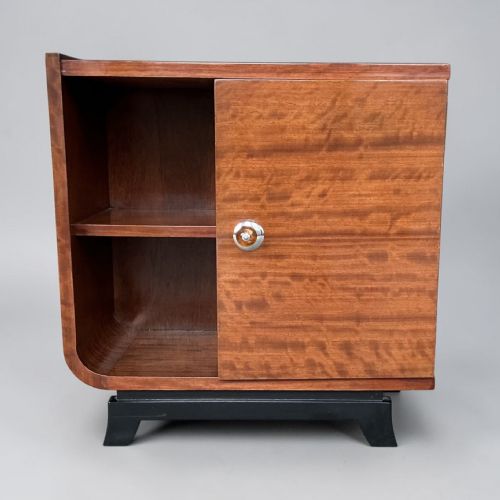
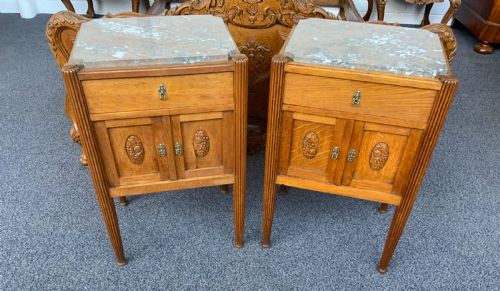
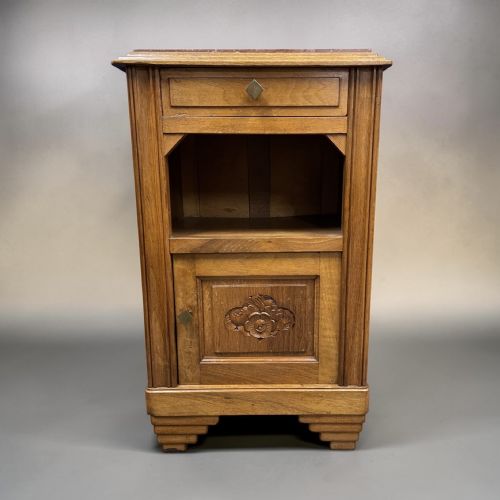
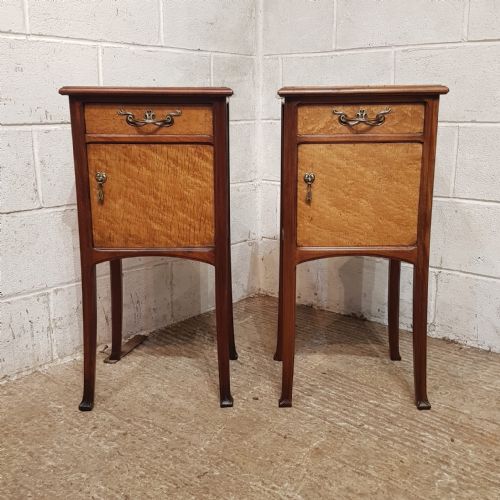
When searching for french art deco nightstands, a buyer encounters pieces designed primarily as bedside cabinets, bedside tables, and side cabinets dating from the 1920s and 1930s. These items often appear alongside matching bedsteads or within pairs intended to flank a bed.
The forms span compact cabinets with doors and drawers to simpler open tables, frequently integrating surfaces suited for companion lighting such as art deco table lamps.
Originating from France during the height of the modern movement, these bedside pieces reflect the shift toward functional yet decorative domestic furniture during the interwar decades.
How they were made
Cabinet makers utilised a foundation of oak or mahogany, frequently overlaying structural timbers with decorative burr walnut veneers to create striking grain patterns across door fronts and tops.
Many examples incorporate fitted marble tops alongside contrasting metal elements in brass, chrome, wrought iron, and spelter for structural support and decorative trim.
A solitary seagull frozen on a wave watches over the room from an evocative period table lamp.
What varies in quality
The grade of materials sets apart superior cabinets, particularly the selection of figured veneers such as burr walnut against standard timbers, alongside the weight and finish of integrated marble surfaces.
Construction precision defines the better examples, seen in the seamless integration of metal mounts in brass or chrome and the crispness of carved or moulded details on oak and mahogany frames.
Daum
The French Art Deco Nightstands Glossary
- Art Deco
- A design style dominant between the 1920s and 1930s characterised by streamlined geometric forms and stylised motifs. It replaced the flowing lines of earlier art nouveau furniture.
- Burr Walnut
- A timber harvested from the burl growths of walnut trees, prized for its swirling grain patterns. Cabinet makers applied it as a decorative veneer on prominent surfaces.
- Spelter
- A zinc alloy frequently used in the 1920s for decorative figures and lamp bases. It was often painted or bronzed to imitate more costly metals.
- Marble
- A metamorphic rock used for the durable, polished top surfaces of bedside cabinets. It provides a cool, moisture-resistant counter next to the bed.
French Art Deco Nightstands: Frequently Asked Questions
What defines french art deco nightstands?
These pieces are compact bedside cabinets or tables dating from the 1920s and 1930s, defined by geometric lines and architectural proportions.
They rely on contrasting materials like walnut veneer, marble, and chrome to achieve their distinctive modern appearance.
How were these nightstands used?
They served beside the bed to hold small personal items, books, and lighting such as spelter or glass table lamps.
Ensuite configurations sometimes integrated the nightstand directly into the design of a larger wooden bedstead.
How do I live with them?
Their compact scale makes them practical beside modern beds while adding distinct period character to a bedroom scheme.
Pairing them with period lighting or complementary timber furniture enhances their architectural presence in the room.
How do I tell periods apart?
Pieces from the 1920s often incorporate figurative metal elements or wrought iron details alongside rich burr walnut veneers.
By the 1930s, designs leaned towards simpler geometric forms utilising chrome, glass, and plainer cuts of oak or mahogany.