





French Art Deco Bedside Tables
French art deco bedside tables bring geometric symmetry and rich timbers to the bedroom, offering practical surface space combined with distinct period design.
French Art Deco Bedside Tables
French art deco bedside tables represent compact storage units designed for the bedroom during the early decades of the twentieth century. These pieces emerge primarily from the 1920s and 1930s, reflecting the streamlined aesthetics of the period.
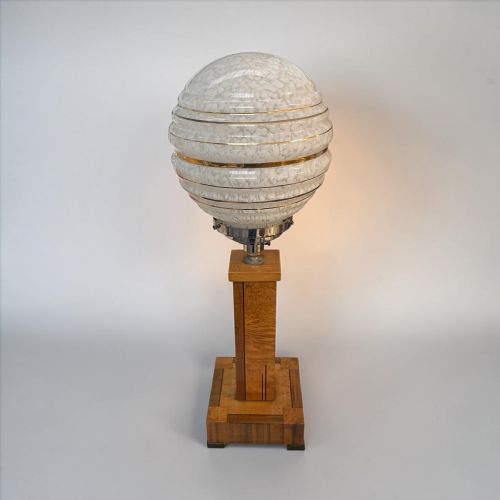
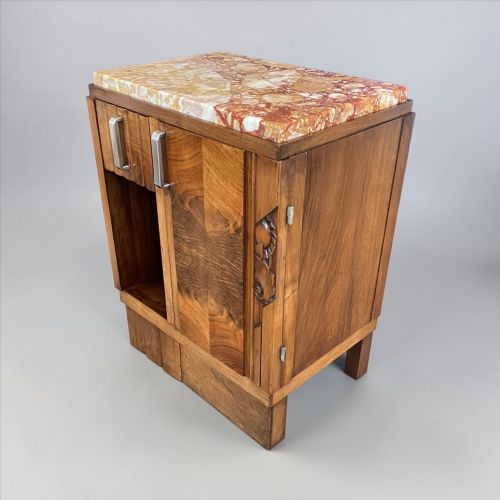
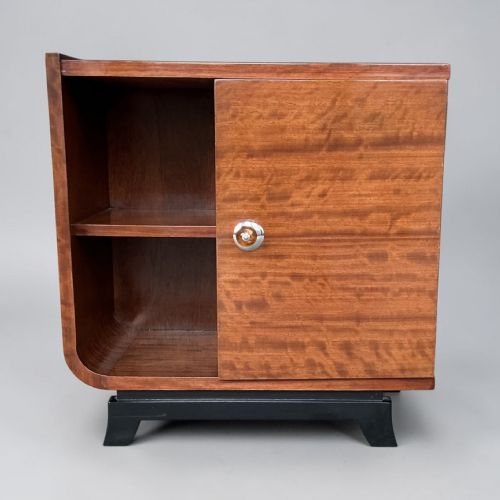
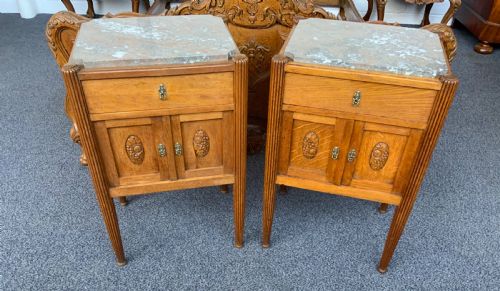
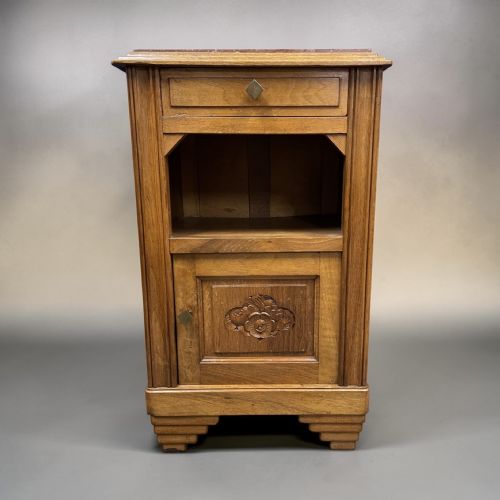
The objects take the form of bedside cabinets and side cabinets, frequently constructed with matched timber veneers and stone surfaces. Alongside cabinets, related items such as bedside tables appear within the aesthetic vocabulary of the era.
Makers of these items utilise dense hardwoods to establish the characteristic silhouette associated with French design from the interwar years. Buyers encounter both single pieces and matched pairs intended to flank a bed.
How french art deco bedside tables were made
Cabinet makers construct these units using substantial timber foundations faced with decorative veneers such as mahogany and burr walnut, alongside solid elements of oak. Marble tops frequently provide a durable and contrasting surface above the wooden carcase.
Construction techniques combine traditional joinery with the application of decorative stone and metal accents. The integration of marble into the top surface demonstrates a preference for mixed materials within cabinet making.
French Art Deco Bedside Tables Retail Price Guide 2026
Typical asking prices for french art deco bedside tables among the pieces listed under this phrase on Sellingantiques today, from the lower quarter to the upper quarter. They describe what is for sale here now, not the wider market.
Listings for french art deco bedside tables span the 1920 and 1930 periods, featuring materials such as marble, mahogany, and burr walnut.
What varies in quality in french art deco bedside tables
The selection of timber veneer determines much of the visual depth, with book-matched burr walnut and mahogany offering greater complexity than plain surfaces. Grain alignment across drawers and doors shows the care taken by the original cabinet maker.
The integration of fitted marble tops and the precision of the underlying wood construction separate standard utilitarian pieces from finer decorative examples. The stability of the carcase and the crispness of the edges define the standard of manufacture.
Charles Schneider·Eileen Grey·Blangy Clockmakers·Bayard
The French Art Deco Bedside Tables Glossary
- Burr walnut
- A figured timber veneer showing swirling knot formations. It provides decorative pattern on cabinet doors and drawer fronts.
- Art Deco
- A design style from the 1920s and 1930s emphasising geometric shapes and stylised forms. It dominates the aesthetic of these bedside units.
- Marble
- A metamorphic rock used for the top surfaces of cabinets. It offers a cool, solid counterpoint to the timber body below.
- Mahogany
- A durable tropical hardwood utilised in cabinet construction. It provides a stable base for fine veneer work.
French Art Deco Bedside Tables: Frequently Asked Questions
How do I identify a french art deco bedside table?
Look for clean geometric lines, rectangular forms, and the use of distinct veneers like mahogany or burr walnut. Many examples include fitted marble tops that sit directly on the wooden carcase.
Dates generally centre around the 1920s and 1930s, matching the broader movement of French art deco design found in cabinets and lighting of the period.
Were these cabinets made in pairs?
Makers produced both single bedside tables and matched pairs designed to sit on either side of a bed. Pairs share identical timber grain patterns and dimensions.
Finding a matched pair remains common within surviving examples from the 1920s and 1930s.
What woods were used for french art deco tables?
Construction relies heavily on dense hardwoods such as oak, alongside applied veneers of mahogany and burr walnut. These timbers provide the foundation for polished finishes.
Stone elements like marble frequently complement the wooden structures on top surfaces.
How do I care for marble top bedside cabinets?
Wipe the marble surface regularly with a damp cloth and avoid harsh acidic cleaners that can etch the stone. Protect the timber carcase with appropriate furniture wax.
Gentle maintenance preserves the polished finish of both the stone and the underlying wood veneers.