


French Art Deco Artwork
These french art deco artwork selections bring the distinct modernist styling of early twentieth century France directly into your interior.
French Art Deco Artwork
When searching for french art deco artwork, buyers encounter a diverse selection of period pieces originating from the early decades of the twentieth century. These items span various mediums, capturing the distinct cultural shifts of 1920 and 1930 France through visual expression.
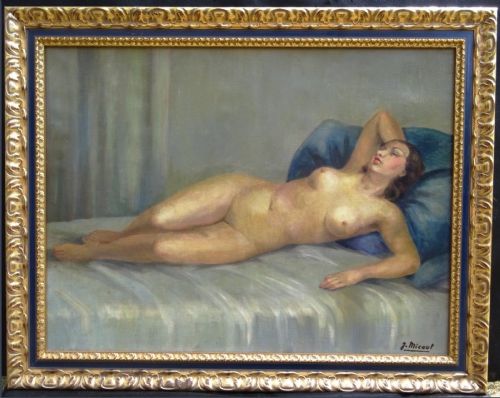
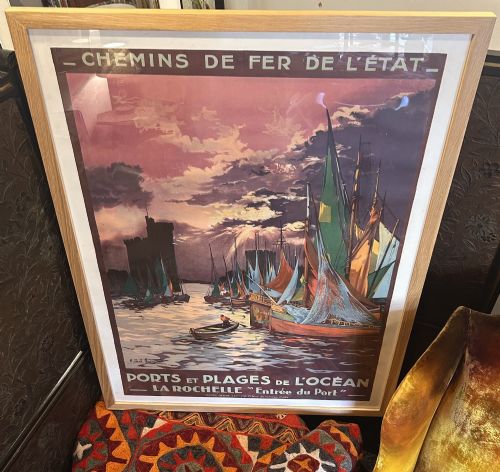
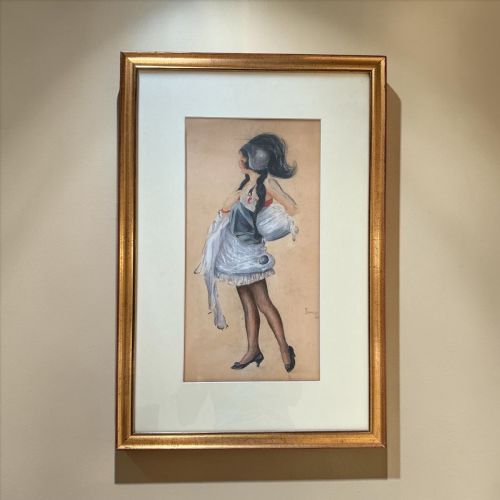
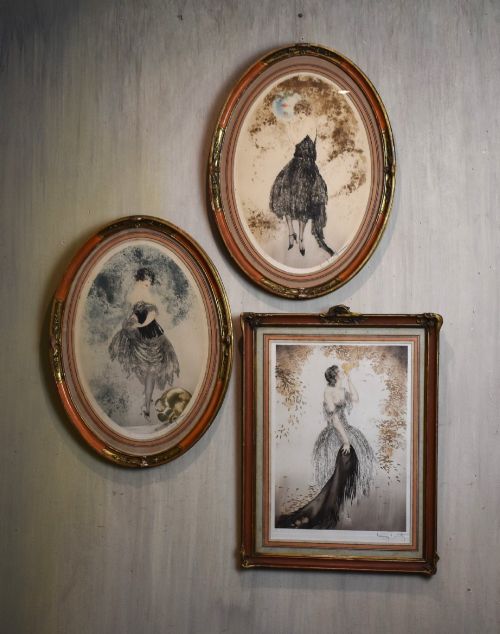
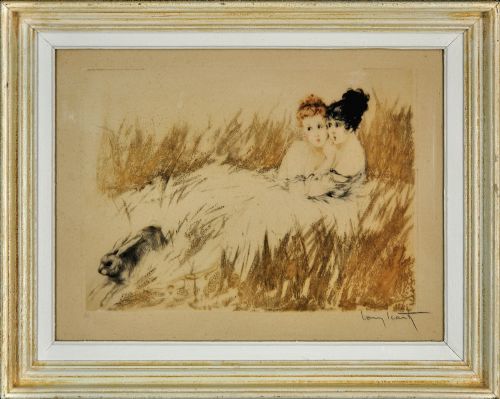
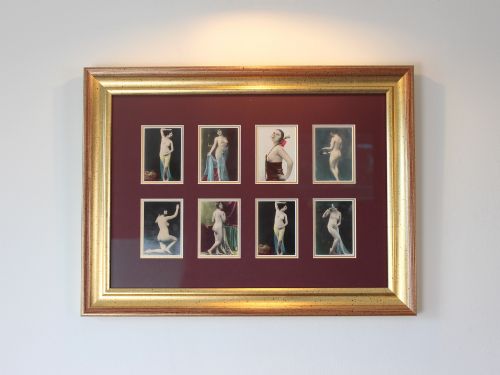
The most common pieces on this page include framed oil paintings on canvas, pastel portraits, and hand coloured etchings. Many examples feature female nude studies, elegant portraits, and travel posters characteristic of the era.
Originating from periods including the 1910s, 1920s, and 1930s, these works reflect artistic movements such as the School of Paris, Fauvism, and the broader Art Deco style. Subjects range from bohemian life in Paris to sunbathing scenes and Mediterranean landscapes.
Materials and technique
Makers utilised traditional supports such as canvas, paper, board, and terracotta, applying oil paint, watercolours, ink, and pastel pigments to create their compositions. Many prints incorporate hand coloured detailing or drypoint and aquatint techniques.
Framed works often utilise glass protection over paper elements, etchings, and photographs, whilst sculptural pieces rely on moulded terracotta to form three dimensional figures.
Flappers, sunbathers, and elegant ladies populate these vintage frames, bringing a permanent 1920s Parisian holiday directly to your wall.
Assessing quality
The distinction between works rests upon the surety of the draughtsmanship, the expressive handling of oil paint or pastel, and the clarity of print impressions in etchings and lithographs. Stronger compositions display confident brushwork and precise detail in character representation.
Condition of the physical medium, whether paper, canvas, or terracotta, heavily influences the standing of a piece. Original framing, clear artist signatures, and well preserved pigments distinguish finer examples from standard decorative items.
Louis Icart·Julian Mandel·Raymond Moritz·Lucien Gibert·Gaetan Dumas·Georges Goursat·Gilbert Privat·Albert Guillaume·Andrè Maurice·Albert Terry·Kees van Dongen
The French Art Deco Artwork Glossary
- Drypoint
- An intaglio printing process where an image is scratched directly onto a metal plate with a sharp needle. This technique creates a characteristic velvety burr in the printed lines.
- Aquatint
- A printmaking method that produces tonal areas resembling watercolour washes through the use of acid resistant resin. It is frequently combined with etching during this period.
- Lithograph
- A planographic printing technique based on the chemical repulsion of oil and water. Artists draw directly onto a limestone block or metal plate to produce multiple impressions.
- School of Paris
- A term describing the diverse community of artists residing and working in Paris during the early twentieth century. It encompasses various modernist approaches distinct from strict academic styles.
- Fauvism
- An early twentieth century painting style characterised by strong colours and painterly qualities. Works in this vein prioritise expressive impact over realistic representation.
French Art Deco Artwork: Frequently Asked Questions
How do prints differ from original paintings?
Original paintings and drawings exist as singular hand painted compositions on canvas, board, or paper. Prints and etchings, conversely, represent multiple impressions pulled from plates or stones.
Signed artist proofs and hand coloured etchings offer collectible qualities distinct from unique painted works.
How should these pieces be displayed?
Most works arrive framed, ready for wall hanging in domestic interiors. Framed etchings, drawings, and photographs require protection from direct sunlight to preserve delicate paper and pigments.
Terracotta busts and sculptures need stable, flat surfaces such as sideboards or dedicated plinths for safe presentation.
How can I identify the period?
Dating relies on recorded artist lifespans, written dates on the reverse or front, and stylistic indicators. Pieces from the 1920s and 1930s typically embody distinct modernist and art deco geometric sensibilities.
Materials like aged paper, original wooden frames, and period signatures further assist in confirming the era.