



French Architectural Mirror
A french architectural mirror brings deep historical presence and structural symmetry to a room, opening light across spaces through grand framing.
French Architectural Mirror
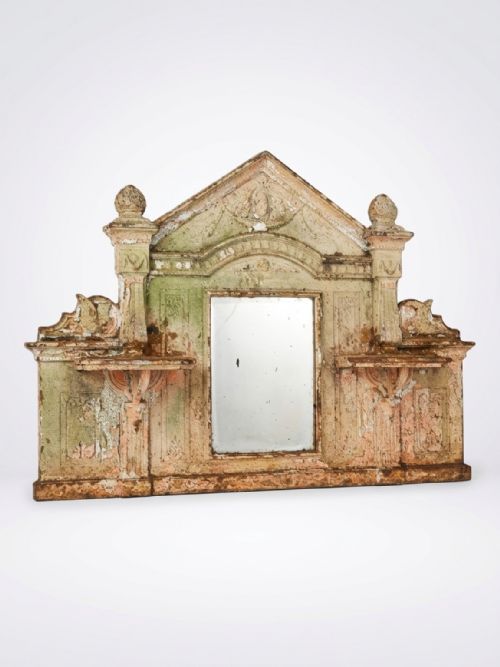
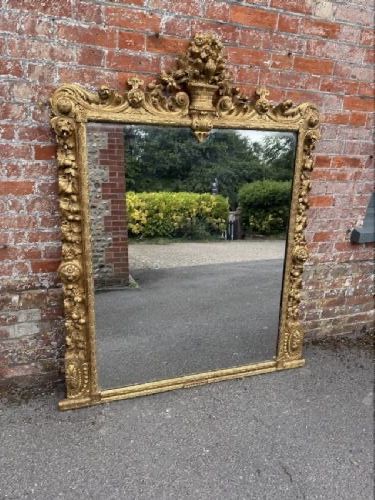
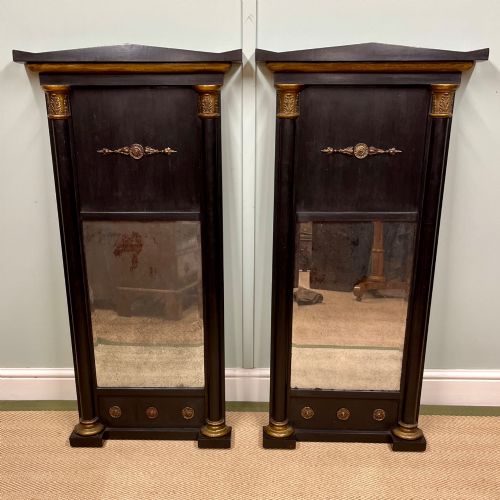
A french architectural mirror draws on classical building forms, presenting substantial frames that echo columns, pediments, and window structures. Buyers searching for a french architectural mirror typically encounter large nineteenth-century pieces, including overmantel, pier, wall, and trumeau variants spanning eras from the eighteenth century through the Victorian period.
Assessing quality and craftsmanship
Depth and crispness of the hand-carved wood ornamentation separate standard production from superior examples, particularly where gesso is layered and modelled without loss of definition. The articulation of architectural details, such as fluted side columns and balanced pediments, demonstrates the maker's skill and adherence to classical proportions.
The integrity of the original surface finish, whether giltwood, gold leaf, or aged paint, dictates visual authority. Pieces retaining their original glass plates and uncompromised structural frames hold greater cohesion than those with replaced elements.
Several mirrors arrive equipped with side columns, ready to hold up an imaginary roof if the ceiling ever gives way.
Nosotti s
The French Architectural Mirror Glossary
- Giltwood
- Wood that has been coated with gold leaf or a gold-coloured finish. This finish provides a luminous and reflective surface characteristic of formal period frames.
- Gesso
- A plaster-like mixture applied to wood frames to create a smooth surface for carving and gilding. It allows for crisp, detailed decorative moulding.
- Trumeau mirror
- A decorative wall mirror combined with a painted panel or artwork above the glass. These were traditionally built into the wood panelling of French interiors.
- Pier mirror
- A tall mirror designed to hang on the narrow wall space between windows. They often coordinate with console tables placed below them.
- Overmantel mirror
- A large horizontal mirror specifically designed to hang above a fireplace mantel. They visually anchor the hearth within the room.
- Parcel gilt
- A decoration technique where only specific parts of an object are gilded with gold leaf, leaving the underlying wood or paint exposed elsewhere.
French Architectural Mirror: Frequently Asked Questions
Where should I hang an overmantel mirror?
An overmantel mirror traditionally sits directly above a fireplace mantelpiece, anchoring the hearth and reflecting light across the room.
Ensure the wall framing can support the substantial weight of these large nineteenth-century giltwood and carved wooden frames.
What is a trumeau mirror?
A trumeau mirror incorporates an integrated decorative panel, often featuring painted artwork or carvings, positioned directly above the glass.
These pieces originated as architectural elements built into the wood panelling of period French rooms.
How do I identify an Empire style mirror?
Empire style mirrors exhibit classical restraint and monumental proportions, frequently featuring architectural elements like side columns and parcel gilt accents.
They draw inspiration from ancient Roman and Greek designs, emerging strongly through nineteenth-century revivals.
Are these mirrors fitted with original glass?
Many period pieces retain their original glass plates, which often display subtle foxing, oxidation, and minor surface variations.
Original glass contributes significantly to the authentic historical character and visual depth of antique frames.