



French Necklace
When you handle a french antique necklace, you hold pieces defined by religious devotion, artistic glasswork, and gold craftsmanship from periods spanning the Georgian era through the Art Deco decades.
French Necklace
A french antique necklace brings together varied forms including religious medals, intricate glass pendants, and long gold chains. Buyers searching this phrase will frequently encounter devotional pieces alongside modernist glass designs.
The selection ranges across Victorian, Edwardian, and Art Deco periods, encompassing both delicate charm pendants and substantial gemstone necklaces. Pieces often combine regional French styles with broader European artistic movements.
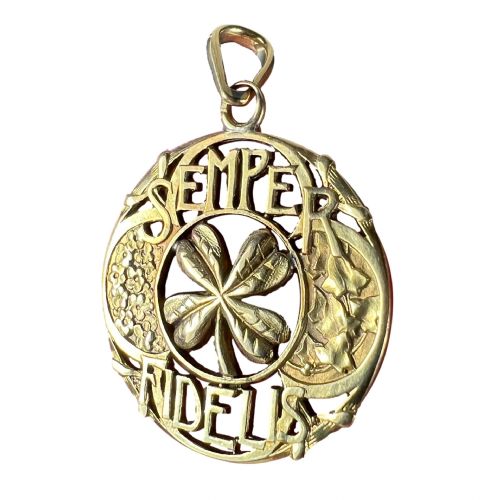
Religious medals dedicated to the Virgin Mary or saints appear alongside secular charms like witch's hearts and zodiac signs. These objects serve as both wearable ornaments and historical artefacts of European craftsmanship.
Materials and Techniques
Maker's workshops utilised 18ct yellow and rose gold, often pairing precious metals with diamonds, pearls, coral, and emeralds. Silver and platinum also support gemstone settings and links.
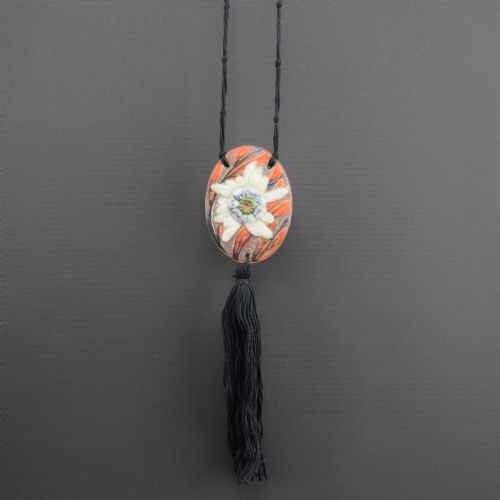
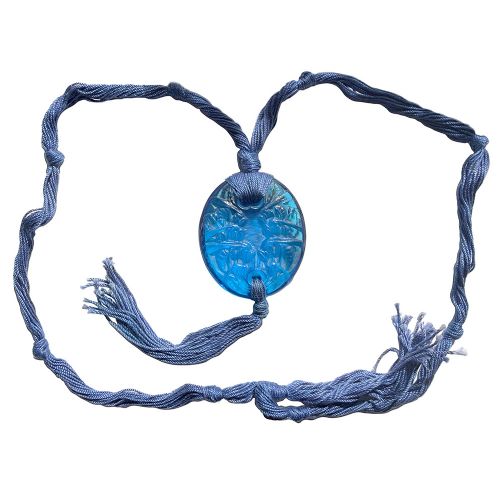
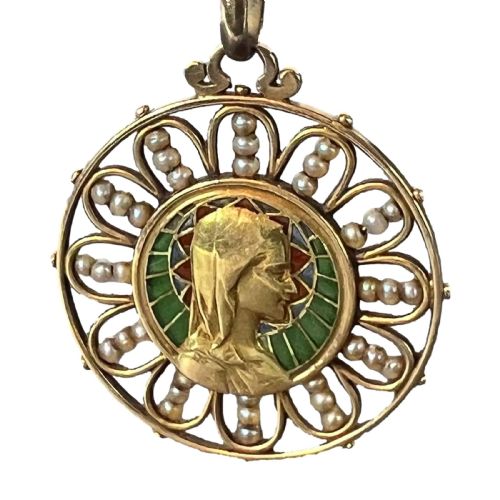
Enamelling techniques such as plique-à-jour create translucent, stained-glass effects within gold frames, particularly on religious medals. Pâte de verre glass forms detailed relief pendants depicting botanicals and insects.
Chains and pendants rely on traditional benchwork methods, including faceted curb links, hollow stampings, and hand-set stones. Metalwork ranges from delicate pierced openwork to robust bezel settings.
French makers cast glass wasps and cicadas into pendants, letting insects dangle from delicate gold chains.
Distinctions in Execution
The standard of a piece depends heavily on the precision of the enamel work and the clarity of moulded glass elements. Crisp details in plique-à-jour cells and sharp definition in stamped medals mark out superior examples.
Gemstone selection and setting integrity govern the overall calibre of gold necklaces and diamond pendants. Uniformity in pearls, depth of colour in emeralds and citrines, and secure claw or bezel work elevate a design.
Signatures from notable makers or clear workshop assay marks add authority and establish a higher tier of workmanship. The complexity of the metal framework, such as pierced galleries or multi-part hinges, dictates the maker's investment in the object.
Argy Rousseau·R Lalique·Paul Brandt·Sellier·Dropsy·Perroud·Chaumet
The French Necklace Glossary
- Plique-a-jour
- An enamelling technique where enamel is applied without a backing, creating a translucent, stained-glass cell effect when held to the light.
- Pate de verre
- A glass-making method involving crushed glass melted in a mould to produce textured, richly coloured relief objects.
- Longuard
- A long, substantial chain designed to be worn doubled or looped, frequently fitted with a swivel clasp for suspending pocket watches or pendants.
- Witch's heart
- A pendant shape featuring a twisted, scrolling flame at the top, symbolising profound emotional attachment.
- Assay mark
- A stamp on precious metal indicating the purity of the gold or silver content, used historically to guarantee standards.
French Necklace: Frequently Asked Questions
How do I identify a religious medal necklace?
Religious medals typically feature depictions of the Virgin Mary, saints, or sacred hearts rendered in gold or enamel. These pieces often bear maker marks on the suspension loop and display devotional inscriptions on the reverse.
You will find these medals hung from period curb link chains or incorporated into larger charm necklaces alongside floral and geometric motifs.
What is plique-a-jour enamel?
Plique-a-jour is a vitreous enamel technique that resembles miniature stained glass, lacking a solid metal backing behind the coloured glass areas. This allows light to pass directly through the translucent enamel cells.
In antique French jewellery, this method frequently highlights the garments and halos of religious figures within gold pendant frames.
How do I date an Art Deco glass pendant?
Art Deco glass pendants often feature stylised natural motifs like thistles, wasps, or cicadas moulded in coloured pate de verre. These works emerged predominantly around the 1920s from prominent glass studios.
Examining the mounting hardware and suspension loops alongside the signature style of the glass relief helps confirm the exact production era.
Are these chains original to the pendants?
Many antique pendants were paired with chains later in their history, though standard Victorian and Edwardian curb link chains frequently match the metal purity of the central charm. Evaluating the wear patterns and gold colour consistency aids in determining whether a pairing is period-accurate.
Spring rings and swivel clasps from the late nineteenth and early twentieth centuries offer further clues regarding original configurations.